There is a kind of righteousness—a well-meaning, progressive, and mostly wealthy one—that runs through much of the conversation about sustainable seafood that I see.
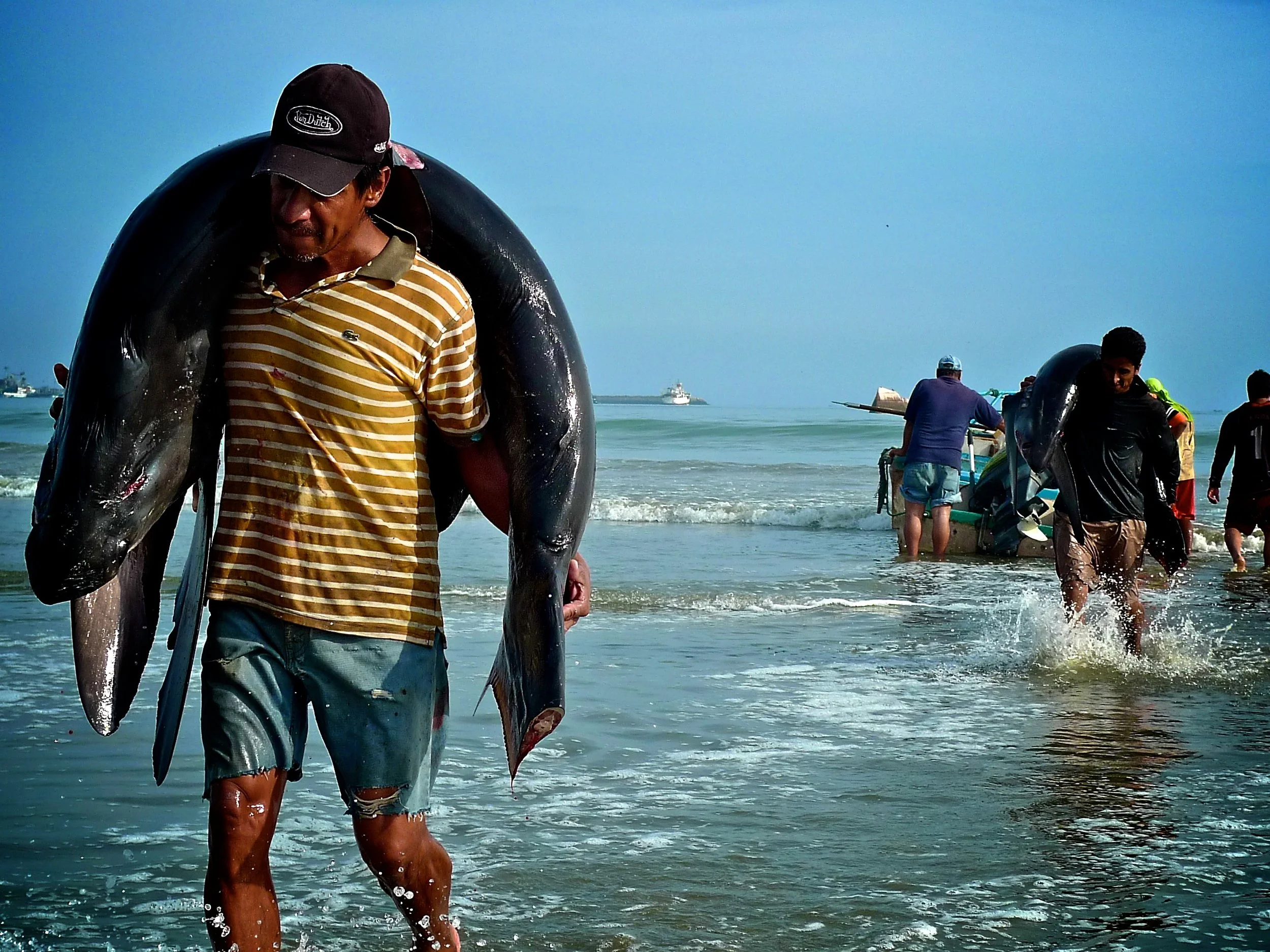
It goes something like this: if we make ethical consumption easy, visible, and sufficiently rewarding, the market will sort it out. Ecolabels will signal the right sustainably caught product, certification schemes will clean up the supply chain from labour abuses, and private capital will make IUU fishing too costly to sustain. All we need is consumer pressure and the right incentives.
It's a nice story. It also assumes, without ever quite saying so, that we all have roughly the same amount of money.
We don't.
The World Bank's updated figures (June 2025) show that nearly half the global population lives on less than $8.30 a day. Not $8.30 for seafood — $8.30 for everything: food, shelter, transport, clothing, the lot.
For them, the question is far from "is this privately certified as sustainable?" What about the catch certificate? Or "was this caught without forced labour?" The question is whether there is anything affordable enough to put on the table tonight.
I’m very lucky to have been able to leave that segment of the world population when I was accepted as a migrant in New Zealand and got good jobs… but when it marks the 1st half of your life, you always remember that “choice is a privilege” (and even here in NZ we have around 30% of the population experiencing food insecurity)
The ability to choose on environmental, ethical or legal grounds is a privilege that perhaps 30% of the world's population can exercise. The rest are not making different choices — they are making no choice at all, because the market mechanism assumes a purchasing power they simply don't have.
This matters enormously when we talk about market pressure as a tool against IUU fishing. When premium buyers in Europe or North America refuse IUU-linked seafood, that seafood doesn't disappear. It gets redirected to markets where the ethics of the supply chain are the last thing on anyone's mind, and where the price point is the only thing that matters.
The ceiling on what private initiatives working through premium market access can actually achieve is real, and it's set not by the willingness of rich consumers to pay more, but by the existence of a much larger market that can't do so.
I've argued before that the private certification model — ecolabels, labour standards schemes, sustainability marks — functions, often unintentionally, as an extension of the neocolonial dependency model. As a 2012 paper I came across put it, transnational eco-certification replicates the structure of colonial-era extraterritoriality: it identifies subjects in the Global South that need protection, builds a narrative of deficient states incapable of providing that protection, and then installs certification agencies as the rule-making authority in their place.
The irony is that it is primarily Northern-based organisations that decide what constitutes acceptable practice in Southern fisheries, charge Southern producers for the privilege of demonstrating compliance, and sell the resulting label to Northern consumers at a premium.
The money flows north. The burden falls south.
And the coverage — this is the part that gets quietly omitted from the brochure — is structurally limited to the segment of global seafood consumption that can afford to care. Which, by definition, is not most of it.
None of this is an argument for doing nothing or for dismissing the genuine good that well-designed market instruments can achieve. Partial tools, deployed with honesty about what they can and cannot achieve, are still tools. But partial tools presented as solutions are something else — they are a way of making people in wealthy countries feel that the problem is being managed, while the larger and messier part of the global seafood system remains largely untouched.
If we actually want ethics and legality to be the baseline — not the premium — then the lever has to be state-driven: binding market-access conditions, flag-state obligations enforced as a condition of trade, and import controls that don't leave a back door open for the price-sensitive end of the market. Consumer choice is a fine amplifier but a very poor foundational stone.