After writing on the new FAO publication regarding labour, I was asked why we were not using fisheries observers for labour issues… this is not a new idea; in fact, a few years ago, together with my friend Osvaldo Urrutia, we wrote a study for a UN agency project that posed a question many keep returning to: could the fisheries observers already working on fishing vessels around the world be turned into monitors of labour and human rights abuses at sea?
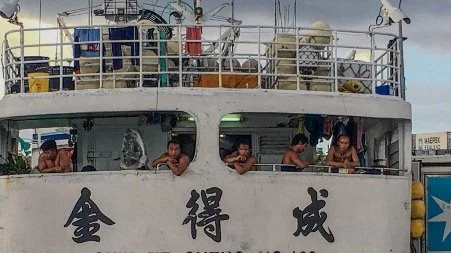
It's a tempting idea. Working conditions on fishing vessels are notoriously hard to monitor, and observers are already out on the water. Why not ask them to watch for crew rights as well as their fisheries work?
Being Osvaldo a well-known fisheries jurist, the paper we did spends a lot of time on the legal plumbing before getting anywhere near an answer, and that plumbing matters. Under UNCLOS, the flag state, the country whose flag a vessel flies, bears legal responsibility for what happens on board, including labour conditions. The 2006 Maritime Labour Convention set global minimum standards for seafarers, but it left fishing vessels out entirely, which is why the ILO built a separate instrument, the Work in Fishing Convention (C188), to cover things like signed work agreements, rest hours, food, water, medical care and repatriation for fishing crews. On paper, the coverage is there. In practice, flag states are often unable or unwilling to enforce it, especially for distant-water fleets operating far from home and rarely inspected.
That enforcement gap is exactly why observers keep being proposed as a potential fix. UNCLOS itself only mentions them in passing; coastal states can require observers on foreign vessels fishing in their waters, but the convention says nothing about what those observers are for, or even about their legal status on board. That vagueness left it to individual countries and regional fisheries bodies to build their own observer programmes from scratch, and the paper walks through four of them to see how far the role has stretched in practice: New Zealand, Chile, the Philippines, and the WCPFC, which manages tuna fisheries across a vast stretch of the high seas.
The differences between them are revealing. Chile keeps its observers strictly to a scientific data-collection role; the law defines them explicitly as researchers gathering data for conservation and management purposes, full stop, with no compliance function at all. New Zealand goes further than any of the others, with observers who support fisheries compliance monitoring and, in some circumstances, even take on a labour-monitoring role, but only when specifically delegated by the labour inspectorate, not as a standing part of the job. The Philippines and the WCPFC's regional programme sit somewhere in between, with observers supporting fisheries compliance but nothing formally built in for labour or human rights monitoring. Across all four, the pattern is the same: observers were designed to gather biological data, compliance monitoring was added later as a practical necessity, and human rights monitoring has essentially never been formally attempted anywhere.
That gap isn't an oversight. It's the paper's central finding, and it stems from a hard, practical problem: the same isolation and power imbalance that make an observer useful also render them vulnerable. A 2020 Human Rights at Sea survey of observers working across the WCPO found that just over half had experienced harassment, abuse, violence or interference on at least half of their trips, and fewer than one in five said they'd never experienced it. Psychological and emotional abuse was the most common complaint. Roughly a third of respondents were dissatisfied with how their reports of these incidents were handled.
I wanted to shorten one section of the paper here because it captures the core dilemma better than anything I could write fresh:
Observers, like anyone, bring their own sense of ethics to the job, and their isolated position on board leaves them open to corruption; captains sometimes allege observers ask for bribes to look the other way, just as observers can be pressured or bought off. Crew may also not see an observer as independent enough to trust with reports of intimidation or abuse. These risks aren't hypothetical: conflict is common in a setting defined by a stark power imbalance, and there have been reports of observers dying in suspicious circumstances while doing their jobs. Some experts (and I) argue observers should be pulled back to a purely scientific role and relieved of compliance duties altogether, and I argue for splitting the functions entirely, leaving observers to the science and letting electronic monitoring (EM) handle compliance. Either way, any reform of observer programmes has to reckon with what it does to observer safety and whether the system still works, and it's genuinely unclear whether observers are even the most efficient use of scarce monitoring funding compared with the technology now available.
That's really the crux of the whole paper. There's no legal barrier stopping a state from expanding an observer's mandate to cover human rights monitoring; New Zealand already shows it's technically possible. But possible isn't the same as wise.
Every extra compliance power handed to an observer raises the stakes of the power imbalance they're already navigating alone, on someone else's boat, weeks from shore, with no colleagues, no easy exit, and often no reliable way to report if something goes wrong.
Layering a human rights watchdog role on top of that, without fixing the underlying vulnerability, risks making the job more dangerous without making the monitoring more reliable.
The paper doesn't conclude that observers are impractical for this role; it argues for caution and for treating electronic monitoring as a genuine complement rather than an afterthought, particularly for the kind of transhipment and long-haul longline operations where abuses are most often reported, and observer coverage is thinnest.
If we're serious about protecting the people working on fishing vessels (fishers and observers), the fix isn't just deciding who gets a new job description. It's building a system (cameras, reporting channels, jurisdictional cooperation between flag, port and coastal states, etc.) that doesn't quietly ask an isolated person on the wrong side of a power imbalance to carry the whole weight of it.