I was sent a picture from my fishing days in the late 80s… surely not one I should be proud off… but I’ll never deny who I was, and the things I did… it would be silly at any stage. The friend that took it is now retired, and he rejoiced in the life I lived and where I am now, while he stayed in Mar Del Plata fishing all the way to retirement.
Made me think about the perception of many fishermen being like pirates, people that rejoice in pillaging the seas, without any alliances to any place or anyone… I think it is far from that.
It made me go back to the opening pages of Conrad’s Heart of Darkness, where Marlow (the protagonist) is introduced by an unnamed shipmate:
He was the only man of us who still "followed the sea." The worst that could be said of him was that he did not represent his class. He was a seaman, but he was a wanderer, too, while most seamen lead, if one may so express it, a sedentary life. Their minds are of the stay-at-home order, and their home is always with them, the ship; and so is their country, the sea. One ship is very much like another, and the sea is always the same. In the immutability of their surroundings, the foreign shores, the foreign faces, the changing immensity of life, glide past, veiled not by a sense of mystery but by a slightly disdainful ignorance; for there is nothing mysterious to a seaman unless it be the sea itself.
Conrad was a seaman before he was a writer, and it shows.
That “stay-at-home order” of mind is exactly what I found on board. The boat is the home and the sea is the country, and everything else glides past.
It is not stupidity; it is a survival setting. You cannot carry the whole world into a cabin you share with four men whose every body noise you hear from less than a metre away.
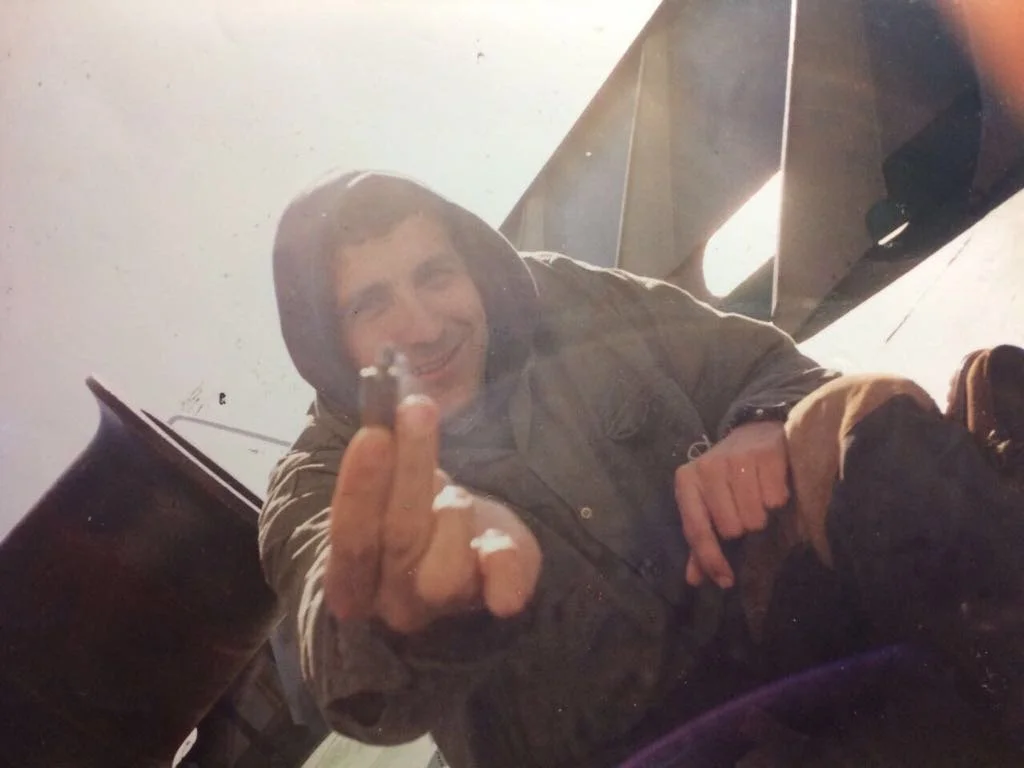
Sharing one after a good trip…. 1988
I have written before that I got into fishing partly because I did not fit anywhere else, and that life at sea sorts people out fast.
Either you deal with it, or you never come back, and that is fine; we respect that.
What holds it together is not affection. I fished with people that had views I despised, yet I would still take them as crew tomorrow, because trust and liking are different things, and only one of them keeps you alive.
Conrad’s disdainful ignorance is, I think, a way of managing what a paper on fishers’ mental health I read a while ago calls the traditional risks…. the weather, the hours, the danger, the missing family, the hope of coming back.
What Conrad’s seaman had no defence for is the modern uncertainty, the criminalisation and demonisation… my own daughter, as a child, telling a friend I was a fisherman… but a nice one.
That one still stings my soul.
The sea is always kind of the same. It is everything ashore that keeps changing.