A while back, I wrote here about being part of the CAPFISH summer academy in Suva, and before that, about the very first CAPFISH workshop back in 2022. One of the nice things about staying involved in something over a few years is that occasionally it turns into a paper, just published in the WMU Journal of Maritime Affairs, that I was invited to co-author: "Regional patterns in coordination and cooperation in the fight against illegal, unreported, and unregulated fishing", led by Kathleen Auld and Francis Neat at the World Maritime University.
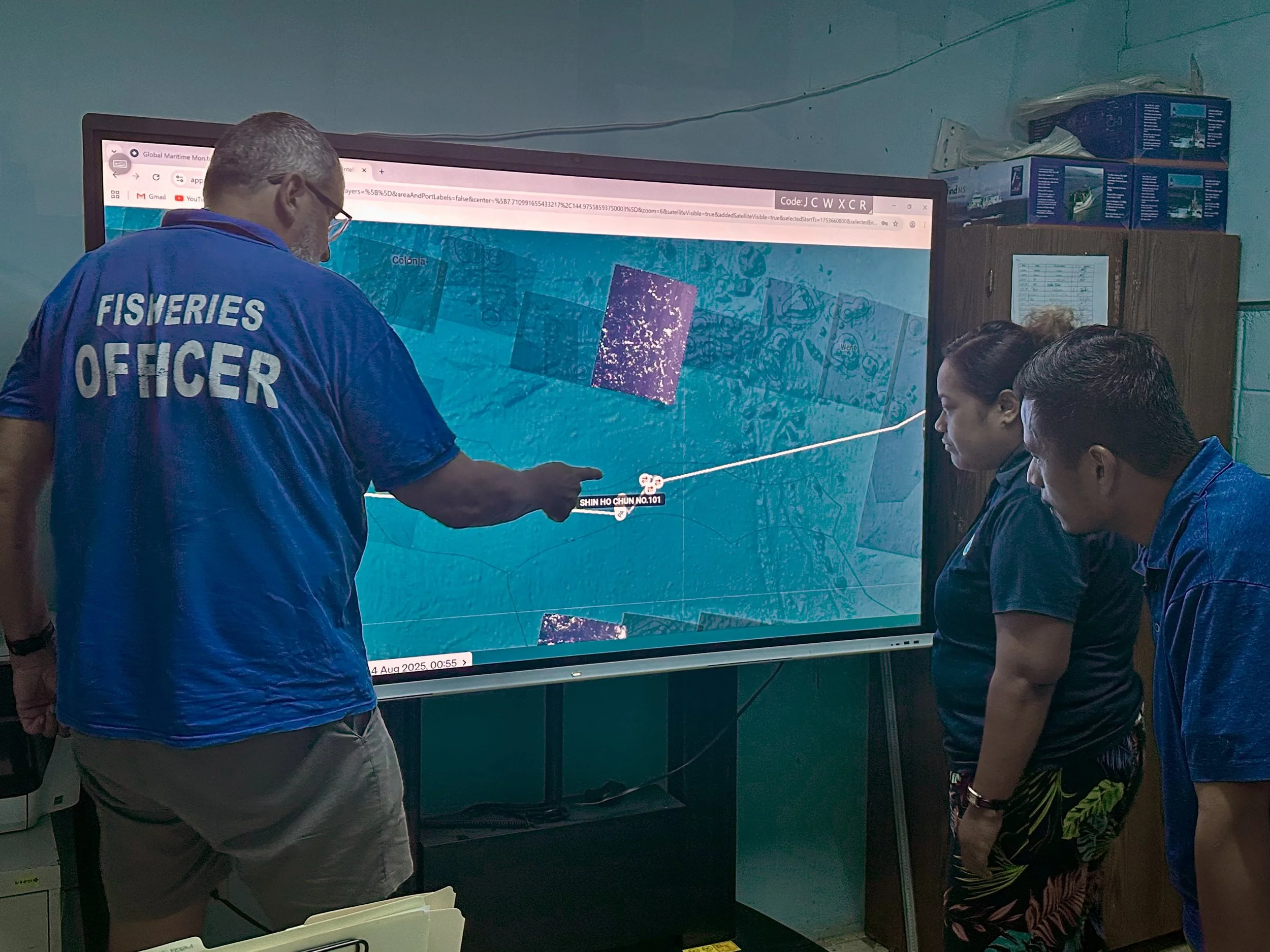
Using Starboard.nz as part of the arsenal
The idea is simple. IUU fishing is too big and too expensive for most developing coastal states and Small Island Developing States (or Big Ocean Sovereignty States - BOSS as my friend Bubba Cook likes it better) to tackle on their own. Regional cooperation is about pooling assets, running joint patrols, sharing data, and establishing common rules.
So the paper examines four regions facing very different situations — West Africa, Latin America, East Asia, and the Pacific Islands — and asks what has actually worked and what hasn't.
My contribution was the Pacific case study, and I want to use this post to explain why, out of the four, the Pacific comes out looking like the most successful example. Not because Pacific people are cleverer than anyone else, but because of how they chose to organise.
Large ocean states, not small islands
The first thing to get right is the framing. The Pacific Island Countries are usually filed under "SIDS", but that label misses the point. In reality, they are large ocean nations, custodians of an enormous combined EEZ, and home to one of the biggest tuna fisheries on the planet.
Fisheries are not a side issue there; in many of these countries, the majority of government revenue comes from fishing, and communities depend on it for jobs, food and livelihoods. That vastness is exactly the problem; no single country can police that much water by itself, and it is also exactly why cooperation was never optional. Necessity did the organising.
A regionally agreed policy that becomes national law
Most of what makes the Pacific work runs through the Pacific Islands Forum Fisheries Agency (FFA). The centrepiece is the Harmonised Minimum Terms and Conditions for Foreign Fishing Vessel Access (the MTCs), first developed in 1983 and updated ever since. This is the clever bit that I think other regions can learn from. The MTCs are, legally speaking, just a regionally agreed policy — soft law. But they are made hard by being written into each member's national legislation, so that every distant-water vessel wanting to fish in the region has to meet the same baseline, no matter whose waters it is in.
On top of that framework, the region has bolted on the tools that actually catch things. Observers, government-nominated people placed on board, who started out collecting scientific data and now also handle compliance; purse seiners in Pacific waters carry one at all times. A satellite-based VMS since 1999, one of the first in the world, tied to the FFA regional register so that every licensed vessel reports its position port to port, not just inside the EEZ. Standardised electronic reporting of catch and vessel movements. A ban on transhipment at sea in coastal waters has been in place since 2005. And, since 2020, minimum labour standards based on the ILO Work in Fishing Convention (C188) have been built straight into the licensing conditions; don't comply with your crew's minimum rights, and you lose your good standing on the register and your fishing rights.
Sharing the picture and sharing the assets
Behind all of this sits what I think is the real jewel: the regional surveillance picture, hosted at the Regional Fisheries Surveillance Centre in FFA HQ. It pulls together, in real time, the positions of vessels reporting to FFA, the WCPFC, and AIS, layered over vessel registers, licence lists, observer reports, and boarding records. From that, you can build a compliance index for each vessel and steer patrol boats towards the ones worth inspecting.
The legal backbone for all this data sharing is the Niue Treaty of 1992. And crucially, countries share not just information but hardware; twelve PICs run a handful of patrol boats between them and top up with aerial surveillance from the Quadrilateral Defence group (Australia, New Zealand, France and the USA). Enforcement stays a national responsibility, always, but nobody is doing it alone.
The clearest sign it works is the quantification of IUU in the tuna fishery. The estimates are low, and they fell between the 2016 and 2020 surveys. The dominant threat was never dramatic pirate fishing; it was unreported catch by licensed vessels, and better coordination and monitoring brought it down. There is also a nice detail I keep pointing to: the MTCs fold in port-state measures aligned with the PSMA, even though very few PICs have actually signed the PSMA. You get the substance of a convention without waiting for everyone to ratify it, and you can tailor it to local realities.
Honest about the gaps
I don't want this to read like a victory lap, because it isn't one. Longline observer coverage sits at a 7.5% target and often falls short because the trips are long and conditions on board are grim. Observers on foreign fleets face threats and abuse, and some have gone missing at sea. Any programme that puts people in that position owes them protection. The transhipment ban applies to purse seiners, but longliners can simply shift to the high seas. And the honest conclusion of the whole paper is one worth repeating: regional cooperation cannot compensate for a lack of resources. It multiplies what you have; it doesn't create it from nothing. External partners and, above all, a strong regional body remain essential.
That, to me, is the "Pacific model" in one line: a credible regional body, minimum standards everyone writes into their own law, shared data and shared assets, and the humility to know where the holes still are. It is not magic, and it is not free, but it travels well, and I think West Africa, Latin America, and East Asia can each take a piece of it home.
The full paper is open access in the WMU Journal of Maritime Affairs. As always, the views here are my personal ones.