A new open-access review by Sangeeta Mangubhai, Kate Barclay, Natalie Makhoul and Gina Houng Lee, Gender-Based Violence in Pacific Fisheries, has just come out in the New Zealand Journal of Marine and Freshwater Research. It is a scoping review that brings together what we know about gender-based violence (GBV) across Pacific fisheries value chains, from industrial vessels to ports, canneries, small-scale fishing, markets, and the household.
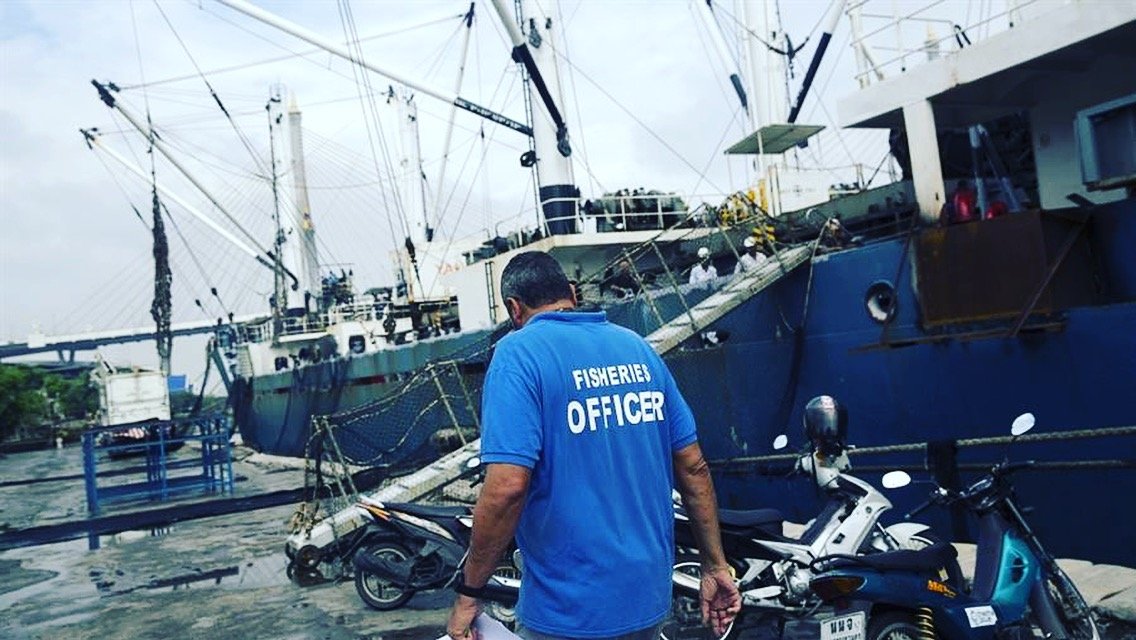
Some disclosure first. I know Sangeeta, Kate and Natalie, and I was one of the 23 regional experts the authors contacted. The paper also builds on an earlier SPC report on GBV in Pacific fisheries that I contributed to, and its cover features one of my photographs. So I am not a neutral reader; I really like the authors and support their line of work. I think this is critical work, and that is precisely why I want to say something about how I read it.
Most of us in fisheries management are used to talk about IUU, catch documentation and port inspections. We are much less comfortable talking about what happens to people at the edges of those systems. The authors have taken that on, and the sector pays attention.
What the paper does
The authors searched databases and organisational websites, contacted regional experts, and compiled 114 documents (out of 225 downloaded) that offered empirical or anecdotal information on GBV in Pacific fisheries. They organised the material around five areas: industrial fishing, ports and transhipment areas, fish factories and canneries, small-scale fishing, and markets and the home. Stakeholder workshops in 2024 and 2025 helped scope and validate the findings.
The framing is broad. GBV here is not only violence by men against women. The paper uses hegemonic masculinity to explain violence among men on board, where hierarchies of rank, nationality and class leave the lowest-ranking crew most exposed (an area I wrote about here), and it also covers women in canneries and markets, transactional sex around ports, children working in fisheries, and fisheries observers, who are targeted not only for who they are but for what they do.
The recommendations are sensible and mostly familiar: implement and enforce what already exists (the FFA Harmonised Minimum Terms and Conditions, the WCPFC crew labour CMM, ILO C188), set up grievance mechanisms crew can use without retaliation, build referral pathways in ports rather than turning fisheries officers into social workers, and fix basic infrastructure like lighting and transport for women on night shifts or early markets. The SolTuna experience in Noro, where the cannery joined the SafeNet network of service providers, is a good example of a company taking practical action. (I’ve been a “fan” of Noro for ages)
Now, the important bit
The paper is built on qualitative evidence, case studies, grey literature and media reports. The authors are upfront about this. They say much of the material is outdated, anecdotal or lacking empirical data, and that it has not been possible to establish how widespread things like forced labour actually are. They also state explicitly that presenting this evidence does not imply GBV is an inherent or universal feature of Pacific fisheries.
That sentence is in the paper. It is also the sentence most likely to be skipped by media or NGOs reading this paper.
Qualitative research is very good at establishing that something happens, how it happens, and why. It is not designed to tell you how often. A documented case of an observer being assaulted tells you that observers can be assaulted, and something about the circumstances that make it possible. It does not tell you that all observers are routinely assaulted. A documented fight on a longliner does not mean the crew of every longliner are fighting all the time. A 2010 study of women boarding foreign vessels in one Kiribati port does not describe every port in the region in 2026.
The authors know this. The risk is in how the paper gets read and quoted afterwards. It is not hard to imagine a summary or a campaign slide that drops the caveats and keeps the adjectives. From there it is a short step to “Pacific fishing vessels are sites of systemic violence”, a prevalence claim the evidence, by the paper’s own admission, cannot support.
The paper itself notes that media coverage favours single, dramatic incidents over systematic analysis, which can stigmatise the whole sector. I agree, and this is a worry I have had for a while. Back in 2021 I wrote about the criminalisation of the fisherman, driven largely by philanthropic, environmental and media organisations, where fishing boats became shorthand for drugs, weapons, trafficking and, after observer deaths, murder by default. That post was prompted by Mackay, Hardesty and Wilcox (2020), which looked at more than 300 media-reported illegal fishing events across the Asia-Pacific and found only six involved other crimes such as drugs. Fittingly, the same paper is cited in this review. The lesson carries over: documented cases are real, but when you stack them up and present them without a denominator, they become a caricature of everyone who works on a boat.
Academic work faces a similar pull. The cases that get written up are the bad ones, because the good ones are not findings. Nobody publishes a paper about a purse seiner where the captain is decent, the crew get paid on time, and the observer is fed and left alone to do the job. Yet in my experience on and around boats since 1984, that describes most boats.
The evidence also looks the way it does for structural reasons. Fishing is dispersed, mobile, mostly out of sight and multinational. Crew rarely talk freely, for good reasons. Researchers cannot easily get on board, and when they do, their presence changes things. So the literature leans towards the cases that broke through: a death, a complaint, a court case, a journalist’s investigation. That is a selection effect, not a sample.
Why the distinction matters
This is not pedantry. If we treat documented cases as evidence of a norm, we design responses for a sector that is uniformly violent. That produces blunt instruments: blanket suspicion of fleets, stigma on crew and on the women who work around ports, and compliance burdens that fall on operators already doing the right thing, while doing little to find the ones who are not.
If we treat the cases for what they are, evidence of where and how harm can occur, we can do what the authors actually recommend: identify high-risk nodes, understand the conditions that enable abuse (isolation, unchecked authority on board, debt, no grievance channels, no way home) and target those. That is a risk-based approach, the same logic we use in MCS for everything else.
It also matters for the people involved. Pacific crews, observers and cannery workers are not helped by being portrayed as perpetual victims of a uniformly brutal industry. Many are proud of their work, and most of their workplaces are, at worst, hard and tedious rather than abusive.
The way forward
The paper’s strongest call is for better data, gathered ethically and safely. I would back that with one emphasis: we need a way to estimate prevalence, not just more cases. Without a denominator, we cannot tell whether things are getting better, worse, or just being reported more. Observer debriefs, port inspection interviews under the PSM and the crew labour CMM, and grievance mechanisms, if designed with this in mind, could generate that information over time.
Until then, read this review as what it is: a solid map of where harm has been documented and why, and a reminder that our governance systems mostly ignore it.
The paper is open access at https://doi.org/10.1002/nzm2.70084.