I'm in Madrid this week at the 3rd FAO Port State Measures Strategy and Monitoring Working Group. I'm representing the Marshall Islands Marine Resources Authority (MIMRA), which has really capable people who should be here- people with genuine knowledge of the country's specific challenges, enforcement gaps, and policy needs. But they're tied up in a regional WCPFC meeting and doing the work in Majuro, where vessels don’t stop coming because there is a meeting… So I show up with the support of NZ MFAT and FAO.
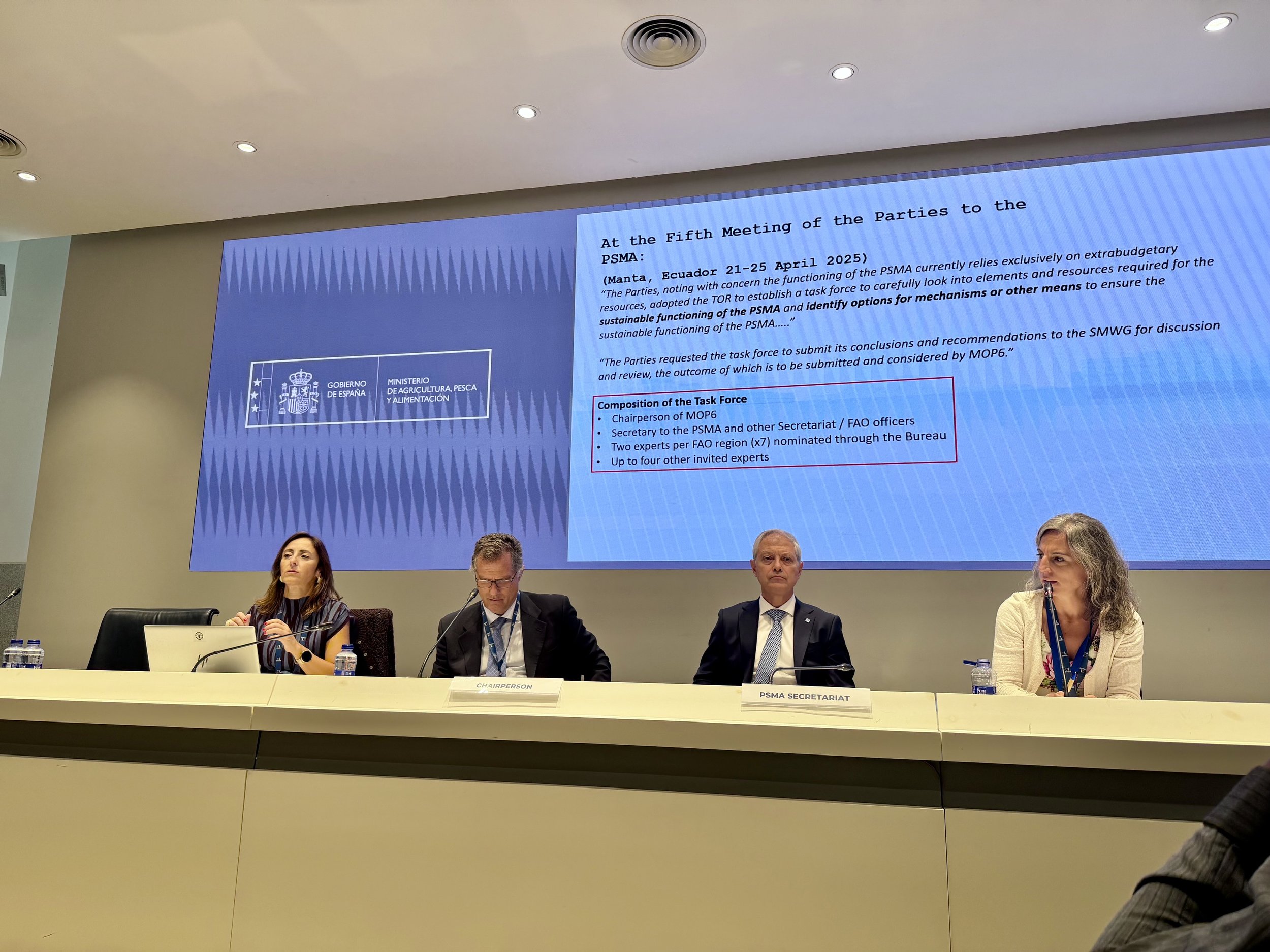
This is the real cost of international governance work that few people talk about outside closed meetings: if you're not in the room, you don't get to explain your position. You get explained about.
The Capacity vs. Representation Dilemma
My approach to my job has always been rooted in the principle that my job is to support the capacity of the people who make decisions for their own countries, not to suggest decisions for them… that is what colonialism did…. So I deeply believe sustainable governance comes from technically strengthening local expertise and institutional memory, not from relinquishing agency to external consultants.
But international meetings operate on a different logic. The people in the room shape the conversation. The people not in the room get discussed, assumed about, and often misrepresented… not out of malice, but simply because absence leaves a vacuum that others will fill.
So here I sit, trying to walk a line between effective representation and inappropriate substitution. It's uncomfortable, but I like to think it's helpful.
What's Actually on the Table
The meeting runs through 1 October, and the agenda is substantial. We're working through the Status of the PSMA and outcomes of the Fifth Meeting of the Parties—a critical overview of where the agreement sits institutionally and what priorities emerged from the most recent full meeting.
But the real meat is in what comes next: a serious examination of the sustainability of the PSMA's operation, with conclusions and recommendations from a dedicated Task Force. This is not administrative housekeeping. This is about whether the architecture meant to prevent IUU fishing at port is working as designed, and what structural changes may be needed.
Alongside that, we're reviewing operational updates to the GIES, the Global Information Exchange System. GIES is how port states share data on transhipments, landing notifications, and vessel movements. It's the developing nervous system of modern port state measures. If GIES isn't working smoothly, nothing else works smoothly.
Then there's a separate strategy document specifically aimed at improving PSMA’s effectiveness. This isn't theoretical. It asks, 'What's not working, and how do we fix it?
We have the technical working group reports from Jeju (June 2026), output tables from regional coordination meetings worldwide, and the full terms of reference for what we're actually supposed to accomplish. When you walk into a room with all of this documentation, the expectation is that you've done your homework.
The Room's Gravity
Port State Measures are experiencing a significant moment. Genuine momentum is building behind the PSMA. The strategy working group is tasked with thinking through how port state control can better serve while working around the accepted ineffectiveness of not just flag state control but the broader architecture of fisheries governance, particularly around IUU fishing, transhipment oversight, and market-based measures.
These are complex issues that require sophisticated voices from small island states. The Marshall Islands has real experience with these challenges. Foreign vessels landing fish, transhipment logistics, the pressure of monitoring operations in one's port… these aren't abstract policy matters to MIMRA. They're operational realities that shape the institutions' viability.
When MIMRA isn't represented, does the discussion account for that reality? Or does it drift toward the concerns of countries with larger fishing fleets and more bureaucratic capacity? The discussion doesn't need to be unfair to end up skewed. It just happens naturally. And when decisions about GIES architecture or sustainability measures are made without island nation voices in the room, the consequences hit those nations hardest.
The Real Issue Behind the Room
What bothers me most isn't having to represent MIMRA in their absence. It's what their absence signals about the system itself.
The regional meeting pulling MIMRA's attention is real and legitimate. Pacific island nations have to manage multiple urgent governance streams with limited staff. This isn't apathy or neglect; it's the reality of international governance infrastructure that assumes more institutional capacity than exists.
But when that happens, when actual decision-makers can't afford to be present, what fills the gap? Consultants. Advisors. People like me. And while I try to bring genuine insight about MIMRA's specific context, the fact remains: I'm making judgements on their behalf that only they should make… The fact that they trust me to do this is both an honour and a huge responsibility.
The Uncomfortable Necessity
So here's the honest tension I sit with: I'll be in meetings over the next few days where I'll need to speak clearly about PSMA sustainability, operational realities of GIES implementation, and what the Fifth Meeting outcomes mean for us. I'll advocate for perspectives that matter to MIMRA and similar nations, ensuring that island nation realities aren't erased from discussions about global port state architecture.
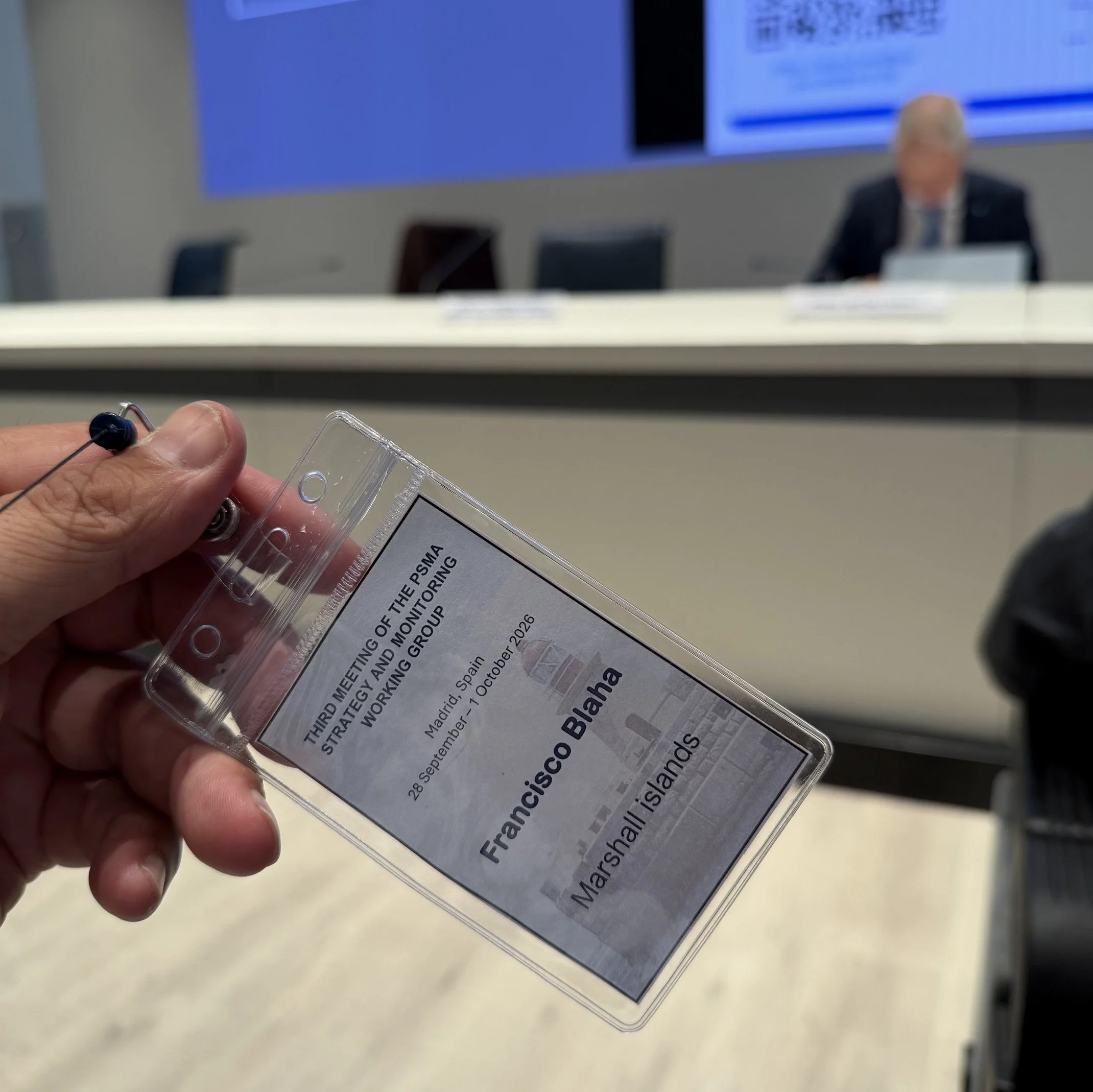
I'll need to do this well, because it's necessary, and the alternative, a voiceless and unheard MIMRA, is worse and does not help anyone.
But I'll do it, knowing that this arrangement is a symptom of a broader problem: developing effective fisheries governance requires presence and engagement that small island states are structurally disadvantaged in providing. Building capacity means not just training programmes and technical assistance, but also fixing the underlying economics that make it so expensive to maintain sufficient talent in the office and sustain continuous international engagement.
Being able to rationalise and write about it may help me, but it does not fix the problem.