I have been fascinated by the impact that drifting Fish Aggregating Devices (dFADs with sonar buoys) have had on the purse seine fishery since I was fishing in the 90s. It has significantly changed the fishery, and I've written extensively about it in the past.
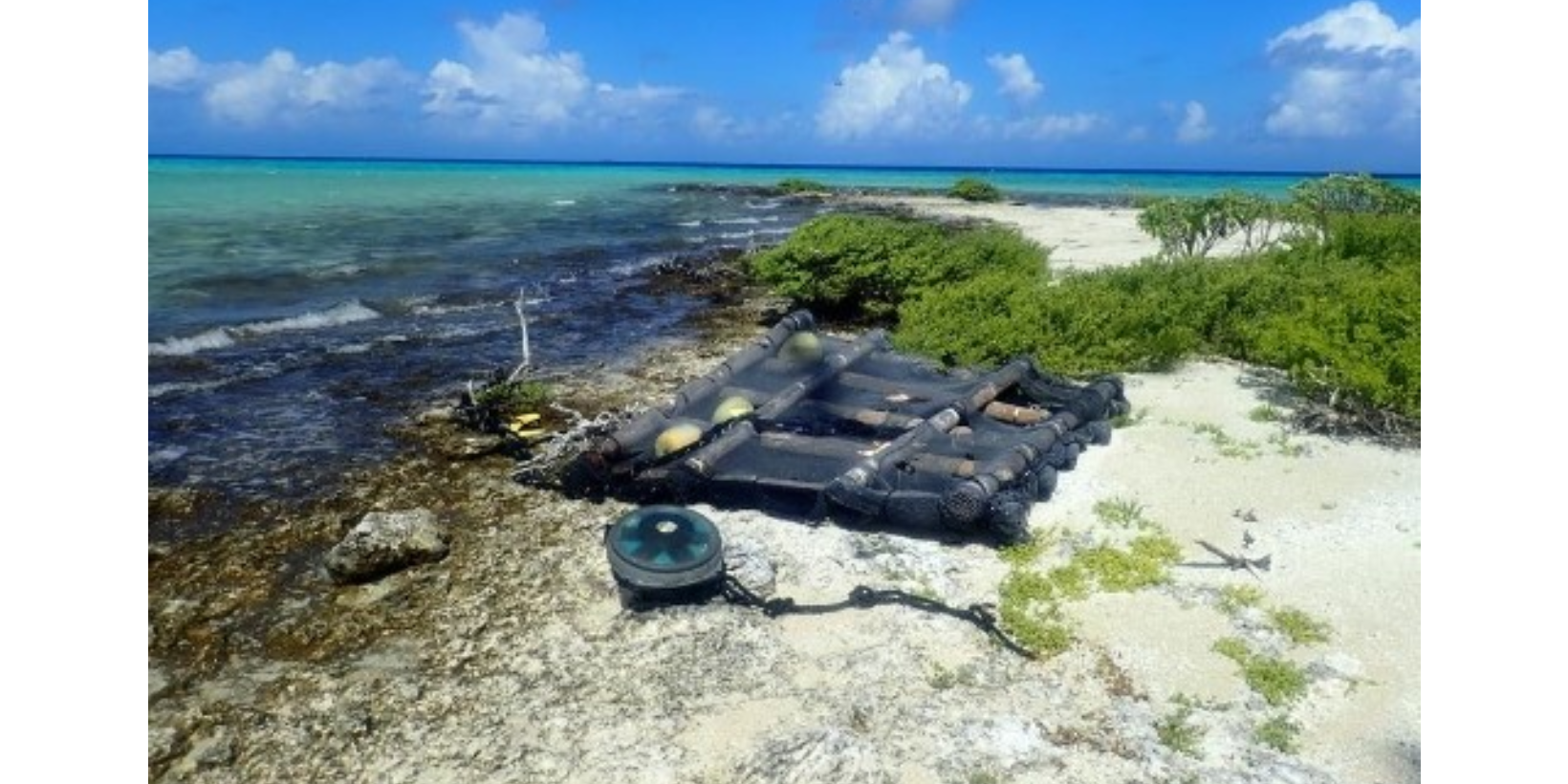
The usual end of lifecycle of a dFAD (picture by @SPC)
While I have worked on assessing plastic waste generation from fishing vessels in the WCPO, I have not written extensively about one of the most persistent and complex challenges facing tropical tuna fisheries: the “other impact” of FADs, namely the loss and abandonment of drifting FADs
This week, I'm in Papeete, Tahiti, for an ambitious and timely international workshop on the subject, organised by SPC and ISSF.
They are getting people from the fishing industry, regional fisheries bodies, scientists, technology providers, NGOs, governments, and coastal communities to work together. The goal of the workshop is to go beyond diagnosis and develop practical, scalable approaches to reduce dFAD loss and increase recovery rates across the Pacific.
The workshop will go for four days and is meant to connect fishing grounds and shorelines. It recognises that losing dFADs is not just a problem for vessels and regulations at sea; it also has real effects on the environment, society, and economy of coastal ecosystems and island communities.
The first day will set the stage for analysis by looking into why dFADs are lost or left behind. Sessions look at how dFAD design and materials have changed over time, keep an eye on new technologies and fishing methods, and show new evidence of loss corridors and buoy trajectories in both the Eastern and Western Central Pacific.
We will examine both the legal frameworks and certification requirements, as well as industry perspectives. This hopefully brings up both regulators' expectations and the realities of running a business. Significantly, stakeholder perspectives—obtained via regional surveys and collaborative exercises—ground the technical discussions in empirical experience.
On day two, the focus will change from offshore dynamics to coastal effects. Participants will look at how stranded dFADs affect reefs, shorelines, and people's lives in the Pacific, Indian, Atlantic, and Caribbean regions. They will also look at how in situ data collection and monitoring programs are being created and put into action.
Peer-to-peer exchanges will help us share what we've learned about recovery operations, getting people involved in the community, and the problems that come with long-term monitoring on remote islands. At the end of the day, there will be talks about how to improve monitoring of stranding events and their effects on the environment, especially in delicate habitats like coral reefs.
The third day will be all about solutions. There will be a wide range of recovery programs on display and under critical review, from community-based FAD watch programs to industry-funded recovery schemes and pilot trials. These experiences add to bigger talks about how to make dFAD retrieval programs work, including how to make them cost-effective, how to set up incentives, and how to measure success. We look into new ways to do things, like deposit-refund systems, repurposing buoys, recycling pathways, and dedicated recovery funds. We're especially interested in making sure that small island developing states don't have to bear too much of the burden.
The workshop will conclude with a visit to the fishing port of Papeete (where I began my Pacific fishing career in 1991). This will connect the discussion to the real world. This last day drives home a key point of the meeting: that long-term solutions to dFAD loss must be technically sound, economically viable, and based in the communities that are most affected.
In general, I think this Tahiti workshop is more about practical alignment than theoretical commitments. We want to create a path to a more responsible and truly sustainable dFAD fishery in the Pacific by bringing together all the people who are involved in the dFAD lifecycle, from design and deployment to loss, stranding, and recovery.
And needless to say, I am truly grateful to Lauriane Escalle from SPC and Gala Moreno from ISSF for inviting me to participate in this event, which is supported by The World Bank, Problue, Direction des Ressources Marines (DRM), ISSF, IATTC, The Nature Conservancy, The Palmyra FAD Watch Program, American Tunaboat Association, Bolton Food, Tri Marine, Satlink, Zunibal, Marine Instruments, and Tunacons. Special thanks go to DRM and Thibaut Tellier for their local assistance and organisation.