I walked away from most social media a few years ago (I only maintain Bluesky and LinkedIn), yet I have had a few non-fishing acquaintances telling me I just read that “a new agreement is going to help finish IUU fishing”… so I thought that I could unpack what the IMO Cape Town Agreement really can (and cannot) do, at least from my operational perspective,
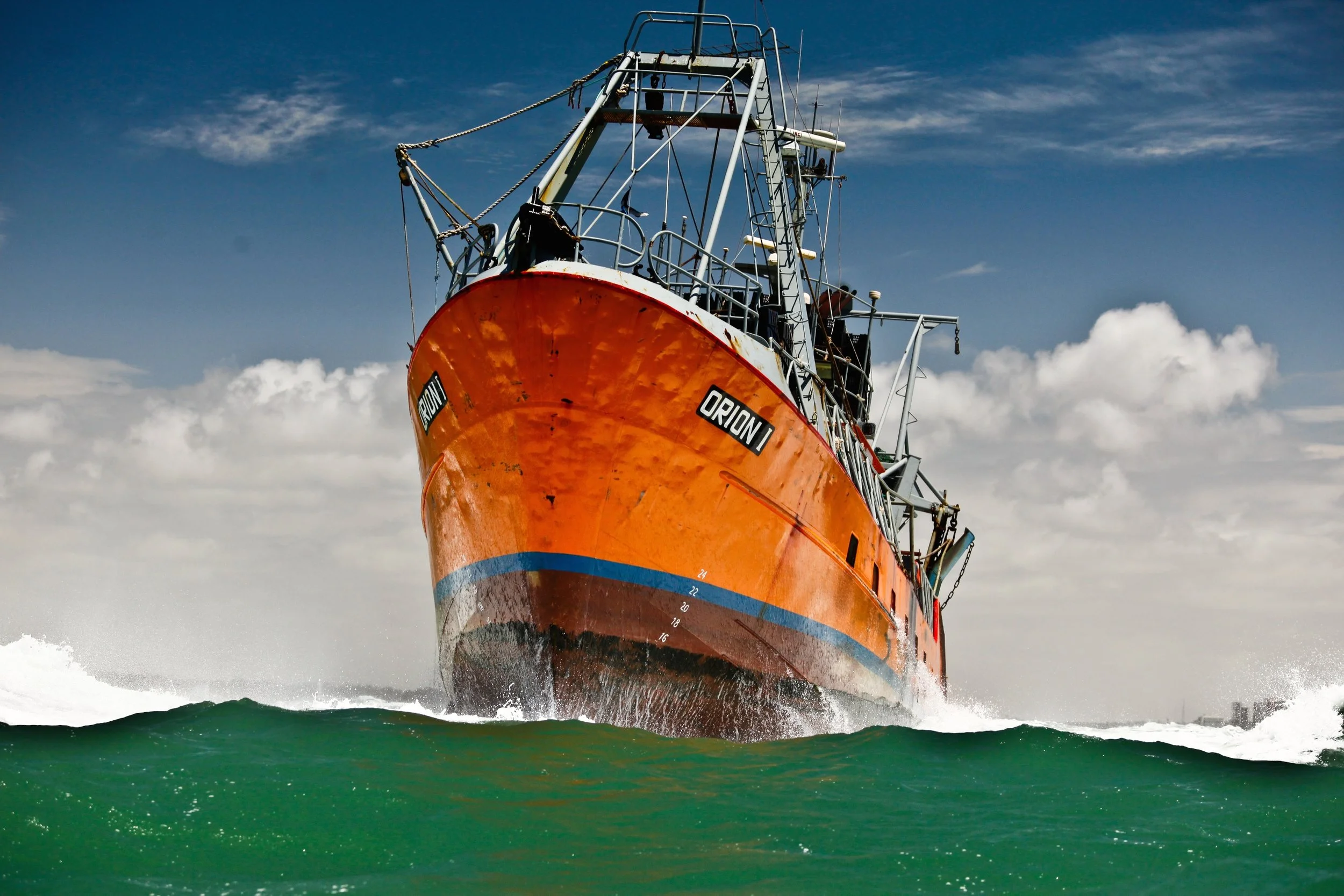
So as usual, hype overruns reality… The Cape Town Agreement (CTA) is not a fisheries instrument — and it was never meant to be.
But dismissing it is not fair, and leads to missing its deeper structural potential.
Let’s start with the premise that signing an agreement (which, after all, is a piece of paper) does mean that the problem it addresses is over… it only means that, as a signatory, you now have responsibilities and standards to meet.
Generally, international bodies adopt the language of an agreement over the years, and once agreed, they set a minimum threshold for accession by IMO member countries before it enters into force, meaning that those that have ratified it need to comply with it.
The CTA (adopted in 2012 under the International Maritime Organisation) updates and modernises the 1977 Torremolinos International Convention for the Safety of Fishing Vessels and the 1993 Torremolinos Protocol.
The CTA was to enter into force 12 months after at least 22 States, collectively representing 3,600 qualifying fishing vessels - typically ocean-going ships operating on the high seas - consent to being bound by the treaty. With the recent accession of Argentina, the total number of Member States has reached 28, and, crucially, the sum of 3,754 vessels of 24 metres or more in length.
The CTA core purpose is to set minimum requirements for Safety standards for fishing vessels ≥24m, in relation to construction, stability, life-saving appliances, radio communications and fire protection, among others as well as setting up mandatory certification and inspection, as well as stronger flag State obligations (yet with the caviat that is applies only to the 28 that are contracting states of the agreement, so far Argentina, Belgium, Belize, Congo, Cook Islands, Croatia, Denmark, Finland, France, Germany, Ghana, Iceland, Japan, Kenya, Namibia, Kingdom of the Netherlands, New Zealand, Nicaragua, Norway, Peru, Portugal, Republic of Korea, Saint Kitts and Nevis, Sao Tome and Principe, Solomon Islands, South Africa, Spain and Vanuatu)
CTA is about the safety standards for fishing vessels above 24m for flag states that are contracting states to the agreement… is not about fishing… but
It raises the cost of being flagged to some open registries
Some open registries (flags of convenience) are associated with states that typically exhibit high levels of IUU events. They are attractive because of their minimal or non-existent requirements for fisheries compliance monitoring. Additionally, they accept substandard vessels in terms of safety (as good, safe vessels are expensive), and often have poorly documented ownership structures behind numerous shell companies, making it difficult to identify responsible parties if problems occur. Regulatory fragmentation also exists, as aspects such as MARPOL compliance and minimal manning standards—such as qualifications and international equivalents required to be a captain or second mate—are convoluted. The key selling point of open registries is their weak flag control, and in many cases, they also function as fiscal paradises, as detailed here.
The CTA imposes more stringent requirements regarding identification and documentation, proper vessel certification, surveys, and inspection routines, which implies recognised flag State oversight. In other words, it obliges vessels to operate within a system of greater transparency than at present, which, in turn, can assist fisheries prosecutions.
Yet again… it would only apply to the countries that are parties to the agreement… and I'm encouraged to see that open registries with low levels of fisheries compliance, such as Belize and Vanuatu, are part of it…. Yet this is a small % of flag states
Does it strengthen port and coastal leverage?
A lot is being said that the CTA complements instruments like the FAO Port State Measures Agreement (PSMA) and the ILO’s Work in Fishing Convention. Yet let’s digest this a bit from the operational side.
Now, as explained before… those agreements are also only compulsory for states that have become parties to it (25 for C188 and 108 for PSMA)
From the PSMA side, the port states that the parties have the right to require vessels arriving to provide information 72 hours in advance, and then conduct intelligence and, as a result, use tools such as deny entry, deny port use, inspect, detain, etc.
However, as a fisheries authority, we cannot take direct action if a vessel lacks a valid safety certification, fails to meet compliance standards, or is structurally non-compliant. The best approach is to collaborate with the official body in the port states responsible for maritime safety, and hope their legal structure and resources can do something about it… Yet again, this displaces the burden to many developing countries’ ports instead of putting the onus of compliance assessment where it legally belongs: the flag state! How come a vessel that is structurally non-compliant, or lacks safety certifications, is allowed to travel to my port by its ultimate responsible, the flag state? Why do I have to make it my problem as a port state?
With C188, the link becomes even more fragile… a vessel can be constructed and designed to meet CTA requirements, and have crew on board whose contracts and living conditions do not satisfy ILO C188, and vice versa. Therefore, unless the flag state is a party to both, the two remain independent.
Yeah, but port states can inspect both and do seething… sure… but again… why do we expect many developing countries’ port states to bear the burden of compliance with flag state obligations? How come an unsafe vessel with crew on board whose labour rights are substandard is allowed to leave the waters of the flag state?
So to summarise, the CTA does not include, among others:
Criminalise IUU fishing
Mandate AIS/VMS transparency
Address beneficial ownership
Create global vessel identifiers
Harmonise RFMO enforcement
Automatically link to any of the present catch documentation schemes
And without a strong flag State political will, it is just paperwork. If key distant-water fleets ratify but under-enforce, little changes, and if major fishing States (like China, Panama, USA, Taiwan, Nauru, FSM, Ecuador, just to name a few in the Pacific) stay outside, the main holes remain.
Where it could be transformative
If — and this is the big IF — it becomes integrated (i.e. a requirement) for:
RFMO positive vessel lists to operate in the high seas
Part of the licensing condition to operate in coastal states
Part of the conditions for IMO ship identification numbers
Part of the condition for crew labour rights compliance regimes
But for me, at least, the key measure would be to make it a condition for insurance and classification societies… no CTA adherence, no insurance.
But yeah… until such day… It’s great that CTA has entered into force, no doubt… but will I see a difference in my work in the fisheries administrations and wharves in the short and medium term… not really.