While Spanish is literally my mother’s language (my mum spoke Spanish to me, my dad -Austrian- spoke German, and my village language was Guarani), I barely work in Spanish… In fact, I work more in Portuguese than in Spanish… even if my schooling and 1st university degree were in Spanish.
I suppose that, as I left Argentina two weeks after submitting my thesis, with most of my experience being in fishing and as a science technician aboard research vessels, I never had the chance to “grow” professionally in Spanish. Consequently, I’m not recognised in that world... but also, and as the Bible states (Luke 4:24), “no one is a prophet in his own land.”
While I was working for FAO in Rome, I liaised with the Spanish industry and the Spanish Association for Standardisation and Certification (AENOR), and I enjoyed it. But that was a long time ago.
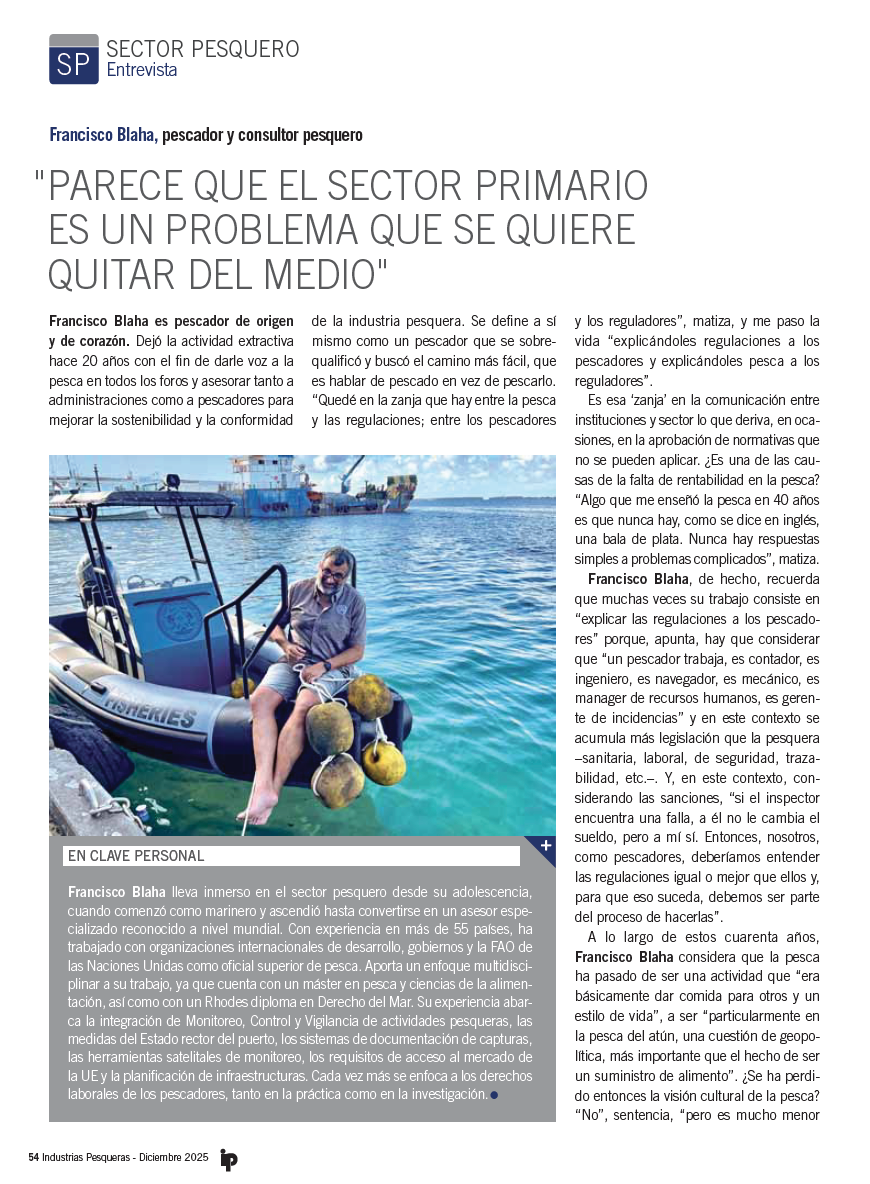
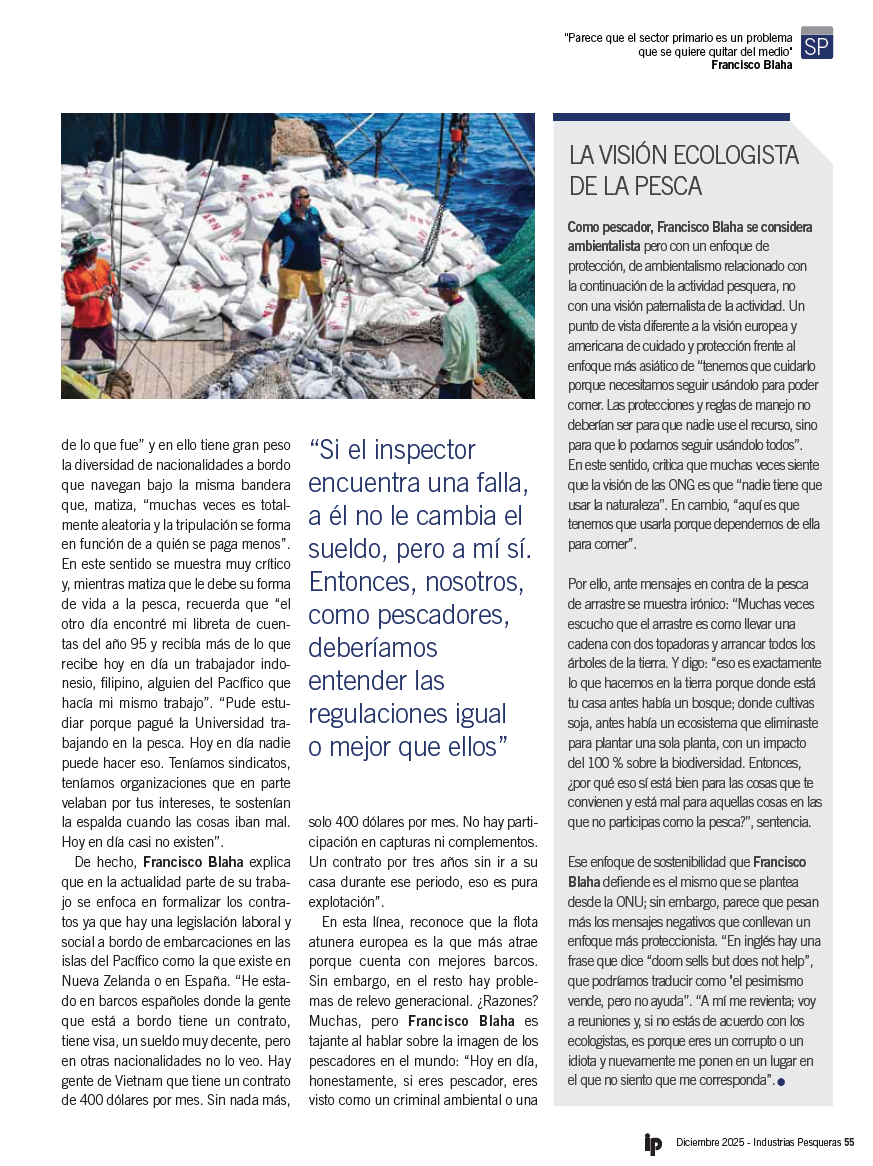
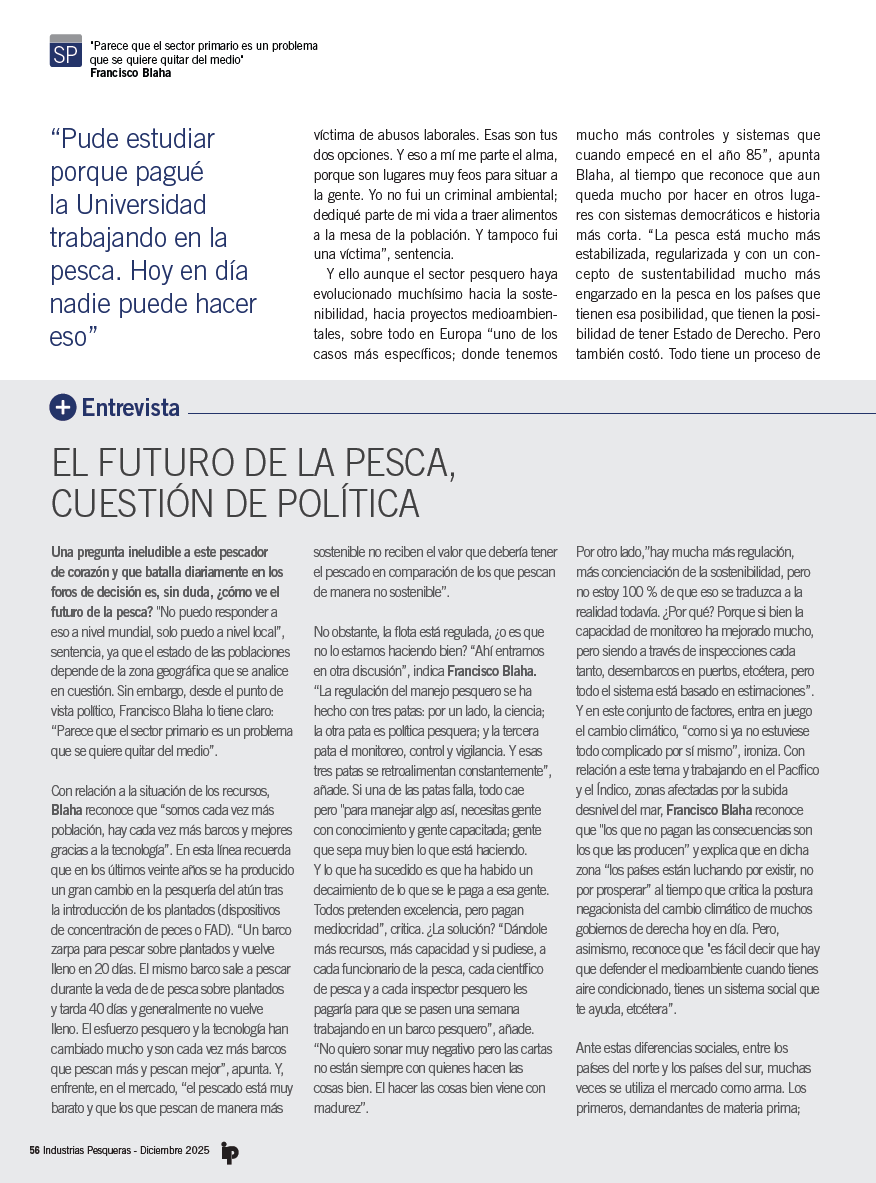
I was pleasantly surprised and somewhat intrigued when the editor of Industrias Pesqueras (IP), a leading Spanish maritime and fishing industry magazine published since 1927 and regarded as the primary reference for fishing and marine activities in Spain and Portugal, asked me for an interview.
The result (in Spanish) is below… it covers my views on fishing, its sustainability, the business (and hypocrisy) of ecolabels, geopolitics, and how we degraded the labour side by commoditising crew as a cost rather than an investment. And similarly, we expect excellence from scientists and regulators, yet we pay for mediocrity at best.
I also discuss the double standards that seem to apply to fisheries compared to land-based activities, and how we would rightly make a fuss if there were a discussion panel on gender issues with four men in their 60s. However, I have rarely seen panels on fisheries and labour rights where any of the panellists have ever worked as fishers.
So yes, apologies to my only English readers; this blog is for those (like me) who grew up speaking Spanish, the second most spoken colonial language (English is the most spoken colonial language overall – including native and non-native speakers – mainly because of its role as a global lingua franca).
I am very thankful to Nieves García Figueira, IP deputy director of the magazine and interviewer for such a candid and frank interview and to the IP magazine for the opportunity.