I have had a complex relationship with NGOs over the decades. I do share some of the aims… but generally not the methods they use
In 1992, a Tongan friend shared a cultural lesson that I have not forgotten… Being young and still a fisherman, I was pretty harsh and confrontational in my manner of speaking. So he asked me: Francisco, if I told you that ‘you are ugly’, how does that make you feel? I replied: I know you are right, but I wouldn't like it. … What if I had said: ‘It's a pity that your inner beauty as a person is not reflected in your external appearance,' how do you feel now? He still told me I’m ugly. But I felt like hugging him for understanding me instead of getting angry.
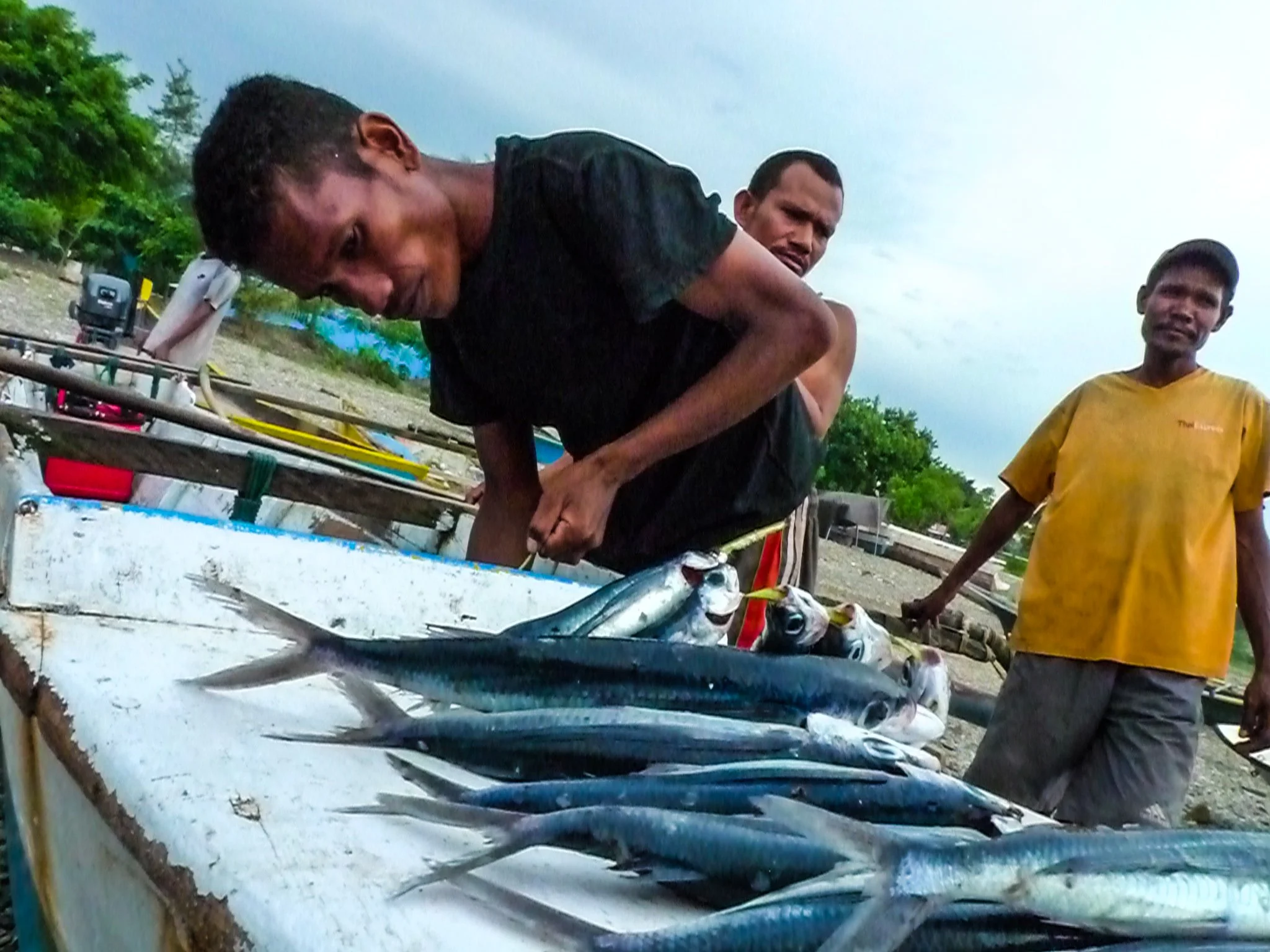
looking undeeath the fish is always a good idea.
And that approach I had then is generally what I struggle with them now… I’ve been part of many fisheries meetings, and when some NGO people fail to influence change, it’s usually because they complain without attempting to understand. They give speeches berating participants, fail to consider trade-offs, and assume that everything is simpler than it is, imagining that the only reason anyone would disagree with them is that they’re corrupt and/or stupid. They accuse the bodies of not listening, but they don’t even attempt to hear. When they’re done, the meeting chair says, “Thanks for your input,” and moves on because they haven’t contributed anything that might sway anyone’s position.
Of course, this is not a universal rule that applies to everyone. I do some work for certain NGOs, but honestly, it's because I like the people I work for. I usually do not compromise my views... A few years ago, I left a very well-paid advisory position with PEW because I felt they were taking a “white saviour” stance on a technical issue and opposing the collective decisions about the Pacific Island countries. So, although I really like my manager, I decided to end the contract.
I think sometimes that is mainly caused by a limited view of what “reality” looks like for others and a bit of ignorance about the VERY recent past of colonisation in many Pacific island countries… I always remind people that, at 60, I’m older than all the countries I work with… and it was the same when I was 30!
Yet I’m very aware of people in NGOs who do an excellent job, have built trust with many partners, and are genuinely committed to being part of the solutions rather than just pointing out problems. My friend Bubba Cook is the first person who comes to mind in this category (even if we disagree on the “positive” role of ecolabels)
So, when I read this article “The End of the Age of NGOs? How Civil Society Lost Its Post–Cold War Power” in the Foreign Affairs magazine, I was genuinely eager to explore it, even if it has a Cold War and political perspective, more than an enviremantal one… yet does not escape my views on cold war roots of tuna diplomacy and the colonial nature of the work I do.
Below is a summary; however, as always, I recommend reading the original for the full context.
—
The 1990s marked a golden era for nongovernmental organisations (NGOs), as their numbers surged and their influence expanded globally. Renowned organisations like Amnesty International, Greenpeace, and Oxfam thrived during this period, championing liberal causes such as LGBTQ rights, environmental protection, and human rights.
Between 1990 and 2000, the number of international NGOs increased by 42%, and thousands of new organisations were founded. NGOs became key players in shaping state policies, delivering humanitarian aid, and influencing global governance. Their efforts led to significant achievements, such as the adoption of the Anti-Personnel Mine Ban Convention in 1997 and the UN Convention Against Corruption in 2003.
The post-Cold War era was characterised by optimism about the role of civil society in creating a better world. NGOs were seen as principled actors, distinct from governments and private companies, and were praised for representing marginalised voices and providing essential services. They gained legitimacy by influencing international negotiations and delivering foreign aid, often in partnership with national governments. The rise of NGOs was heralded as a "power shift" from states to global civil society, with many believing that NGOs could drive progressive policy changes and improve service delivery worldwide.
However, the landscape has shifted dramatically in recent years. Between 2010 and 2020, the growth of international NGOs stagnated, with their numbers increasing by less than 5%. Public scepticism about NGOs has deepened, governments have developed strategies to undermine their activities, and funding sources have begun to dry up. The result is a significant decline in NGOs' political power and capacity, with states reclaiming much of the influence they had lost.
Mounting Criticism of NGOs
Over the past two decades, criticism of NGOs has intensified. Sceptics from across the political spectrum have questioned their effectiveness, accountability, and political influence. While NGOs have made efforts to address these concerns—such as implementing transparency initiatives and localisation strategies—public trust in the sector has eroded. High-profile scandals, such as the sexual exploitation cases involving Oxfam Great Britain in Haiti and the Democratic Republic of the Congo, have further damaged the reputation of NGOs. These incidents have led to accusations of corruption, fraud, and unethical behaviour, undermining the public's perception of NGOs as principled organisations.
The Edelman Trust Barometer, which measures public trust across 28 countries, revealed a significant shift in 2021: for the first time in 25 years, businesses were trusted more than NGOs. By 2025, businesses were perceived as nearly as ethical as NGOs and far more competent. This growing scepticism has made it increasingly difficult for NGOs to maintain their legitimacy and secure funding.
Government Crackdowns on NGOs
The decline in NGO power has coincided with a global erosion of democratic norms. In the 1990s, the liberal international order supported the growth of NGOs, even in nondemocratic countries like China and Zimbabwe, where governments allowed NGOs to deliver essential public goods. However, as democracy has waned in recent years, governments have become more hostile toward NGOs, particularly those advocating for human rights, environmental protection, and democracy.
Authoritarian regimes have implemented strict regulations to suppress NGOs, fearing that their activities could lead to democratisation or regime change. Russia, for example, passed laws in 2006 and 2012 that imposed severe restrictions on NGOs, including labelling foreign-funded organisations as "foreign agents" and subjecting them to burdensome reporting requirements. These laws have served as a model for similar legislation in countries like Georgia, Hungary, and Kyrgyzstan. In India, Prime Minister Narendra Modi's government has revoked the registrations of thousands of foreign-funded NGOs, including Greenpeace India, citing alleged violations of the country's Foreign Contributions Regulation Act.
Governments have also created "zombie" NGOs—organisations that mimic legitimate civil society groups but serve state interests. These government-organised NGOs undermine genuine advocacy efforts and erode public trust in the sector. For example, low-quality election monitors in countries like Azerbaijan and Zimbabwe have been used to legitimise flawed elections. At the same time, government-organised NGOs have submitted reports to the UN praising repressive regimes.
The growing influence of nondemocratic powers like China and Russia has further emboldened governments to suppress NGOs. Research shows that countries with closer economic ties to China are more likely to repress NGOs, as Beijing does not use trade sanctions to promote human rights. Russia has also worked to discredit Western election observers and democracy promotion efforts, encouraging other countries to adopt similar strategies.
Financial Struggles and Shrinking Resources
The financial challenges facing NGOs have been exacerbated by declining government support for foreign aid. Budget constraints, competing priorities, and populist opposition have led to significant cuts in development assistance from major donor countries. In 2024, overseas development assistance from top donor countries in the Organisation for Economic Cooperation and Development fell by over 7%. The United States, under President Donald Trump, has drastically reduced foreign aid programs, and European countries like Germany, the United Kingdom, and France have also made steep cuts to their development budgets.
The closure of the U.S. Agency for International Development (USAID) in 2025 marked a significant blow to the NGO sector, as it was a primary source of funding for many organisations. While some private donors and foundations have stepped in to fill the gap, their resources are limited compared to those of governments. As a result, many NGOs have been forced to downsize, curtail their activities, or shut down entirely. This has had a devastating impact on humanitarian relief efforts, vaccine administration, and other critical programs.
The Shift in Power
The decline of NGOs has led to a shift in power back to states, particularly nondemocratic governments. By suppressing NGOs, these governments can control information, stifle dissent, and avoid accountability for failing to meet international standards. This shift has contributed to the global decline of liberal norms and values, as states become more insulated from external pressure.
The weakening of the NGO sector also represents a loss for democratic governments, which have historically benefited from the advocacy and service delivery provided by these organisations. Former U.S. Secretary of State Colin Powell once described NGOs as a "force multiplier" for achieving U.S. foreign policy goals, including democracy promotion and human rights protection. By reducing foreign aid budgets and undermining NGOs, Western governments are relinquishing a key source of influence in global politics.
The Path Forward for NGOs
To reverse these trends, NGOs must take proactive steps to restore their legitimacy and adapt to the changing political and financial landscape. Transparency and accountability are crucial, as organisations must demonstrate their commitment to ethical practices and effective service delivery. Collaboration among NGOs can also help resist government repression, as seen in successful campaigns in Kenya and Nigeria to prevent the passage of restrictive laws.
In the face of shrinking government funding, NGOs will need to explore alternative sources of support, such as private donors and socially conscious businesses. However, private capital is unlikely to replace the resources provided by states fully. As a result, many NGOs may need to refocus their programming or scale back their operations.
The decline of NGOs highlights the fragility of the post–Cold War power shift that once empowered global civil society. While the optimism of the 1990s envisioned a world transformed by active and well-resourced NGOs,
——-
The authors of the piece have a new open-access book, Crowded Out (Cambridge University Press), for anyone who wishes to learn more. It examines how today's aid system—rules for compliance, contracting chains, risk offloading, and "foreign agent" regimes—can unintentionally leave out the very civic actors it aims to help, using data from multiple countries and fieldwork to identify what went wrong and what needs to change.