Here is another update to this seminal FFA publication… I remember the 1st version commissioned by my good departed friend, Hugh Walton, in 2011 and written by Amanda Hamilton and the now departed Anthony Lewis, plus Mike McCoy, Liam Campling and Elizabeth Havice being the last 3 ones continuing authors of the present opne
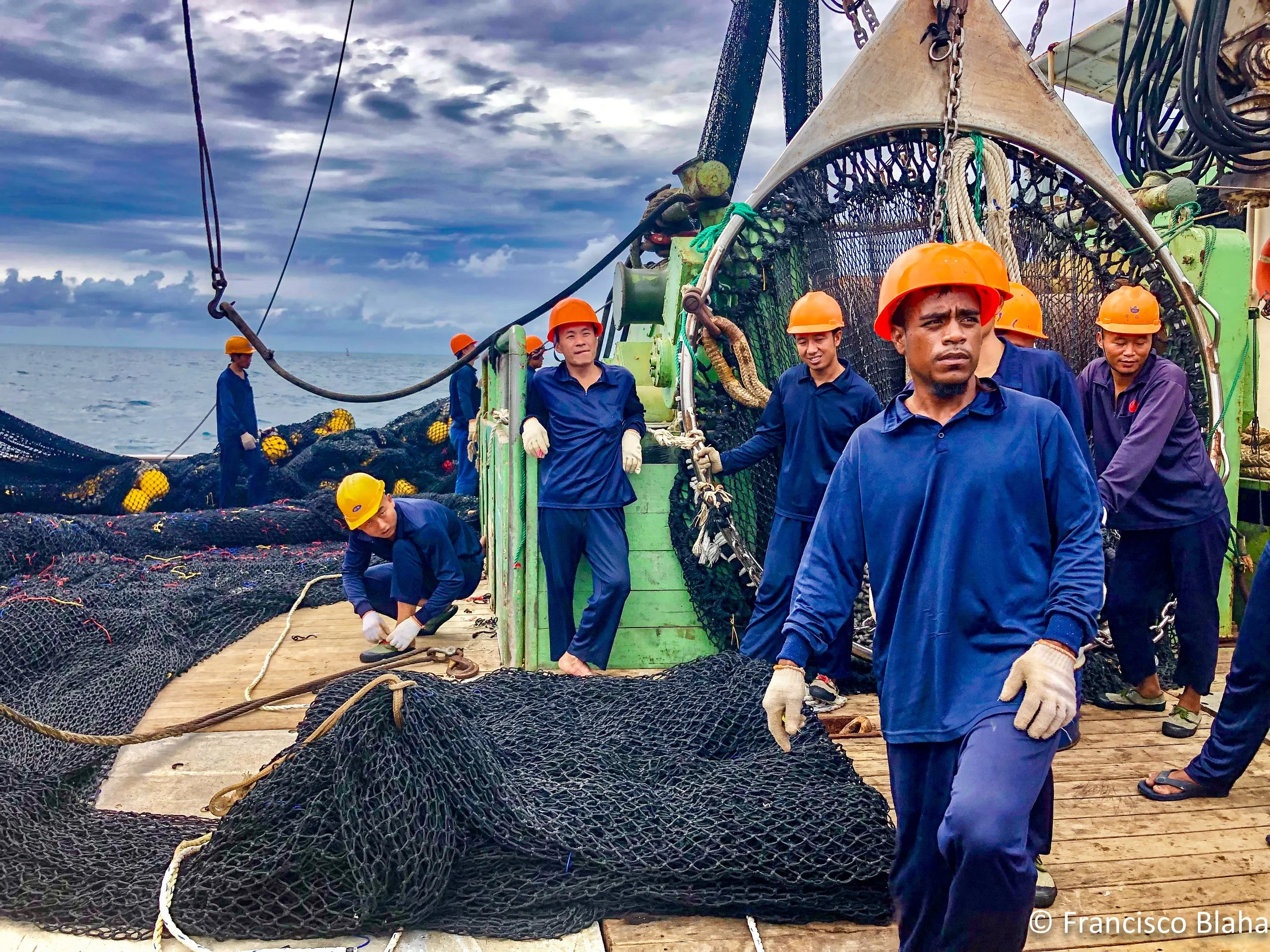
The publication offers a detailed analysis of the tuna industry and trade patterns in the WCPO. It explores key players in the international tuna market, emerging environmental, social, and governance (ESG) trends, trade policy developments, and their implications for Pacific Island Countries (PICs).
I just get some of the basics I like, and the ones I don't… Yet, as noted, it is a critical publication that one should read in its entirety to have any credibility when discussing tuna fisheries in the region.
Key Players in the Tuna Industry
The global tuna industry is led by a few major players, known as the "Big Four," which include Bolton Food & Tri Marine, Thai Union & Chicken of the Sea, FCF & Bumble Bee, and Dongwon Industries & StarKist. These companies are highly competitive, vertically integrated, and have diverse portfolios in seafood and other sectors. They depend on efficient access to raw materials and competitive prices to stay profitable.
Bolton Food & Tri Marine: Bolton Food is a family-owned company with a strong presence in Europe, Latin America, and the US. It owns several premium tuna brands, including Rio Mare, Saupiquet, and Wild Planet. Tri Marine, acquired by Bolton in 2019, is a global tuna trading company with operations in the Solomon Islands. Together, Bolton Food & Tri Marine have established a vertically integrated supply chain, ensuring sustainable fishing practices and delivering substantial economic benefits for the Solomon Islands.
Thai Union & Chicken of the Sea: Thai Union is the world’s largest ambient tuna processor, with factories in several countries, including Thailand, Indonesia, Vietnam, and the US. It owns brands such as Chicken of the Sea, John West, Petit Navire, and Mareblu. Thai Union is recognised for its sustainability efforts, including its SeaChange 2030 strategy, which emphasises environmental and social responsibility. Despite its global presence, Thai Union faces challenges stemming from declining consumer spending in the US and the effects of new tariffs.
FCF & Bumble Bee: FCF is a major marine products trading company with strong links to the Taiwanese fleet. It owns Bumble Bee, a leading North American seafood brand, and has made significant investments in processing facilities across the Pacific, including plants in Papua New Guinea (PNG) and Fiji. FCF has faced scrutiny over labour and environmental practices but has introduced programmes to address these concerns, including social responsibility initiatives and sustainability certifications.
Dongwon Industries & StarKist: Dongwon Industries is South Korea’s largest deep-sea fishery company, owning vessels and processing plants worldwide. It acquired StarKist in 2008, which is the leading shelf-stable tuna brand in the US. StarKist operates a large processing plant in American Samoa, benefiting from duty-free access to the US market. Dongwon has also invested in processing facilities in Ecuador and Senegal, expanding its global presence.
In addition to the Big Four, Chinese companies are increasingly important in the tuna industry. Companies such as Shanghai Kaichuang Marine International, Zhejiang Ocean Family, and Liancheng Overseas Fishery (Shenzhen) Group have expanded their presence in the WCPO, leveraging government support and joint ventures with Pacific Island nations. These companies are vertically integrated, with investments in fishing fleets, processing plants, and trading operations.
The Philippines also plays a vital role in the tuna industry, with companies like RD Corporation and Frabelle Group operating as vertically integrated businesses. RD Corporation has led onshore tuna processing in PNG, while Frabelle Group has set up fishing and processing operations in the WCPO and PNG.
Emerging companies like Dayang Seafood Ltd., a Taiwanese firm, are also establishing their presence in the industry. Dayang operates purse seine vessels in the WCPO and has invested in a processing facility on Kosrae.
Environmental, Social, and Governance (ESG) Trends
The publication emphasises the increasing significance of ESG trends in the tuna industry. Environmental sustainability and social accountability have become essential parts of the business, driven by pressure from major markets, buyers, and NGOs. Companies are progressively implementing dedicated ESG programmes, public sourcing commitments, and traceability systems.
These advances appear to be achieved only through private certifications; here, as may be expected, I disagree not with the authors but with the principles that the present systems imply.
They discuss the impact that the Marine Stewardship Council (MSC) has on the fishery... As someone who works with fisheries officers, I see things from the other side — the effect the fishery has on MSC.
A fishery can be certified becasue is sustainable; it is not sustainable because it is certified.
The framing of this discourse suggests that private certifications enhance environmental sustainability and social accountability, but they do not. It is primarily the Pacific Islands and their organisations, such as SPC, PNA, and FFA, that undertake the real work… while private certification. ro the rubberstamping
The whole existence of private certification based in rich Western countries is based on the colonial and racist principle that you cannot trust poor brown people, so organisations based in rich white countries have to come and certify this… otherwise it is not true. Furthermore, it is the producers who must pay for this, not the wealthy people who want the fish because they overfished their own.
For example, the bulk of the work for MSC Principles 1 and 2 (focusing on maintaining sustainable, productive fish stocks and minimising environmental impacts) is done by the Oceanic Fisheries Programme (OFP) of SPC, while Principle 3 focus on effective management system that respects local, national and international laws and standards and incorporates institutional and operational frameworks… wich is what all the pacific fisheries admintrations do, even if the evaluators only used the data provided by the clients.
The real work is mostly performed by the same people who cannot be trusted, and then certified by certification bodies that are paid by the industry; MSC receives a share of all sales that bear its logo.
FIPs are even worse, as they morph the obligations into a situation where companies and flag states are seen as having voluntary commitments, and they are allowed to improve over time… instead of clearly stating: this is an obligation, and if you cannot prove that you are complying with it in its entirety, you cannot fish here.
I have written to oblivion on this and the even worse menace of private certifications for labour standards…. Independently, we are the only region in the world that tied fishing access to minimum labour standards through the FFA HMTC for licensing and the forthcoming WCPFC Labour Standards CMM.
Earlier this year, I attended a presentation by Marcelo Hidalgo on the numerous private certifications and initiatives to which the PNG Fishing Industry Association adheres (likely at high cost to its members). I'm unsure whether any fishery in Europe could fulfil all those requirements… And why. Is it because of PNG? More importantly, I have not found any study suggesting that they earn more than other countries because they adhere to those standards.
For me, the whole private certification world is a racketeering scheme based on deep-seated colonialism. I see my friends and colleagues in the Pacific working REALLY hard… doing a great job… yet the whole setup is that their efforts are not to be believed unless “certified” by an organisation from a rich colonial country.
On more positive topics
It’s encouraging to see that climate change is on the agenda: companies are developing decarbonisation strategies to mitigate its impacts. Thai Union, Bolton Group, and Dongwon Industries have set ambitious targets to reduce greenhouse gas emissions and achieve net-zero emissions by 2050.
It would be useful to review their strategies regarding MARPOL, as we investigated their plastic dumping in 2021, and the figures are staggering.
With respect to traceability and transparency, private and third-party traceability systems are increasingly prevalent in tuna value chains. Traceability is part of the remit of both fisheries and seafood authorities in every Pacific Island country. Yet again has to be approved by someone from the other side of the world for it to be true and demonstrable
Trade Policy Developments
The publication also examines the influence of trade policies on the tuna industry, emphasising tariff arrangements, rules of origin, and changing trade policies.
Tariff Structures: The EU and US are the largest markets for canned tuna, with tariff peaks of 24% and 35% respectively, to protect local producers. Preferential trade arrangements, such as the EU’s Economic Partnership Agreements (EPAs) and the US Compact of Free Association Act, provide duty-free access to specific markets, influencing the distribution of tuna production.
Rules of Origin: Rules of origin (RoO) determine whether products qualify for preferential access to trade. The EU’s "global sourcing" RoO, negotiated in the 2007 Interim Economic Partnership Agreement (IEPA), allows Pacific Island countries to source fish from any vessel, provided it is processed locally. This flexibility has benefited PNG, Solomon Islands, and Fiji, enabling them to access the EU market for canned tuna and loins.
Evolving Trade Policies: Labour and environmental standards are increasingly integrated into trade agreements. The EU’s Corporate Sustainability Due Diligence Directive (CSDDD) is a forthcoming trade requirement intended to improve sustainability and labour conditions in global supply chains. However, these measures also create compliance burdens for Pacific Island countries.
Finally, it irks me a bit that market access and market success are conflated; market access is the minimum requirement to enter a particular market with your products. For example, for the EU, you must first be an authorised country from a sanitary perspective; then, every consignment entering the EU requires a health certificate and a catch certificate issued by the competent authorities of the country of origin… no private certifications from MSC to ISO are needed… only those of the state…. For the US, being in SIMP is what is required, and so on (written about this here)
Now, MSC, BRC, FoS, CREW... and you could include 20 more... are all private certifications that a buyer in Europe might request. Since you want to sell them, you pay for these certifications, which can help you achieve market success. However, they are NOT part of the official market access requirements.
Around 80-90% or more of the tuna consumed in Europe and the USA is caught outside their waters and supplied via imports... and from that I will say that 60-70% is from the WCPO. What do you think will happen if all of the producers stop paying for private certifications… Will people stop eating tuna? Will canneries stop canning? Will vessels stop fishing?
Of course not… everything will continue as it is… and all private certifications will disappear…
Overall, the publication emphasises the unique position of PICs in the global tuna value chain. As resource owners, PICs possess significant leverage but encounter challenges in capturing more value from the industry.