Here is a consulting opportunity for you!
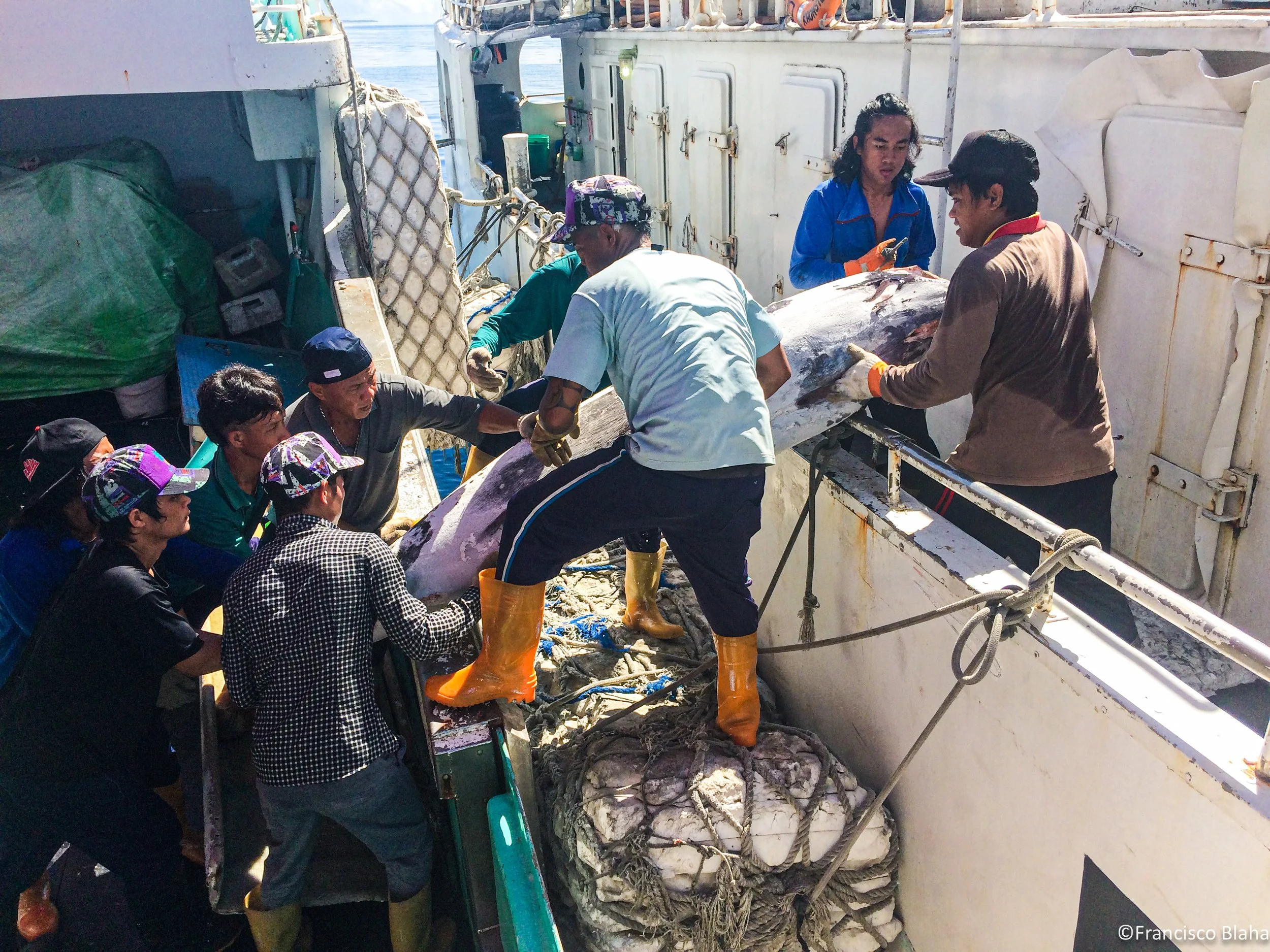
My friend Bubba, for whom I have tons of respect, is involved with Sharks Pacific, a well-established NGO that is seeking to engage a qualified fisheries economist and research team to conduct a comprehensive analysis of decision-making dynamics within the WCPFC.
The detailed request for proposals is here, but in summary, this is who you need to be and the team you should assemble. Of course, you can also have me support you as a Pacific Islands specialist with regional expertise and networks.
The primary objectives of the project include the following:
Quantifying Historical Economic Losses: Assess the economic losses PICTs have experienced from high-seas transhipment practices over the past 20 years (2005-2025).
Calculating Current Opportunity Costs: Compare the economic benefits under current transhipment regimes with counterfactual scenarios requiring in-port delivery.
Projecting Future Impacts: Analyse potential economic impacts under various policy scenarios through 2040, including considerations for climate change.
Disaggregating Regional Impacts: Evaluate the economic effects at regional, sub-regional, and individual PICT levels.
Identifying Policy Pathways: Develop actionable recommendations for PICTs to capture greater economic value through reformed transhipment governance.
The research will address critical questions across revenue dimensions, economic multipliers, infrastructure development, distributional impacts, comparative policy analysis, and climate change interactions. The findings will inform PICT governments, regional organisations, and international fisheries forums, supporting policy reforms to maximise economic benefits and enhance sovereignty over marine resources.
Technical Qualifications of the Desired Team:
The ideal team should comprise highly qualified professionals with expertise in fisheries economics, economic modelling, and regional knowledge of the Pacific Islands.
Key qualifications include the following:
Lead Researcher/Team Lead Requirements:
A PhD in economics, resource economics, agricultural economics, or a closely related field.
At least 10 years of professional experience in fisheries or natural resource economics.
A proven track record of published research on fisheries economics, particularly in the Pacific context.
Advanced quantitative modelling skills, including econometric analysis, input-output modelling, and spatial economic analysis.
Proficiency in statistical software such as Stata, R, or Python.
Strong communication skills to present complex economic analyses to non-technical audiences and policymakers.
Team Composition (if applicable):
A senior fisheries economist to lead the project.
A Pacific Islands specialist with regional knowledge and networks.
A data analyst or quantitative modeller for handling large datasets and conducting economic modelling.
A research associate to manage stakeholder engagement.
Optionally, a climate economist or fisheries scientist can integrate climate scenario development.
Institutional Requirements:
Affiliation with a recognised research organisation, university, or consulting firm.
Proof of liability insurance and capacity to manage the proposed budget and timeline.
Experience working with Pacific Island governments or regional organisations is highly desirable.
The team must demonstrate the ability to employ rigorous economic impact assessment methods, conduct comparative and spatial economic analyses, and engage effectively with stakeholders to ensure the research is policy-relevant and actionable.