A New Roadmap for the Pacific's Coastal Fisheries by Francisco Blaha

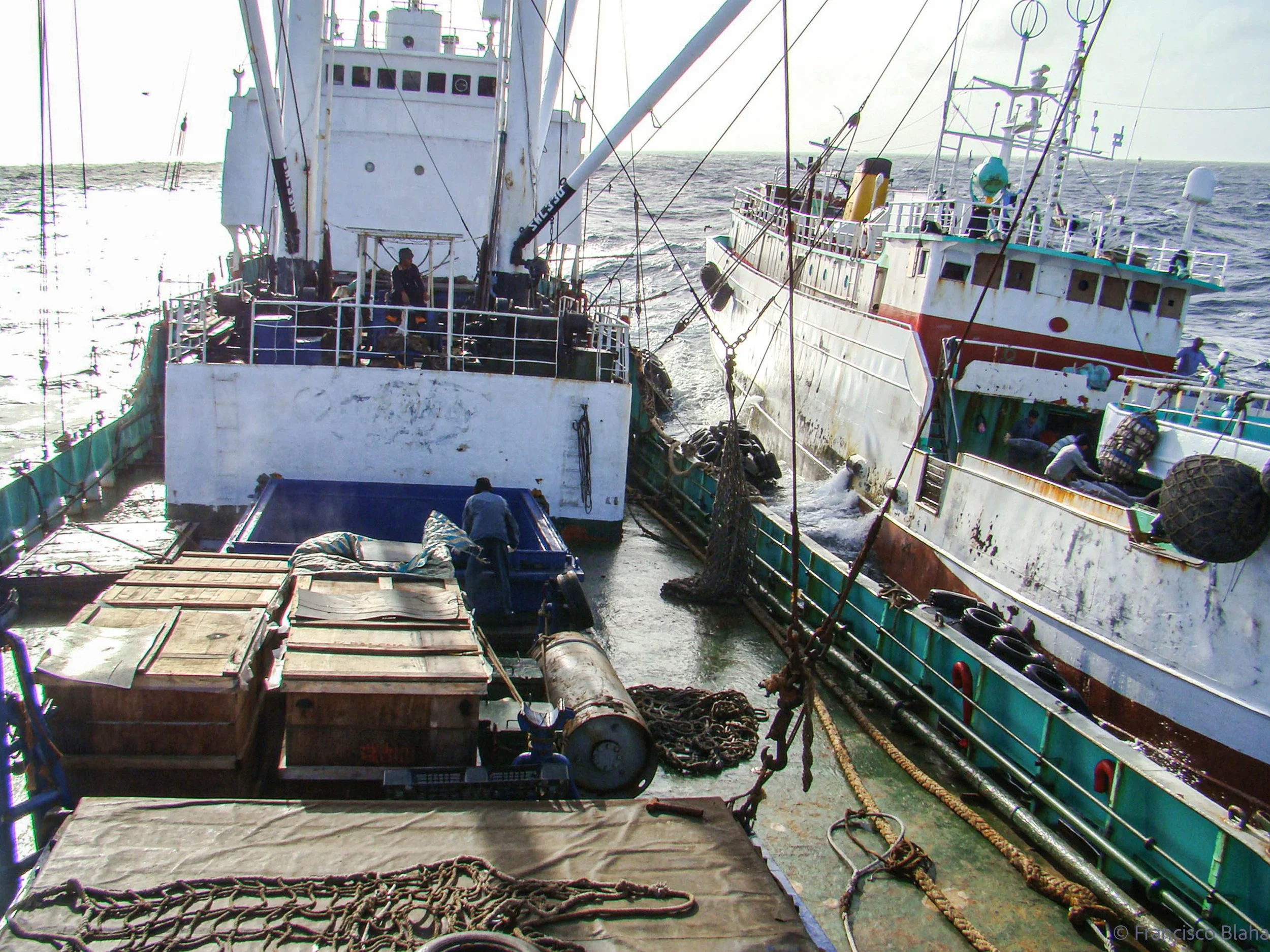
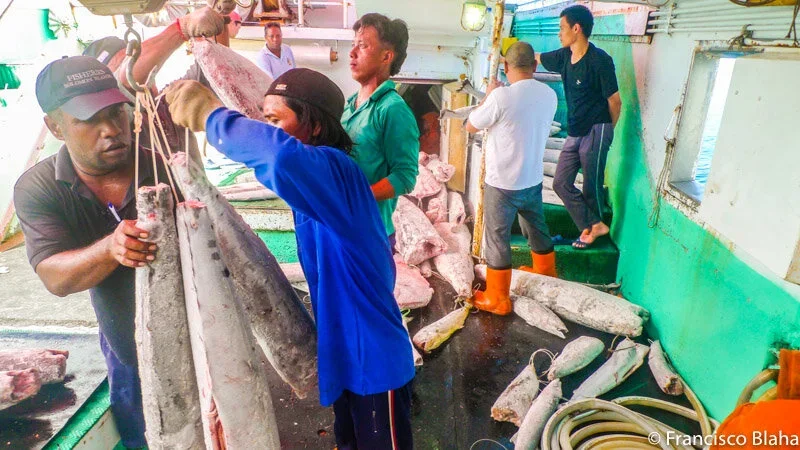
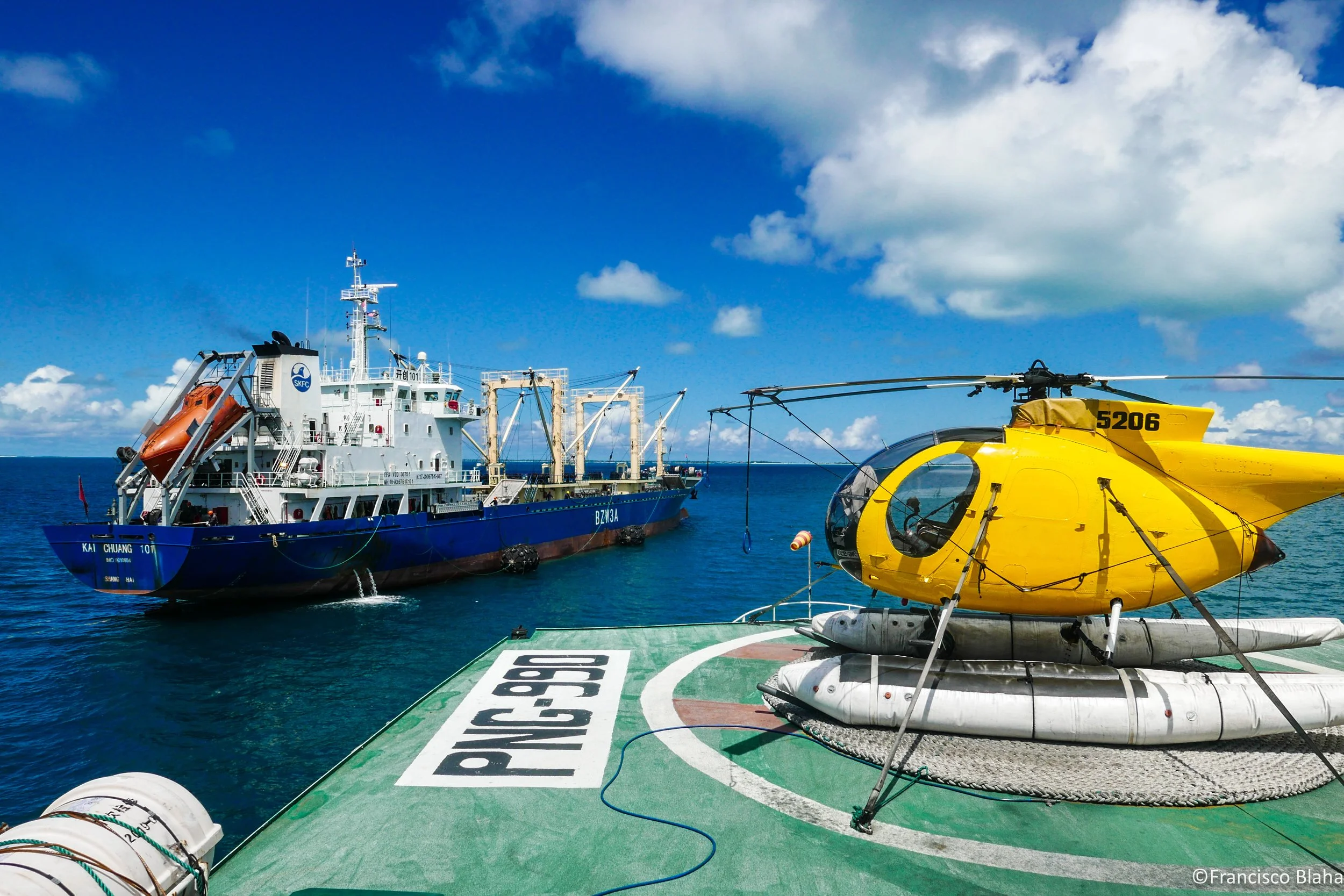
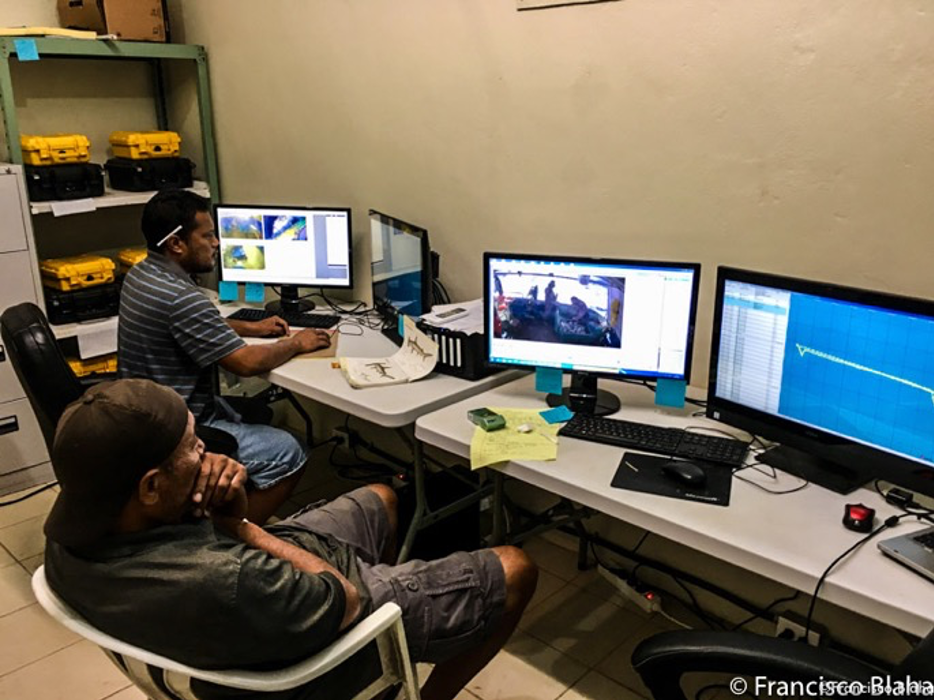
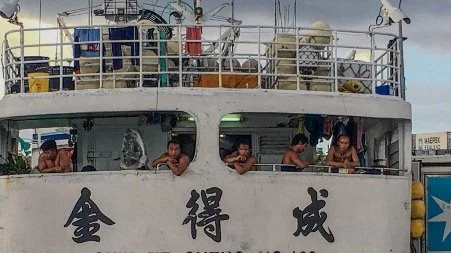
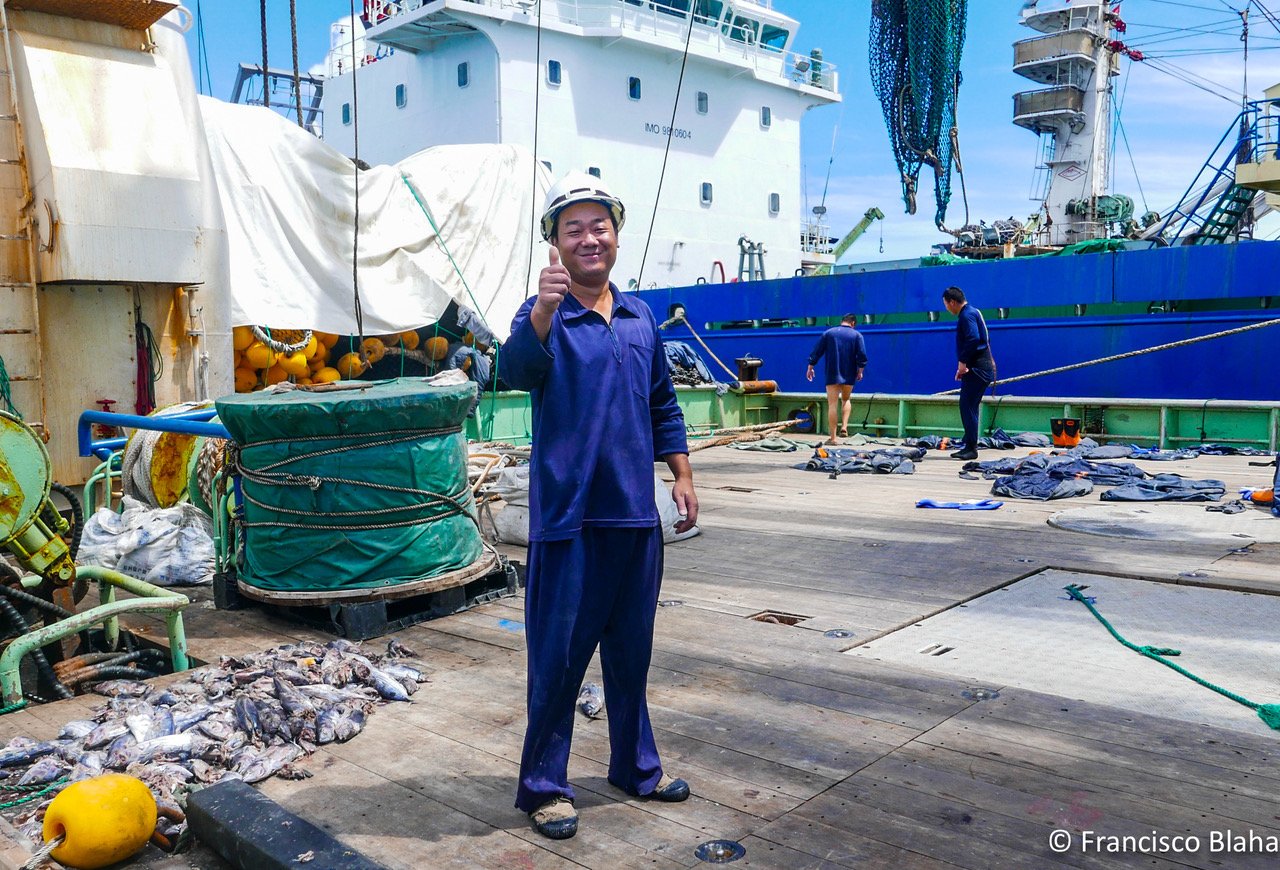
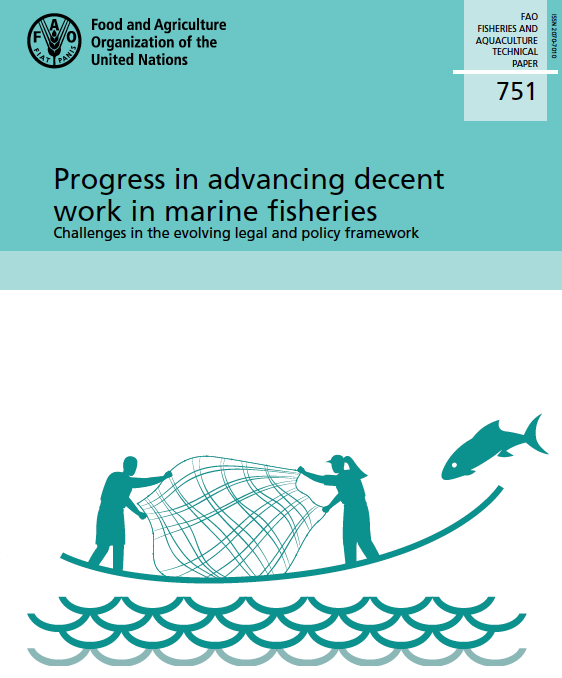
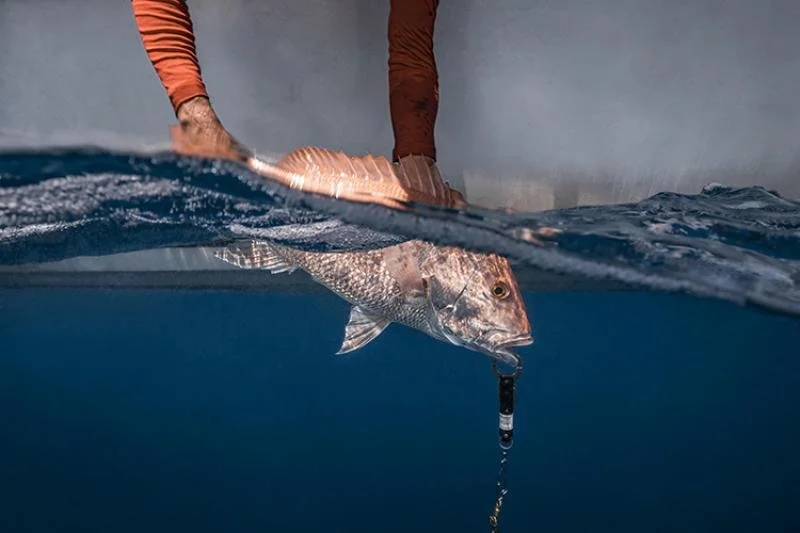
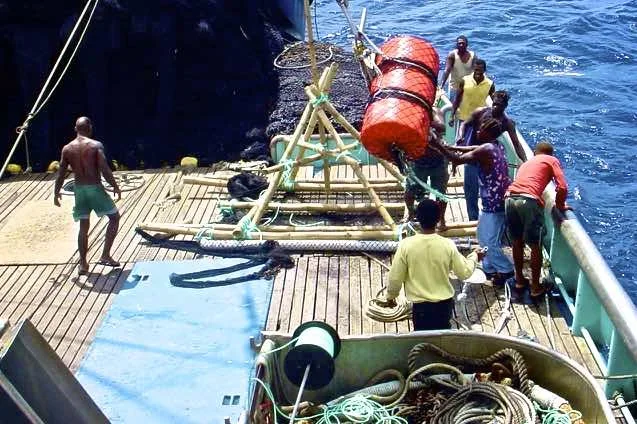
I was moved beyond words by having one of my photographs on the cover of what may be this region's most important publication on the future of coastal communities — and another in its key opening chapter. This region has been home for more than half my life. I would not be who I am without my Pacific colleagues and friends.

While I don’t really work on coastal fisheries, I wanted to write about this document beyond the fact that my camera often happened to be with coastal fishers.

The Pacific Climate Change Strategy for Coastal Fisheries and Aquaculture (2026–2036), released by the Pacific Community (SPC) out of Noumea, is the product of two years of Member-led negotiation — from a mandate at the Heads of Fisheries meeting in 2024, through ministerial endorsement in Niue in 2025, to final clearance in Noumea this April. It is dense, technical, and, in places, quietly devastating. It is also, I think, the kind of document this region has needed for a long time.

Why coastal fisheries, and why now

It's easy for coastal fisheries to get lost in conversations about the Pacific and climate change, overshadowed by the offshore tuna industry's economic weight or by the more visceral imagery of sinking atolls. But coastal fisheries are the fabric of daily life here. They account for an estimated 57% of fisheries-related GDP across the region, and coastal marine resources supply roughly half of all animal protein Pacific Islanders eat. In Palau, for example, aquatic food consumption reaches up to 125 kg per person per year, among the highest rates anywhere on Earth. These fisheries aren't just an economic sector. They're food security, they're women's livelihoods, they're the social safety net that kept communities fed when COVID-19 cut off imported supplies, and they're inseparable from custom, ceremony, and identity.

And they're under serious threat. Coral bleaching, ocean acidification, sea-level rise, and shifting species distributions are already degrading the reefs, mangroves, and seagrass meadows these fisheries depend on. The modelling in the Strategy is stark: coastal fisheries catches across the Pacific are projected to fall by 2050, with losses reaching as high as 65% of annual catch in the hardest-hit locations under high-emissions scenarios, and some countries facing protein deficits of up to 29 kg per person per year.

Yet despite all this exposure, the sector receives less than 1% of global climate adaptation finance, and the Pacific as a whole has accessed only 0.22% of global climate funds. Coastal fisheries barely feature in most national climate plans. This Strategy exists to close that gap, between how much this sector matters and how little it has been resourced to adapt.

Six objectives, twenty-two actions

Rather than treating climate change as a single problem, the Strategy organises its response around six connected strategic objectives: strengthening adaptation and resilience; advancing mitigation and blue carbon protection; recognising and responding to loss and damage; ensuring fishing communities are informed and heard; mobilising climate finance; and embedding coastal fisheries in Pacific and global climate policy.

Underlying these are 22 specific actions, ranging from scaling up community-based fisheries management (still, the document argues, the single most effective governance tool the region has) to piloting climate risk insurance for small-scale fishers, to helping countries build the technical capacity to write competitive proposals for funds such as the Green Climate Fund or the newly established Fund for Responding to Loss and Damage.

What struck me most, reading it, was the loss and damage section. The Strategy is blunt about this: for Pacific fishing communities, loss and damage are not a future risk to be modelled. As it puts it, it “is a present reality.” That section pushes for something more than economic accounting; it calls for national capacity to document slow, cumulative losses that don't show up neatly in a spreadsheet: the disappearance of species a family has fished for generations, the erosion of access to traditional grounds, the loss of species central to ceremony. Documentation methods, the Strategy insists, should be decided nationally and can be qualitative, narrative, or culturally grounded… not forced into a template that was never built for this region.

I also appreciated that this isn't a document that treats gender equity as an afterthought. Women make up roughly half of everyone engaged in subsistence fishing in the Pacific and account for 56% of small-scale catch by volume, yet they're consistently the least visible in the data and the governance structures that decide who gets heard and who gets resourced. The Strategy builds gender, disability, and social inclusion into a mandatory accountability standard running through every single objective and action, not a side box to tick.

A regional framework, not a regional mandate

One thing the Strategy is careful about is not overreaching. It explicitly describes itself as “a regional framework, not a regional prescription”— each Pacific Island country and territory implements it through its own national fisheries plans, on its own political timeline, adapted to its own capacity and vulnerability. An accompanying tiering framework sorts the 22 actions by sequence: what has to happen first (strengthening data systems, scaling community-based management, embedding fisheries in disaster planning), what accelerates once those foundations exist, and what requires longer, sustained investment, like innovative finance mechanisms and insurance products.

Why this matters to me

I've spent more than half my life in this region, mostly working on compliance mentoring and research on boats and docks, and sometimes photographing the people for whom fisheries is not a hobby, but their livelihood, mostly fellow commercial fishermen, but sometimes, a couple helping each other after a fishing day in Kiritimati, or the young men in Noro coming to check me out while superfinishing,.

Seeing those pictures in the cover and opening chapter of the Strategy is something I still haven't fully processed. This document won't fix everything (no strategy could), but it names, clearly and with real evidence behind it, what people here have known for a long time: that these waters, and the people who depend on them, deserve far more attention and far more finance than they've been given. I hope it gets both.

The full Strategy is available through the Pacific Community (SPC). Many thanks to Marie Lecomte for choosing the pictures and to SPC for the acknowledgement.

Help me understand this “new” longline manoeuvring pattern by Francisco Blaha

I’m trying to better understand this emerging fishing pattern — and I'd love to hear from people who've actually seen it in action.

Something interesting is showing up in vessel-tracking data, and I think the people best placed to explain it are those out on the water or those who manage them.

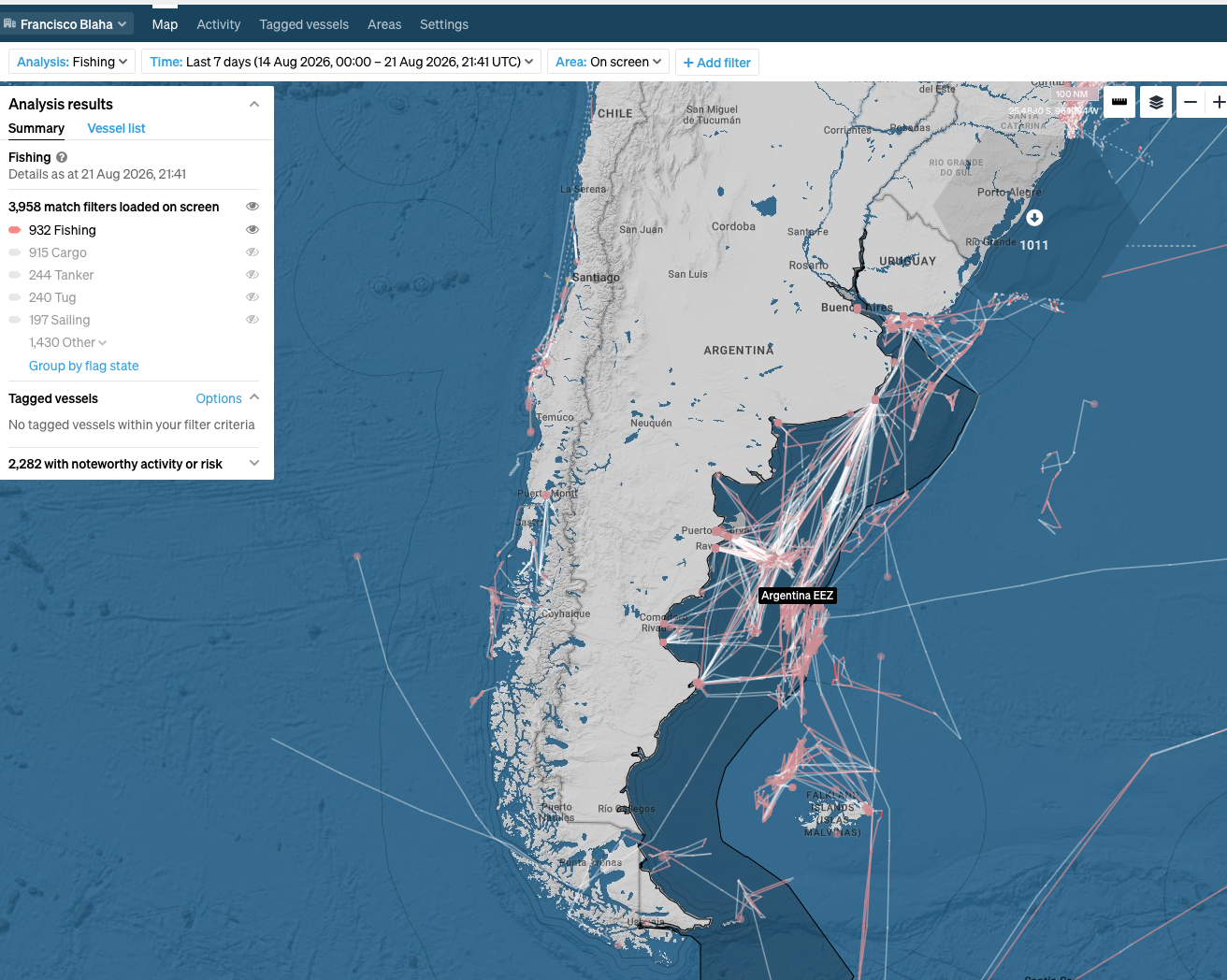
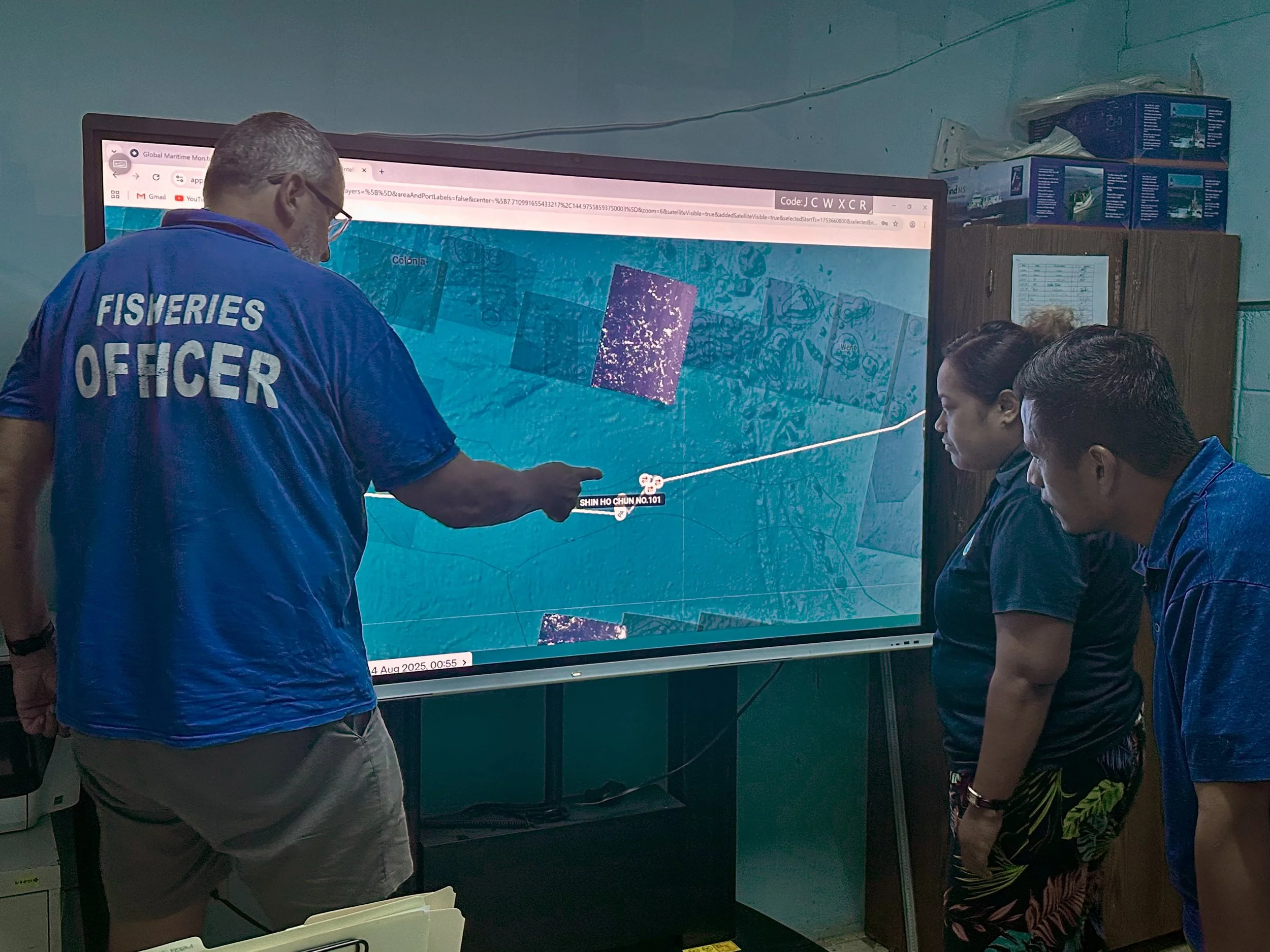
More and more, I’ve been observing in the WCPO longline fleet a change in the traditional manoeuvring pattern from parallel straight lines to an almost rectangular overlapping pattern  

And I have been asked to have a look at this and the potential it may have on the way we monitor LL fisheries and its impacts on CPUE

One of the explanations I’ve been asked to take a closer look at is what's being called "double setting" — a more complex setting pattern that some longline vessels appear to be using within a single fishing operation.

From what we've been able to piece together and out of one the theories, the sequence seems to go roughly like this:

  1. Set the first line

  2. Begin hauling it

  3. Cut it in half mid-haul

  4. Set the second line

  5. Haul the second line in full

  6. Go back and haul the remainder of the first set

A similar thing is that they set out the line with X baskets, then haul only half of them, 1/2 X , cut the mainline and join/connect another new set and set maybe ½ X baskets again, basically expanding the number of hooks by 50%

The result, when you look at it, is a pattern of overlapping rectangles. It's visually distinctive, which is partly why it's starting to catch our attention in vessel-tracking data.

So why does this matter?

These kinds of manoeuvres are becoming increasingly visible in monitoring systems, and they raise some genuinely interesting questions about how fishing effort and catch data get captured.

As you see below, other h than the RMI-based fleet (upper left corner) that fishes in the standard parallel and coordinated among vessels of the same company style, the rectangle way is taking over on other EEZ and HS.

When a vessel conducts a complex, interleaved set-and-haul sequence like this, how well does a traditional logsheet capture this? To answer that, I’d like to understand the reasons and logistics of the manoeuvring.

Getting this right matters, not to create more paperwork for anyone, but because regional monitoring standards need to keep pace with how fishing is actually done out there. If the data doesn't reflect modern operations, it doesn't serve anyone well.

Here's where I love your help if you know more about this

Has been a long time since I was on the bridge of an operation longliner, so I may be seeing this with old eyes; hence, I’m at the early stages of trying to understand this properly — which means what I need most right now isn't large volumes of data. I’m after examples and operational insight.

Specifically, I’m curious about:

  • How these operations actually play out in practice on the water

  • How skippers and crew sequence the deployments and hauling activities

  • How vessels typically record what they've done in the official logsheets, with, or under EM

Have you seen this? Have you done this? Does the description above match something you recognise, or does it miss the mark in ways that would be useful to flag?

I’m genuinely keen to hear from skippers, crew, observers, fishing companies, anyone with a window into how these operations work on the water. Anything shared will be treated confidentially and used solely to improve my understanding of current fishing practices.

So yeah… if you've got ideas, stories, or just a hunch about how this works — I’m more than happy to hear them.

Reach out directly at franciscoblaha(at)mac.com. Thank you.

Disclaimer: No confidential information is being disclosed; all these images are from Starboard.nz, which is the platform I work on most, but they will be visible to anyone on other platforms, such as GFW or Skylight.

When the Physics Doesn't Quite Fit the Biology by Francisco Blaha

I like papers that make me think... And I like thinking. It's not about fish, or food, or the sea… not directly anyway.

But it touches on something that has always kind of bothered me: the moment when a theory gets so much respect that people stop questioning it.

This paper by Marshall and colleagues is a polite but firm reminder that physics borrowed into biology is only as good as the biology it wraps around, and that a model that fits the data is not the same as one that explains it.

“Schematic representation of water flows across the gills of a fish”. From a different paper I enjoyed: The gill-oxygen limitation theory (GOLT) and its critics. https://www.science.org/doi/10.1126/sciadv.abc6050

There's a fish growth example in here that will resonate with anyone who has thought about how fish actually grow. And there's a Borges reference, which is always a good sign for me as a fan of its writing.

When someone tells you that larger cells are constrained by surface-area-to-volume ratios, or that fish stop growing because their gills can't keep up with their oxygen demands, it feels solid. Grounded. The laws of physics, after all, don't negotiate. So when biology leans on them, the resulting theories seem to inherit that same authority.

A new review paper, Second thoughts about first principles in biology, in Trends in Ecology & Evolution by Marshall, White, Savage, and Levine (2026) pushes back on this confidence, not to demolish first-principles approaches in biology, but to make them better. The authors argue that many of biology's most influential theories, despite claiming physics as their foundation, are built on incomplete physics, hidden biological assumptions, or both. And the field's habit of validating theories by how well their predictions fit the data, rather than by scrutinising their assumptions, has left these problems largely unexamined. 

It's a paper that rewards careful reading, not least because the authors are candid enough to use some of their own past mistakes as examples.

What Are First-Principles Approaches?

A first-principles approach in biology means building theory upward from established physical or chemical laws, rather than fitting curves to data and working backwards. The appeal is obvious: if your theory is grounded in physics, it should apply broadly, depend less on the quirks of any one species, and require fewer empirically estimated parameters to get off the ground. Examples that have worked well include Stokes' law predicting how pollen disperses in wind, and how marine snow sinks through the water column, elegant applications of well-understood fluid dynamics.

Many of biology's big theoretical frameworks use this approach, including the Metabolic Theory of Ecology (MTE), Dynamic Energy Budget (DEB) theory, and the Gill Oxygen Limitation Theory (GOLT) for fish growth. All three purport to derive their predictions from first principles of physics. The authors examine each and find that, in different ways, each falls short of the standard it claims.

The Problem of Incomplete Physics

The first issue the paper identifies is what the authors call "unaccounted-for physics": situations where the physical principles invoked are real and valid but incomplete for the biological context in which they're applied.

They illustrate this with cell size, a topic where the surface-area-to-volume ratio is invoked almost reflexively. The argument goes: larger cells have less surface area relative to their volume, so by Fick's law, they face greater constraints on resource uptake. Smaller cells should therefore be favoured when resources are scarce, and under warming, which increases metabolic demand, smaller cells should be even more strongly selected. It's intuitive. It has the feel of inevitability.

But the physics is incomplete. Whether surface area or diffusion rate limits resource uptake depends critically on whether the cell is moving. A swimming or sinking cell creates thinner boundary layers around itself, dramatically reducing diffusion barriers. A cell of 1000 micrometres in diameter acquires resources 300 times faster when swimming than when still. When you include this covariance between cell size and swimming speed (which is not captured by simple surface-area arguments), you get a very different picture of how cell size should respond to warming. Some models that include this physics reach the opposite conclusion to those that don't. 

The fish growth case is developed at length in the paper's Box 1, and it's worth dwelling on. The Gill Oxygen Limitation Theory (GOLT), one of the more prominent modern theories of fish body size, proposes that the surface area of gills scales sublinearly with body size. As a fish grows, the argument runs, its metabolic oxygen demand eventually outpaces what its gills can deliver, and growth halts. Under warming, when oxygen demand rises further, this constraint bites at a smaller size, so fish should shrink in a warming ocean. It's a theory with significant implications for fisheries science and climate change biology.

GOLT grounds itself in Fick's second law of diffusion, making it sound like settled physics. But the authors show that, as typically formulated, GOLT treats gill surface area as the only body-size-dependent variable in its gas-exchange equation. In reality, two other terms in that equation also change with body size: gill tissue thickness decreases as fish get larger, and the boundary layer of water around the gills (the main barrier to oxygen transfer in water-breathing fish) thins as larger fish swim faster and ventilate more vigorously.

When these terms are allowed to vary with body size, as a more complete application of the physics requires, the conclusion reverses: larger fish may be less oxygen-constrained than smaller ones, not more. Similarly, GOLT excludes the effect of temperature on Krogh's diffusion coefficient, which increases with warmth, meaning the theory overestimates diffusive barriers in warmer water and underestimates how well fish can supply themselves with oxygen as temperatures rise.

This isn't a minor technical quibble. These omissions underpin predictions that feed directly into climate-change models for marine ecosystems and fisheries management.

Hidden Biological Assumptions

The second issue is subtler and, in some ways, more troubling. First-principles approaches can smuggle in biological assumptions so naturally that they go unnoticed, even by their authors.

The paper's authors confess to having done exactly this in their own work on carbon uptake in photosynthesising cells. They predicted, based on Fick's law and surface-area scaling, that larger cells would struggle to meet their inorganic carbon demands. When they tested this experimentally, the prediction failed: larger cells simply upregulated the density of carbon transporters on their surface and evaded the constraint entirely. The physics was real, but the assumption that transporter density was size-independent was not, and that assumption had never been stated explicitly.

Similar hidden assumptions lurk in larger theories. MTE famously predicts that metabolic rate scales with body mass to the 0.75 power, derived from the geometry of fractal distribution networks. The argument for why these networks should be optimally efficient invokes evolutionary logic: efficient networks leave more energy for reproduction. But this implicitly assumes that total energy intake is independent of network efficiency, an assumption with major consequences that received far less scrutiny than the scaling exponent itself, which became the focus of intense and largely inconclusive debate.

The Prediction-Explanation Fallacy

Here, the paper makes its sharpest point. Across all the examples discussed, the dominant response to each theory's critics has been to point to predictive success: the theory predicts that organisms shrink with warming, and they do; it predicts metabolic scaling of 0.75, and that's roughly what's observed; it predicts that larger organisms grow more slowly, and they do. Surely this is evidence that the theory is right?

The authors call this the prediction-explanation fallacy, and illustrate it with the story of Clever Hans — a horse famous in the early twentieth century for appearing to solve arithmetic problems by tapping his hoof. Hans consistently got the right answers. The problem was that he wasn't doing arithmetic at all; he was responding to subtle, unconscious postural cues from his interlocutors. He predicted the right answer for entirely the wrong reasons.

A theory that fits the data is not thereby proven to explain the data. Multiple theories with very different assumptions can often yield the same predictions, as the paper demonstrates across growth, metabolic scaling, and cell size. Prediction is a necessary condition for a good theory, but it is not sufficient.

The Map That Becomes Useless

None of this means, as the authors are careful to say, that first-principles approaches should be abandoned. It means they need to be built and evaluated more rigorously.

The paper borrows Jorge Luis Borges's image of the perfect map, a map so detailed that it replicates the territory exactly and is therefore completely useless. Theories should not seek to capture every nuance of the phenomenon they describe; otherwise, they would be as useless as Borges's perfect map.

Simplification is not just acceptable; it's necessary. But simplification requires choices about what to include and what to leave out, and those choices carry assumptions… assumptions that should be stated, tested where possible, and scrutinised with the same rigour as the physics they accompany.

The authors propose a three-part test for first-principles theories: completeness (are all the factors that covary with the trait of interest actually included?), clarity (are both included and excluded assumptions explicitly stated?), and congruence (is the physics appropriate for the scale at which the biology is operating?). They also argue for a shift in how debates about these theories are conducted, away from battles over predictive fit and towards scrutiny of the assumptions that lie beneath.

For those who have spent time considering how fish grow, how they cope with warming oceans, or how marine ecosystems respond to change, this paper offers a useful corrective. The physics matters. But so does the biology that surrounds it. 

Marshall, D. et al. (2026). Second thoughts about first principles in biology. Trends in Ecology & Evolution. https://doi.org/10.1016/j.tree.2026.04.010


Emerging Thawing Technologies by Francisco Blaha

Why How You Thaw Your Fish Matters More Than You Think


While I was fishing commercially and going to university, I was always the guy who wrote all the documentation on board... and there was a lot of writing to do!

Confronting the paper work on the Ocean Dawn, aNZ factory twawler that produced filled hoki at the end of the 90s … NZ fisheries and seafood paper work is really heavy, yet that was my job!

You have the fisheries side (logsheets, reports, etc.), the maritime side (safety, logbooks, radio, etc), the labour side (working hours, crew safety), and the seafood safety side (cleaning records, maintenance, etc.). While fishing in the WCPO in the 90s, most of it was the FFA log sheets and port entries.

Only after the WCPFC was established did we get the standardised ones. And once in NZ, the whole HACCP world and the deepening of market access requirements kicked in, and not many people were doing that... so I rode the wave and did a lot of work on the seafood safety side of fishing... “Once fish is on deck, it becomes food”, and a whole other regulatory universe becomes necessary, one that, until the last two decades, wasn’t as critical as now.

Partly because of that, I did my 2nd master's in Seafood Science, as I knew fish but wanted credibility in ‘fish as food’, particularly since it was associated with the official certification world, which prepared me for what was to come with the various catch certifications and CDS.

I did a lot of work around that. In fact, the EU itself contracted me for over 10 years to train seafood inspectors on vessels and at landing sites worldwide, including in Europe. I wrote guides on the EU certifications and even a chapter in a book on refrigeration on board, which is still quoted today.

I found the physics and chemistry of freezing very interesting, as well as the best relationship between fishing methods and types. For example, it would be ridiculous to use blast or plate freezing on a purse seiner, just as it would be ridiculous to use brine freezing on a longliner or a hoki trawler. Yet the corollary of freezing, namely thawing, didn't get much attention those days… mostly you just took it out of the freezer and left it in a cold, humid place, or directly in water before processing…

Things have changed, and this particular paper brings updates to a lot of the newer methods… not all related to fish… for now… yet the nerd in me likes to learn new tricks for old methods.

So yeah, here is a summary of the paper, but as always, I recommend you read the original.

Freezing is the backbone of the global meat and seafood trade. Vast quantities of fish, beef, pork, and poultry are frozen and shipped around the world every day, typically stored at −18°C or below. The problem isn't the freezing itself — it's what comes next.

Traditional thawing methods, such as leaving the product at room temperature or running it under water, are slow, wasteful, and damaging. As ice crystals melt, they disrupt muscle fibres, cause water to leak out (known as drip loss), and create ideal conditions for bacterial growth. That drip loss isn't just water — it carries soluble proteins, vitamins, and other nutrients. For the food industry, this translates directly into lost weight, quality, and money. For anyone operating within a HACCP framework, it also represents a Critical Control Point that demands close attention.

The damage goes deeper than the surface. Thawing triggers a cascade of chemical changes: proteins unfold and denature, fats oxidise and develop off-flavours, and the muscle’s fine microstructure — the tight bundles of fibres that give it texture — breaks down. The longer the thaw takes, the worse these effects become.

What Actually Goes Wrong Inside the Muscle

The review identifies four main areas of quality deterioration during thawing, all of which will be familiar to anyone who has worked seriously with frozen seafood.

Water-holding capacity is arguably the most commercially important. During freezing, water forms ice crystals outside muscle cells. When it thaws, an osmotic imbalance draws water out rather than back in. The result is the spongy, pale, wet surface you sometimes see on thawed product. Once this water is lost, so are the nutrients dissolved in it. Fish and crustaceans are particularly vulnerable here because their connective tissue is structurally weaker than mammalian muscle, making their cell walls more susceptible to irreversible ice-crystal damage.

Protein changes are subtler but equally significant. Roughly 20% of muscle is protein, and these proteins — particularly the myofibrillar proteins that control texture — are highly sensitive to freeze-thaw cycles. During thawing, protein structures partially unfold, hydrogen bonds weaken, and reactive oxygen species attack them. This is why thawed product can turn mushy or lose elasticity. Fish myosin is notably less stable than its mammalian counterpart, so temperature control during seafood thawing needs to be stricter.

Lipid oxidation is the primary cause of off-flavours and reduced shelf life. When cellular compartments rupture during thawing, fats come into contact with oxygen and iron-containing compounds in the drip fluid, accelerating rancidity. Seafood faces heightened risk here because of its high content of polyunsaturated fatty acids (PUFAs), which are far more chemically reactive than the saturated fats that dominate red meat. Anyone who has thawed tuna or salmon poorly knows exactly what this smells like.

Finally, microstructural damage — visible under electron microscopy — reveals physical tearing of muscle fibres, widened gaps between cells, and disrupted connective tissue. These gaps become channels through which additional water and nutrients escape, compounding the drip loss problem.

Seven Technologies Changing the Game

The review evaluates seven emerging thawing technologies, each based on different physical principles.

High-Voltage Electric Field (HVEF) thawing uses a strong DC electric field to reorient water molecules in the ice, accelerating melting without generating significant heat. It shows real promise for inhibiting microbial growth, but requires careful calibration. Exceed the right voltage threshold, and you enter corona discharge territory, generating ozone that accelerates fat oxidation — the opposite of what you want, especially with PUFA-rich seafood.

Ohmic thawing passes an alternating electrical current directly through the product, generating heat uniformly from within via electrical resistance. One study found it thawed frozen tuna more than five times faster than water immersion, while preserving nutrient content. The main concern is the potential migration of metallic ions from the electrodes into the food if parameters aren't tightly controlled.

Microwave thawing generates internal heat by exciting water molecules with high-frequency electromagnetic waves — a principle familiar to anyone who has used a domestic microwave. The limitation is uneven heating. The classic "still frozen in the middle, cooking on the outside" problem is a genuine quality and safety concern in industrial settings, causing localised protein denaturation and textural damage.

Radiofrequency (RF) thawing operates on the same electromagnetic principle but at much lower frequencies — around 27 MHz, compared with 2,450 MHz for microwaves. The longer wavelengths penetrate more deeply and more evenly, making RF particularly well-suited to large commercial frozen blocks. Several studies confirm that it produces a more uniform temperature distribution than microwaves, with significantly less surface overheating.

Ultrasound-assisted thawing uses high-intensity sound waves to induce cavitation — microscopic bubbles that collapse, releasing intense local heat and pressure, thereby accelerating thawing and inhibiting microbial growth. The trade-off is that excessive power can mechanically damage muscle fibres. Research into multi-frequency ultrasound systems, which use transducers operating at multiple frequencies simultaneously, shows considerable promise in overcoming this limitation.

Low-temperature, high-humidity (LHT) thawing surrounds the product with near-saturated humid air at temperatures just above freezing. The humidity forms a thin water film on the surface, which blocks oxygen and dramatically slows oxidation. Of the seven technologies reviewed, LHT consistently produced the best results for preserving water-holding capacity and minimising lipid oxidation. Its main drawback is speed — it is the slowest of the methods examined.

Vacuum thawing reduces atmospheric pressure, causing water vapour to condense on the frozen product's surface and release latent heat that drives thawing. The low-oxygen environment effectively prevents oxidation, but the process can cause moisture loss through sublimation. Recent developments — particularly vacuum sublimation-rehydration thawing — aim to address this by reintroducing water during the thawing cycle.

So Which Is Best?

The honest answer is that it depends on your operational priorities. The review is clear: no single technology wins across all criteria.

For large-scale industrial operations where speed and uniformity matter most, RF thawing is the most practical standalone method. For operations where quality preservation is the priority — minimising drip loss, protecting protein structure, and limiting oxidation — LHT thawing delivers the best outcomes. For the optimal balance of speed and quality, the combination of microwave and ultrasound-assisted thawing emerges as the most scientifically robust hybrid approach, with each technology compensating for the other's weaknesses.

Technologies such as standalone vacuum thawing and ultrasound remain largely confined to the laboratory scale, hampered by scalability challenges and equipment costs.

The Road Ahead

The review is candid about the gap between laboratory promise and industrial reality. Most studies have been conducted on small, neat samples in controlled settings, and there is a critical shortage of data on how these technologies perform on the large, irregularly shaped commercial blocks that real-world processing involves.

The authors identify three key pillars for future progress: integrating multiple physical technologies into combined systems; deploying machine learning and digital twin models to dynamically adjust thawing parameters in real time; and developing standardised Life Cycle Assessments to quantify the true energy and carbon costs of each approach.

For those of us who have spent careers thinking about what happens to fish between the moment it hits the deck and the moment it reaches the consumer, that last point feels particularly timely. The physics of freezing has always attracted attention. It's good to see thawing finally catching up.

Wang, Y. et al. (2026). Emerging Thawing Technologies for Frozen Muscle Foods: Mechanisms, Quality Impacts, and Industrial Prospects. Foods, 15, 1991. https://doi.org/10.3390/foods15111991


The environmental impacts of deep-sea mining by Francisco Blaha

I’ve been interested in this topic for a while, and when my friend Gilles sent me this paper, Glover, A.G. et al., 2026, “The environmental impacts of deep-sea mining,” Current Biology 36, R400–R419 (, it struck me as a good, rigorous treatment of the subject.

Source: Graphical abstract of the paper

At the end of 2024, I completed the ISA’s Deep Dive 3 training programme — the Authority’s most advanced capacity-building course, covering over 50 lessons across UNCLOS, geological and biological oceanography, environmental assessment, and the engineering realities of prospecting in the Area. That training gave me some foundation for reading this paper with some discipline rather than just reacting to the loudest voices on either side.

This review brings a deep and credible roster of deep-sea biologists — many of them from the Natural History Museum, the National Oceanography Centre and Southampton’s long-running SMARTEX programme — that methodically dismantles that myth that the deep sea as a cold, dark, food-poor desert where almost nothing lived., and in doing so produces one of the more honest accounts of seabed mining’s environmental stakes I’ve read. Its great virtue is refusing the easy story in either direction.

The first thing the paper insists on is that “deep-sea mining” is not one thing. There are three quite different targets — polymetallic nodules on the abyssal plains, seafloor massive sulphides at hydrothermal vents, and cobalt-rich crusts on seamounts — and they sit in ecosystems so different that lumping them together is a category error. A fourth, often-forgotten impact cuts across all three: the midwater plume created when ships dewater the ore, which can affect the water column far from the seabed. Treat these as one problem, and you will get the policy wrong.

The nodule fields: scarring and slow, partial recovery

On the nodule fields of the Clarion-Clipperton Zone, the science is now genuinely informative, and the picture is nuanced rather than damning. The abyss turns out to be biodiverse but at vanishingly low biomass — Southern Ocean sediments can hold three orders of magnitude more animals per square metre. A commercial 20-year mine might clear an area the size of Crete, scraping nodules and the surface sediment and laying down a benthic plume. The standout dataset comes from revisiting a 1979 US mining test: 44 years on, the tracks are still visibly cut into the seabed, and megafaunal density in the collection area remains reduced. Yet the story isn’t uniformly bleak. Macrofauna and foraminifera showed no clear spatial impact, a xenophyophore had actively recolonised the most disturbed ground, and recent tests — the 2021 Patania and 2022 NORI-D trials — suggest the plume is more constrained than once feared, though the NORI-D work did find macrofaunal density down 37% in the tracks. The honest summary is “persistent geophysical scarring, mixed and partial biological recovery over decades,” not “instant catastrophe” and not “no harm done.”

Impact is not extinction

Crucially, the authors draw a distinction that most public debate collapses: ecological impact (animals die, communities shift, recovery takes decades) is not the same as biodiversity loss (extinction). For the abyssal nodule fields, they are admirably candid that we cannot currently predict extinction risk. Of an estimated 6,000–8,000 animal species in the CCZ, only 436 are named, and 98% of the wider abyss is unsampled. Some common species have ocean-basin-scale ranges, which would lower extinction risk; but there are also real biogeographic boundaries that could shrink ranges and raise it. The data simply aren’t there yet. This is the paper at its best — naming an absence of evidence rather than dressing precaution up as certainty, or treating ignorance as licence.

Vents and seamounts

Vents and seamounts are where the verdict sharpens. Active hydrothermal vents are minuscule — under 50 km² globally, a rounding error on Earth’s surface — island-like, and full of endemic species found nowhere else; 71 of 184 assessed vent molluscs are already Endangered or Critically Endangered. Seamounts likewise show high endemism and host slow-growing corals and sponges that recover from disturbance over centuries, if at all. Here, the logic flips relative to the abyss: we have limited data on the precise ecological impacts of mining them, but clear reason to expect biodiversity loss, precisely because the habitats are rare and their inhabitants restricted. The review’s most pointed conclusion follows directly: if vents and seamounts were classified as areas of “high biodiversity importance” under the Convention on Biological Diversity, mining them would not be scientifically compatible with the Kunming-Montreal Global Biodiversity Framework. That is a strong claim, but it is carefully bounded — a scientific “if/then,” not a political demand.

The comparison the paper doesn’t make: land-based mining

Where the paper is necessarily thinner is on the comparison that any informed reader will be reaching for: how does this stack up against land-based mining for the same metals? The review largely brackets that question, and that is a real limitation given that the entire commercial rationale for seabed mining is that terrestrial cobalt and nickel extraction carries its own heavy ecological and human costs. The authors gesture at it — noting that abandoning one resource simply shifts demand elsewhere is the industry’s core argument — but they don’t adjudicate it, which leaves the most consequential trade-off for policy unresolved. To their credit, they don’t pretend to settle it; the paper is explicitly about in-situ effects and extinction risk, not life-cycle accounting. But a reader wanting “seabed versus terrestrial, all things considered” won’t find the answer here, and shouldn’t pretend the review offers one.

A word on positioning

In fairness, the authors’ institutions have received research funding from across the spectrum — governments, NGOs, and public and private companies — to conduct baseline work for ISA-regulated exploration, though this particular paper was government-funded with declared independence. That breadth of funding is disclosed, and the measured tone bears it out; this does not read as advocacy for any side.

I also should be transparent about where I’m coming from. When I did the ISA’s Deep Dive 3 programme (fifty-plus lessons, each with its own exam requiring a minimum of 80% to pass), I did it as an independent learning resource to expand the horizon of my work, and I found it genuinely rigorous. It didn’t hand me a position on whether seabed mining should proceed; it gave me the vocabulary and the disciplinary grounding to interrogate the claims made on all sides.

My professional background is in fisheries compliance. The marine realm beyond national jurisdiction is not new territory for me. What Deep Dive 3 added was the seabed dimension: the geology, the governance architecture of the Area, and the environmental assessment frameworks that any responsible regulatory conversation about mining has to engage with seriously. I cite this not to claim authority I don’t have, but because I think it’s relevant context: the Glover et al. review reads very differently once you have some grounding in the underlying science rather than arriving at it purely through the advocacy literature, whether that advocacy comes from the industry or the campaign groups.

Why it matters

What I take from it is a model of how to talk about an uncertain environmental issue. The deep sea is not a desert — it is biodiverse, ancient, and slow to recover. But it is also not a single fragile monolith: the abyss, the vents and the seamounts demand separate verdicts, and the science supports a cautious “we don’t yet know” for nodules and a much firmer warning for vents and seamounts. The campaigners who say “ban it all” and the contractors who say “it’s basically empty down there” are both flattening a story that refuses to be flat.

That refusal is exactly why this review is worth reading

Challenges and Opportunities for Strengthening the Sustainability of Bottom-Tow Fisheries by Francisco Blaha

I started my fishing life in southern Argentina, initially in small trawlers and trap-based fisheries, and then moved up to commercial trawlers and trawl-based research vessels. I know this gear well and, to an extent, marvel at the unique physics involved in the operations. And yes… I’m fully aware, having had frontline experience, of the environmental impacts not only of trawling but of most fishing gear.

Furthermore, I also grew up on a farm. My dad was an agronomist working with Argentina’s National Institute of Agrarian Technology, and I spent my fair share of time ploughing with tractors and managing sheep and cattle herds. 

A few weeks ago, I drew on the irate responses from readers in our local weekly newspaper to a letter that appeared the week after the previous edition, which had 3 articles about banning bottom trawling in the Hauraki Gulf and across New Zealand, either through NGOs and the Green Party

My question in the letter concerned consistency: if the justification for banning bottom trawling is its undeniable impact on the seabed ecosystem, then intellectual honesty demands that we apply the same standard to other forms of primary production. Ploughing land for wheat doesn't merely disturb an ecosystem — it eliminates it, replacing a complex native community with a single-species crop and re-tilling it every season. Converting land to a pine plantation removes indigenous vegetation, creating an even-aged exotic monoculture for decades. By most ecological measures — loss of native species, permanence of conversion, soil disturbance, habitat homogenisation — these terrestrial land uses inflict damage that is at least comparable to, and arguably greater and more permanent than, dragging a net across a recoverable muddy seabed (as we have in the Hauraki Gulf).

So a society genuinely willing to ban trawling on impact grounds should, to be consistent, be equally willing to ban wheat farming and plantation forestry. Since virtually no one is, the singling out of trawling looks less like principled environmental policy and more like selective attention — easier to target because the damage is out of sight and the affected industry is small.

Of course, my point wasn’t about banning agriculture, but about highlighting that bans don’t work (look at drugs), that "we can't ban everything" doesn't establish that we should ban nothing, and that the comparison doesn't become a way to excuse all impacts rather than reduce any. Food and fibre from farming are poor substitutes for one another, so trade-offs aren't symmetric. And "you'd have to ban agriculture too" can slide into a tu quoque — pointing at someone else's harm doesn't neutralise your own. 

The honest version of the argument isn't "therefore ban nothing" but "therefore judge all primary production on a consistent, evidence-based footing”, and stop treating trawling as uniquely sinful, as a trawled benthos can still support a (modified, depleted) functioning benthic community, whereas a wheat paddock holds almost none of the system it replaced."

Needless to say, my rational argument for what we should be discussing is not blanket prohibitions but rather about where and how much trawling, via spatial closures, as we discuss agriculture and forestry, did not impress the readership… the conversations (allegedly, as I don’t have the most common social media apps) diverted to my past as a commercial fisher (therefore I’m a unredeemable enviromental criminal), that as a scientist I know nothing (and are corrupt), to a mention that, as I worked for the UN FAO, I was involved in the COVID conspiracy…

And then yesterday, a paper landed on my desk (whose author list tells you as much as its abstract) titled "Challenges and Opportunities for Strengthening Bottom-Tow Fisheries Sustainability" that made me feel less lonely in my plight.

Scroll through the byline, and you find over thirty names spanning Alaska to Iceland, Peru to China. It reads like a who's who of those who have spent their careers arguing that fisheries can be managed well rather than merely mourned. That pedigree is worth flagging up front, because it shapes both the strengths of the piece and the questions a fair reader should keep in their back pocket. 

The subject is trawls and dredges — gear dragged across or near the seafloor that, between them, lands roughly 24 million tonnes of seafood a year. That is not a niche. It is a globally significant animal-protein system, and the paper's framing is unapologetically food-systems: as the human population heads towards ten billion, abandoning a major protein source simply shifts the ecological burden onto land or other fisheries.

The authors are explicit that many bottom-tow fisheries are already well managed and that over a third of MSC-certified fisheries use these very gears. Their starting position, in other words, is not "ban it" but "fix what's broken and protect what works."

What's broken is laid out with admirable specificity. The group convened a workshop alongside the 2024 World Fisheries Congress and distilled the discussion into 30 sustainability gaps across six challenge areas: seafloor disturbance, bycatch and discards, management design, fishing operations, cross-sector conflicts, and public perception. The honesty here is real. They point out that quantifying benthic disturbance remains difficult, that "unobserved mortality" — animals killed by gear contact but never landed — is a genuine and contested problem, and that seafloor carbon release from trawling is poorly mapped and poorly modelled. These are not the admissions of an industry apologia. They are the live controversies, clearly identified.

The 28 recommendations that follow cluster into four themes: better data capture, better models, stronger policy, and better communication. The top-ranked fixes by breadth — diversify collaboration, strengthen governance, inventory fleets and gear, collect spatially explicit catch and effort data — are sensible and, as is generally the case for strategies that work in reality, unglamorous.

 That is rather the point; the paper's through-line is that sustainability is mostly an information problem layered on a governance problem: you cannot manage seabed impact, bycatch, or carbon if you cannot see them, and you cannot see them without funded monitoring, study fleets, and habitat maps that most jurisdictions simply lack.

Where a fair reader should stay alert is in the framing's gravitational pull. This is a group temperamentally inclined toward "manage and innovate" over "restrict and close," and the paper reflects that. Spatial closures are repeatedly cast in terms of their downsides — displacing effort to higher-bycatch grounds, requiring enforcement to mean anything, which is true, but the framing leans more toward the limitations of closures than their successes.

The carbon section is candid about uncertainty, yet other researchers read the same evidence as warranting more precaution, not less.

And recommendation R23 — liberalising the permitting of gear experimentation — is plausible, but "streamline regulation" is the kind of phrase that deserves scrutiny about who benefits. None of this is sleight of hand; the authors are upfront about their food-systems lens. It simply means the document is as strong an expert argument as it is a neutral inventory.

 The communication chapter may be the most quietly significant for me after 14 years of doing this blog; the authors note that media coverage of trawling is overwhelmingly negative and that the sector has done a poor job of showing its actual performance — feeding a cycle in which pressure to ban outruns evidence.

They want Life Cycle Assessments and transparent "report-card" metrics to put bottom-trawled fish on the same footing as beef, chicken, or farmed alternatives. That is a fair ask. It is also, conveniently, an argument that tends to favour well-run fisheries, which is exactly the point that most of the authors have pursued throughout their careers.

From my perspective, this is a valuable, rigorous, refreshingly specific synthesis from people who know the gear, the science, and the politics intimately. Read it as the considered case of the management-and-innovation school — persuasive, evidence-rich, and worth weighing against the more “preventative” voices it gently argues with.


Consumer choice is a fine amplifier but a very poor foundational stone. by Francisco Blaha

There is a kind of righteousness—a well-meaning, progressive, and mostly wealthy one—that runs through much of the conversation about sustainable seafood that I see.

It goes something like this: if we make ethical consumption easy, visible, and sufficiently rewarding, the market will sort it out. Ecolabels will signal the right sustainably caught product, certification schemes will clean up the supply chain from labour abuses, and private capital will make IUU fishing too costly to sustain. All we need is consumer pressure and the right incentives.

It's a nice story. It also assumes, without ever quite saying so, that we all have roughly the same amount of money.

We don't.

The World Bank's updated figures (June 2025) show that nearly half the global population lives on less than $8.30 a day. Not $8.30 for seafood — $8.30 for everything: food, shelter, transport, clothing, the lot.

For them, the question is far from "is this privately certified as sustainable?" What about the catch certificate? Or "was this caught without forced labour?" The question is whether there is anything affordable enough to put on the table tonight.

I’m very lucky to have been able to leave that segment of the world population when I was accepted as a migrant in New Zealand and got good jobs… but when it marks the 1st half of your life, you always remember that “choice is a privilege” (and even here in NZ we have around 30% of the population experiencing food insecurity)

The ability to choose on environmental, ethical or legal grounds is a privilege that perhaps 30% of the world's population can exercise. The rest are not making different choices — they are making no choice at all, because the market mechanism assumes a purchasing power they simply don't have.

This matters enormously when we talk about market pressure as a tool against IUU fishing. When premium buyers in Europe or North America refuse IUU-linked seafood, that seafood doesn't disappear. It gets redirected to markets where the ethics of the supply chain are the last thing on anyone's mind, and where the price point is the only thing that matters.

The ceiling on what private initiatives working through premium market access can actually achieve is real, and it's set not by the willingness of rich consumers to pay more, but by the existence of a much larger market that can't do so.

I've argued before that the private certification model — ecolabels, labour standards schemes, sustainability marks — functions, often unintentionally, as an extension of the neocolonial dependency model. As a 2012 paper I came across put it, transnational eco-certification replicates the structure of colonial-era extraterritoriality: it identifies subjects in the Global South that need protection, builds a narrative of deficient states incapable of providing that protection, and then installs certification agencies as the rule-making authority in their place.

The irony is that it is primarily Northern-based organisations that decide what constitutes acceptable practice in Southern fisheries, charge Southern producers for the privilege of demonstrating compliance, and sell the resulting label to Northern consumers at a premium.

The money flows north. The burden falls south.

And the coverage — this is the part that gets quietly omitted from the brochure — is structurally limited to the segment of global seafood consumption that can afford to care. Which, by definition, is not most of it.

None of this is an argument for doing nothing or for dismissing the genuine good that well-designed market instruments can achieve. Partial tools, deployed with honesty about what they can and cannot achieve, are still tools. But partial tools presented as solutions are something else — they are a way of making people in wealthy countries feel that the problem is being managed, while the larger and messier part of the global seafood system remains largely untouched.

If we actually want ethics and legality to be the baseline — not the premium — then the lever has to be state-driven: binding market-access conditions, flag-state obligations enforced as a condition of trade, and import controls that don't leave a back door open for the price-sensitive end of the market. Consumer choice is a fine amplifier but a very poor foundational stone.


The structural tension in UNCLOS when it comes to fisheries access agreements by Francisco Blaha

I’m starting some work on the nature and structure of fisheries access agreements, and while my angle is from an operational perspective, as a born-again UNCLOS nerd, there is so much more to it than rich country A with lots of boats and no fish paying poor country B (generally with surplus fish and fewer boats) to fish in their waters.

So I guess over the next few months, I’ll be using the excess research I’m doing for that job to blog about a few of the many issues these agreements entail… starting with the legal tensions arising between the regulatory frameworks of the flag state and the coastal state.

In the past, I wrote about the geopolitics in fisheries, and access agreements are the most basic manifestation of that… and perhaps the most influential (albeit short-lived) and forgotten agreement was the Kiribati - Soviet Union one in 1985 that brought the USA Purse Seiners to accept and respect the Pacific Island Countries’ EEZ. I wrote about it here

But let's get back to the “tension,” of course. I don’t develop much new thinking myself that hasn't been studied and published before by real experts, and some of them are acquaintances, which I'm extremely proud to know: Camille Goodman and Valentin J. Schatz are the first ones to come to mind… so this blog has a lot of bibliography at the end!

Flag and/or Coastal?

The foundational issue is that the EEZ is legally neither territorial sea nor high seas — it is a sui generis zone where two sets of jurisdiction apply simultaneously to the same space. Under UNCLOS, the coastal State has sovereign rights for the purposes of conserving and managing the living resources within its EEZ (Article 56(1)(a)) and is authorised to board, inspect, and arrest vessels engaged in IUU fishing in violation of its laws (Article 73(1)). At the same time, as a general rule, ships on the high seas are subject to the exclusive jurisdiction and authority of the state whose flag they lawfully fly — a principle of exclusivity firmly rooted in the order of freedom of the high seas. When a foreign fishing vessel enters an EEZ under an access agreement, both jurisdictions claim it simultaneously, and UNCLOS does not fully resolve how they interact[1].

The "due regard" asymmetry

The critical mediating concept is Article 58(3), which requires flag states and their vessels to have "due regard" to the rights of the coastal state when operating in its EEZ. The existing discourse on due regard obligations has primarily focused on the conflicting rights or interests between coastal States and flag States in areas within national jurisdiction. Most commentators read this as an asymmetric, subordinating obligation — it falls on the flag state operating in someone else's EEZ, not on the coastal state in its own zone. This gives the coastal state structural legal prevalence, even if the practical picture is messier.[2]

The ITLOS 2015 Advisory Opinion

The most significant recent clarification came from the ITLOS advisory opinion of the Sub-Regional Fisheries Commission. The Tribunal's starting point was the role of the coastal state, which, "in light of its special rights and responsibilities in the EEZ, has the primary responsibility, and even an obligation, to take the necessary measures to prevent, deter and eliminate IUU fishing." With respect to fisheries in the EEZ, Articles 56, 61, 62 and 73 establish the coastal state's primary responsibility, which includes extensive regulatory and enforcement jurisdiction. However, the opinion did not make the coastal-state and flag-state jurisdictions mutually exclusive. Rather, the flag state retains parallel or concurrent jurisdiction over its fishing vessels in the EEZ. [3]

Recognising the sovereign rights of coastal States to manage and conserve fisheries resources in their EEZs, the Tribunal concluded that coastal States have "the primary responsibility for taking the necessary measures to prevent, deter and eliminate IUU fishing." Nonetheless, the Tribunal emphasised that flag States were not relieved of their obligations. The Tribunal acknowledged the obligation under UNCLOS Article 58(3) to give "due regard" to the laws of the coastal State, and under Article 62(4) for nationals of other States to comply with the laws of the coastal State. As such, flag States have the obligation to effectively exercise jurisdiction and control over the vessels they flag when those vessels are in the EEZs of other States..[4]

The practical implication was that, as coastal State regulation and enforcement have, in many cases, proven insufficient, the focus has shifted towards a parallel, complementary responsibility of flag States.[5]

How the literature assesses prevalence

The scholarly consensus is that coastal state rights are legally primary within the EEZ, but that primacy is qualified in three important respects:

First, 40 years after the adoption of the Convention, there remains considerable uncertainty about the nature and extent of these sovereign rights — particularly how far coastal States can go in imposing conditions on access and in exercising enforcement. Goodman's influential work (OUP, 2021) argues that coastal State jurisdiction over living resources in the EEZ is flexible but functional — consisting of broad discretion, exercisable within functional limits determined by reasonableness and by reference to the balance of rights and interests in the EEZ. Crucially, she also identifies a clear trend: coastal States adopt approaches that "thicken" their jurisdiction within the EEZ, "project" their jurisdiction beyond the EEZ, expand the effect of their jurisdiction through cooperation, and enhance the application of their jurisdiction through technology. [6]

Second, international courts and tribunals are likely to adopt a more generous approach to assessing the reasonableness of the coastal State's prescriptive exercises of jurisdiction, and a narrower, more textual approach to assessing the reasonableness of enforcement jurisdiction. Thus, coastal States have wide latitude to legislate access conditions, but less latitude to enforce them extraterritorially.[7]

Third, there is a live political dispute — most visible at WCPFC — over how this legal primacy translates into allocation. Coastal states have advocated that "all historical catches taken within an area under the national jurisdiction of a CPC shall be attributed solely to the CPC with jurisdiction over that area, regardless of the flag of the vessels that took such catches." In contrast, the EU and some distant-water fishing nations have proposed that historical catch from an EEZ should be attributed to the vessel's flag, even if a foreign vessel within an EEZ took it. This is a direct collision between the legal logic of coastal state sovereign rights and the political-economic interests of distant-water fishing nations, and it remains unresolved. [8]

A note on the critics

Not everyone views the current settlement as satisfactory for coastal states. Generally, the ITLOS advisory opinion places emphasis on the responsibilities of flag States and eludes the question of the primary responsibility of coastal States for the management and conservation of resources. This criticism from the Coalition for Fair Fisheries Arrangements reflects a broader concern among developing coastal states that the "primary responsibility" language cuts both ways — conferring rights but also imposing obligations on states with limited enforcement capacity, while distant-water fishing nations retain practical leverage through access negotiations and economic dependence. [9]

In short, the legal literature broadly concludes that coastal state rights are structurally and judicially prior within the EEZ, but that this primacy is (a) constrained by a reasonableness standard on enforcement, (b) supplemented rather than replaced by flag state concurrent obligations, and (c) contested in practice through the political economy of access negotiations where distant water fishing nations retain significant leverage regardless of the formal legal position.

Bibliography

[1] Deirdre M. Warner-Kramer & Krista Canty, Stateless Fishing Vessels: The Current International Regime And A New Approach, 5 Ocean & COASTAL L.J. (2000). Available at: https://digitalcommons.mainelaw.maine.edu/oclj/vol5/iss2/3

[2] Kim, So & Moh, Youngdawng. (2025). Due Regard Obligations in Areas beyond National Jurisdiction. International and Comparative Law Quarterly. 74. 235-254.

[3] Valentin Schatz (2016) Fishing for Interpretation: The ITLOS Advisory Opinion on Flag State Responsibility for Illegal Fishing in the EEZ, Ocean Development & International Law, 47:4, 327-345, DOI: 10.1080/00908320.2016.1229939

[4] Ford, J. H., Wold, C., Currie, D. & Wilcox, C. (2022). Incentivising change to beneficial ownership and open registers—Holding flag states responsible for their fleets and costs of illegal fishing. Fish and Fisheries, 23, 1240–1248. https://doi.org/10.1111/faf.12677

[5] Valentin J. Schatz (2017), The contribution of fisheries access agreements to flag State responsibility, Marine Policy, Volume 84, , Pages 313-319, ISSN 0308-597X, https://doi.org/10.1016/j.marpol.2017.06.022

[6] Camille Goodman (2021). Coastal State Jurisdiction over Living Resources in the Exclusive Economic Zone (Oxford, Oxford University Press) 2021, ISBN: 97801928g6841,

[7] Goodman, C. (2018). Rights, Obligations, Prohibitions: A Practical Guide to Understanding Judicial Decisions on Coastal State Jurisdiction over Living Resources in the Exclusive Economic Zone. The International Journal of Marine and Coastal Law, 33(3), 558-584. https://doi.org/10.1163/15718085-12323082

[8] Andriamahefazafy, M., Haas, B., Campling, L. et al. (2024). Advancing tuna catch allocation negotiations: an analysis of sovereign rights and fisheries access arrangements. npj Ocean Sustain 3, 16. https://doi.org/10.1038/s44183-024-00055-9

[9] Anaïd Panossian, 2015 Rights and responsibilities of flag states and coastal states in West Africa - CFFA comments on ITLOS Advisory opinion about SRFC request. https://www.cffacape.org/publications-blog/2015/06/09/2015-6-9-rights-and-responsibilities-of-flag-states-and-coastal-states-in-west-africa-cffa-comments-on-itlos-advisory-opinion-about-srfc-request

The Long Arm of the Port: Extraterritorial PSMs and the High Seas Transhipment Problem by Francisco Blaha

A PhD thesis from 2019 rarely makes it to the top of my ever-growing everyday work reading pile, but it does when pretending to be an academic researcher on UNCLOS (after my conversion at the Rhodes Academy), one of my pet topics: transhipments in the High Seas by Longliners in the WCPFC.

That is why Arron Honniball's PhD thesis on extraterritorial port-state measures deserves not only my attention, but that of anyone who thinks seriously about how we govern fishing on the high seas.

What he maps out — methodically, legally, sometimes painfully — is the architecture of something practitioners like me navigate daily: the uncomfortable gap between what a port state wants to do and what international law allows it to do.

Yet it is not a straight line, as Arron's thesis doesn't focus specifically on high-seas transhipment. I therefore used the extraterritorial PS Jurisdiction framework he builds as the lens through which to examine why transhipment is so legally awkward: carrier vessels arriving at port with catch that changed hands in international waters, outside the reach of any port-state inspection that occurred at source.

The distinction he draws between enforcement jurisdiction (what happens at the port, which is territorial) and prescriptive jurisdiction (the rule being applied, which may target extraterritorial conduct) is the heart of it.

That's what makes denying landing to a reefer carrying transhipped fish legally defensible in some cases but exposed in others.

Let me explain why his work matters overall, but for my interest…. especially for high-seas transhipment.

The basic idea of port state measures (PSMs) is elegant in its simplicity: a vessel has to come to port eventually, and when it does, you have leverage. Deny it entry, deny it landing rights, deny it fuel and ice and the ability to offload its catch — and suddenly the economics of IUU fishing become far less attractive. The Port State Measures Agreement (PSMA), which entered into force in 2016, formalised this leverage into binding international law. So far, so good.

But here is where it gets complicated, and where Arron’s analysis cuts to the bone.

The moment a port state tries to go further than reacting to what happened in its own waters — the moment it tries to use port access as a lever to regulate what a vessel did on the high seas, or in another state's EEZ, or in a fishery it has no direct relationship with — it steps into deeply contested jurisdictional territory. This is what Arron calls "extraterritorial" port state jurisdiction (PSJ): the use of port access conditions to influence conduct that happened elsewhere.

And this is precisely the terrain on which high seas transhipment lives.

The transfer of catch from a fishing vessel to a carrier or reefer vessel on the high seas is one of the original sins of fisheries monitoring. It is the moment when the chain of custody breaks, when IUU catch can launder itself in the legitimate supply chain, when the accountability that port state inspections are supposed to provide simply... evaporates.

A tuna longliner offloads to a carrier in a High Seas Pocket. That carrier then steams to a port — maybe in one state, maybe another — and presents documentation for fish that no inspector or intelligence analysis has laid eyes on since it was caught. The fishing vessel itself may never enter a port where a PSM-capable authority is waiting for it.

The transhipment problem is not new… anyone working in Pacific tuna knows it. The WCPFC has wrestled with it for years around the “impracticability exemption” but what Arron's work forces us to confront is the legal fragility of the tools we're using — or trying to use — to fix it.

When a port state refuses to allow port use to a carrier vessel (maybe change crew or to land fish that were transhipped at sea from a vessel suspected of IUU activity), it is doing something legally remarkable: it is effectively regulating conduct that took place outside its territory, by a vessel it may have no flag or nationality connection to, in waters governed by flag state exclusivity under UNCLOS. The freedom of fishing on the high seas is not a platitude — it is a foundational norm, and states that breach it face real legal exposure.

Arron walks through this carefully. The basis for extraterritorial PSMs lies in a mix of treaty obligations (UNFSA's Article 23, PSMA provisions, RFMO CMMs) and the more contested terrain of customary international law. The key insight is that a port state denying landing or transhipment is exercising enforcement jurisdiction within its own territory—at the wharf side or in the lagoon—even if the prescriptive basis for that denial (the rule being enforced) targets extraterritorial conduct. The distinction matters legally, even if it looks academic from the operational perspective.

What this means in practice is that the legal ground under PSMs applied to high seas transhipment is real but limited. A port state can deny the landing of fish that were transhipped from a vessel suspected of IUU fishing or a vessel on the vessel of interest list (VoI). It can refuse port services to a carrier whose documentation doesn't meet the CMMs of the relevant RFMO. It can require prior notification and inspection.

What it cannot do — or at least cannot do without legal risk — is unilaterally legislate behaviour on the high seas and enforce that legislation through port access conditions that go beyond what existing treaty frameworks authorise, hence the importance of having information and compliance-sharing agreements, but also reaching out to port states to be part of RFMOs, even if as cooperation non-members.

The Chilean – EU (2000-10) swordfish dispute is the canonical cautionary tale here. Chile sought to use port access conditions to enforce its national licensing requirements for high-seas swordfish fishing. The EU pushed back hard, arguing that this violated the freedom of fishing and constituted an extraterritorial overreach. The case was eventually settled, but the legal ambiguity it exposed never really went away. Port states with strong domestic fisheries interests, good inspection infrastructure, and political will to act — and there are not many of them — have to calibrate carefully.

So, where does this leave the transhipment problem?

Honestly? In a difficult place. The PSMA's provisions around transhipment — requiring parties to inspect vessels seeking to use designated ports for transhipment — are a real step forward. Several RFMOs have moved toward requiring transhipment in port or at designated anchorages rather than on the high seas. These are the right moves. But enforcement remains patchy, the carrier vessel fleet is heavily concentrated under flags of convenience (or open registries to use the polite terminology), and the high seas remain — as they always have — a jurisdiction of last resort where the flag state's exclusive authority is both foundational and yet frequently useless as a compliance tool.

What Arron's work does, at its best, is provide practitioners and policymakers with a map of what can legally be demanded of vessels entering port and where those boundaries lie.

For those of us working on transhipment reform — trying to make the data systems work, trying to get independent observer coverage on carriers, trying to conduct intelligence analysis prior to notification requirements, and actually inspect what comes off carrier vessels — this is not abstract jurisprudence. It is the scaffolding on which operational tools are built.

The future of PSMs as applied to high seas transhipment almost certainly runs through two things: greater multilateralism (so that unilateral measures reflect shared treaty obligations rather than individual state preferences) and better information systems (so that port state inspectors can actually interrogate the catch history of fishing vessels that pass their fish to a carrier vessel before it offloads).

The legal framework, as Aron demonstrates, can accommodate robust action. Whether the political will and the technical capacity exist to use it — that remains the harder question, and one that no PhD thesis can answer for us.

This blog draws on Arron N. Honniball, Extraterritorial Port State Measures: The Basis and Limits of Unilateral Port State Jurisdiction to Combat Illegal, Unreported and Unregulated Fishing (Utrecht University, 2019).


In tuna fisheries... fuel prices underlie it all. by Francisco Blaha

A bit over a month ago, I wrote about the potential impacts of the then-looming fuel crisis on the tuna industry. Unfortunately, things have not got better.

Source: https://shipandbunker.com/prices/apac/sea/sg-sin-singapore

When analysts discuss threats to global tuna supply chains, the usual suspects appear: overfishing, IUU fishing, climate change, labour standards, traceability gaps, and so on. These are real concerns. But the single biggest disruptor on the desk of every Pacific tuna vessel operator is none of them. It is a fuel invoice.

What began as military strikes between Israel, the US, and Iran has escalated into a full maritime crisis — Gulf shipping attacks, Strait of Hormuz restrictions, and the Houthis re-emerging as a force capable of paralysing Red Sea commerce. Most people read war headlines. Pacific tuna businesses are reading them as cost projections.

Here is the number that matters: Singapore bunker fuel — the benchmark for Pacific fishing fleet operations — was trading at USD 709 per tonne at the end of February. By 10 April, it had reached USD 1,630. Fuel prices doubled in six weeks.

This is not a minor fluctuation in input costs. Fuel accounts for 40 to 65 per cent of vessel operating costs in tuna fisheries. No other single variable comes close. When the Persian Gulf destabilises, Singapore’s crude supply tightens almost immediately — and the Pacific, which depends on Singapore for bunker fuel, feels the impact within days. The distance between a military strike in the Strait of Hormuz and a vessel operator in Majuro delaying departure is shorter than most people in this industry appreciate.

Fish prices have risen in response — skipjack has moved from around USD 1,600 to USD 2,000 per tonne — but nowhere near enough to offset the cost shock. Operators are caught in a margin squeeze with no quick way out.

What does a fleet do when fuel economics break down? It does not stop immediately. The changes are operational and incremental: dry-docking brought forward, port stays extended, departures delayed while waiting for price signals. By the third week of April, contractions were visible. Philippine fleets slowed. Taiwanese vessels lingered in port. South Korean ships returned early, nominally for maintenance. In fisheries economics, these are leading indicators. The supply chain notices them weeks later, often after the damage has already compounded.

The industry that worries me most in this scenario is not the large distant-water fleets backed by conglomerates or state subsidies. Those operations have balance sheets capable of absorbing a prolonged shock, and some have government support mechanisms that effectively socialise the risk. The operations that cannot wait out a six-month fuel crisis are the marginal domestic operators in Pacific Island countries — smaller fleets, thinner capitalisation, higher exposure to local financing costs, and far less resilience to external shocks they cannot influence.

When domestic Pacific fleets stop fishing, the consequences quickly move ashore. Processing plants in the Solomon Islands and Papua New Guinea depend on local tuna throughput. Reduced throughput generally means reduced employment, reduced export earnings, and direct pressure on foreign exchange reserves in economies where fisheries revenues are not marginal — they are foundational. A conflict in the Persian Gulf becomes, within months, a budget problem in Noro, in the Solomon Islands.

For me, this is the structural lesson that Pacific tuna fisheries policy (and surely others, too) struggles to grasp: global seafood systems are energy systems first. We spend enormous effort debating reference points, the use of dFADs, paying for Ecolabels, EM and observer coverage, catch documentation, labour standards, market access, and so on— all of it important, all of it necessary — yet fuel prices underlie everything.

Without affordable fuel, vessels don't move, carriers don’t transport fish, containers don’t get loaded, refrigeration chains become economically unviable, air freight costs escalate, and the access fee negotiations that underpin Pacific Island government revenues look completely different at the table, where distant-water operators factor fuel costs into every offer.

That last point deserves serious attention from Pacific governments. Prepaid vessel-day arrangements currently offer some insulation. But if high fuel prices persist through the next negotiating cycle, operators will build that uncertainty into their pricing. Nobody wants to pay yesterday's access fees against tomorrow's fuel bill.

There is a deeper paradox here. The foreign distant-water fleets that Pacific Island nations have, entirely reasonably, sought to regulate and extract greater value from are, structurally, better placed to survive this kind of shock than the domestic industries those same nations are trying to build. External shocks rarely first weaken the most powerful actors. They weaken the most exposed.

The tuna is still in the water. The vessels can still catch it. The market still wants it. But between the tuna and the plate lies a global logistics and energy system that is becoming increasingly volatile and more expensive to operate. Pandemics, conflicts, sanctions, climate disruption, freight crises — these are no longer exceptional events for Pacific fisheries managers to plan around. They are becoming the baseline operating environment.

The sector is no longer just managing tuna stocks; it is managing volatility. That requires a different kind of thinking from the one most fisheries institutions we work with were built for.


The Fisheries Bill Debate We Should Actually Be Having by Francisco Blaha

I don't get involved in NZ fisheries much anymore, yet up to the late 90s I was part of the industry, then advised regulators and also was an MPI (MoF on those days) research provider working on pelagics and recreational fisheries assessments, and survival rates of returned fish

that is me going fishing here at home in Waiheke island… speaffishing and non motorised troll

Various reasons for me not being involved… firstly, NZ has a lot of good people working on fisheries, then while many people believed that I being a “foreigner” was good as I had no agenda… others had a more “who the fu*k are you?” attitude and they were quite vocal about it. Finally, there was better pay for working overseas.

This is not to say that I don't keep a keen interest in it or that I have no intention of returning to it. In fact, I have used NZ experiences and models in my work overseas and have good friends deeply involved in NZ fisheries at every level. 

In any case, I always get dubitative when I’m asked to comment on NZ fisheries, since you're immediately cornered into a sector or user… doesn't matter what you take is… You are with us or against us… and I hate that shit.  I get accused of being with industry (even if I haven’t worked for industry for over 20 years) or, as I work with government, it means that I’m paid by industry, or as a scientist, I don’t know shit, or as a former UN fisheries officer, I’m part of a conspiracy… and so on

Yet there has been a remarkable amount of noise about the proposed New Zealand Fisheries Amendment Bill. Depending on who you listen to, it is either a long-overdue modernisation of fisheries management, a dangerous weakening of environmental protections, or a total sell-out to industry interests. The problem is that voices are either from a recreational lobby group with the support of massive multinationals with interest in selling trucks, boats and fishing equipment, people involved in making money out of selling spearfishing gear (which I buy) or have a TV fishing program on one side and the minister of fisheries on the other, and that is it

As usual, the reality is more complicated and somewhere in between those poles. So it was great to read a few of my friend Shelton Harley's posts on LinkedIn. Shelton is an avid recreational fisherman originally from Whakatane, but is also a fisheries scientist with over 30 years' experience studying fisheries in New Zealand, Alaska, the western and central Pacific, the Indian and Atlantic Oceans. He obtained his PhD in Canada, where he studied in the years immediately after the infamous cod collapse (and in my opinion, he is part of a group of scientists responsible for the fact that tropical tunas have not collapsed)

I tend to be generally fair with my praise, but he really knows his shit… I would only trust 3 people in terms of NZ fisheries advice, and he is one of them (Adam Langley and Andy McKay are the other 2)

So, based on his writings and my own ideas, here is my take… yet first, I state that I dive into this from a fisheries science and management point of view, not from privacy rights and compliance, so I stay away from the non-science aspects of the bill: i.e., the fines for releasing EM footage

I start where much of the public discussion has focused on headlines—“legalising discards,” “allowing undersized fish to be landed,” “weakening protections.” But also, for me, a key aspect that has not been touched and is buried beneath the politics is some genuinely important questions about how fisheries management actually works in practice, and how it might work better in the future.

The three aspects of the Bill that are particularly interesting to me are: the introduction of multi-year catch decisions and Management Procedures, the proposed changes to discarding rules, and the reform of Minimum Legal Sizes (MLSs). On the surface, these may appear to be separate technical issues. In reality, they are deeply connected by a common theme: incentives.

And in my experience, fisheries management is, in the end, largely about incentives.

New Zealand manages more than 400 individual fish stocks under the Quota Management System. That alone explains part of the challenge. We often talk about “the fishery” as if it were a single entity, but it is really hundreds of small management systems operating simultaneously across species, regions, and fishing methods.

A useful comparison that Shelton does is monetary policy. The Reserve Bank reviews the Official Cash Rate regularly using economic indicators and adjusts it accordingly. Fisheries management operates in a broadly similar way, except that, instead of one OCR, fisheries managers effectively run hundreds of them at once.

The difficulty is scale… only around 20 to 35 catch limits are reviewed each year. At that rate, many fish stocks may go a decade or more without formal reassessment. And it is worth remembering something important: not reviewing a catch limit is still a decision. It is a decision to leave things as they are.

This is where the Bill’s proposals on multi-year decisions and Management Procedures become interesting. At present, catch limits are generally reviewed annually. If the science suggests that a stock needs a significant adjustment but decision-makers prefer a cautious, staged approach, the current system often requires repeating the entire consultation and decision-making process each year. This consumes time, resources, and management attention.

The Bill proposes allowing multi-year pathways to be agreed upon up front. In practical terms, this means a gradual adjustment over several years could be consulted on once, rather than repeatedly.

That may sound bureaucratic, but it matters. Because the real issue here is not simply efficiency, it is management coverage. If structured processes allow managers to deal with more stock more often, that can potentially improve responsiveness across the system.

Management Procedures go a step further. These are essentially pre-agreed rules that determine how catch limits change based on data. In plain language: if the stock looks like this, then management responds like that.

This is not a radical idea. Variants of Management Procedures and Harvest Strategies are widely used internationally, including in some of the world’s best-managed fisheries. We have been dealing with this in the WCPFC for a while now… in fact, and I couldn't give a shit about Ecolables like MSC (I find private certifications neocolonial), but having a Harvest Strategy is one of the conditions.

Environmental organisations and industry groups alike often support them because they reduce ad hoc decision-making and create more predictable, science-based responses; also, and fundamentally, in my opinion, they reduce the space for lobbying and political improvisation.

Of course, no system is entirely automatic. Exceptional circumstances still require judgment. But the principle is important, fisheries management works best when rules are clear before the pressure arrives, not negotiated afterwards in the middle of conflict.

What strikes me about this part of the Bill is that it has attracted relatively little public attention compared with some of the more emotive debates. Yet these procedural changes may ultimately prove more significant in the long term than many of the headline issues.

Because they are really about changing how decisions are made, not simply what those decisions are.

The debate around discards and Minimum Legal Sizes is different. Here, the politics become more visible because the images are more tangible. Undersized fish thrown back dead into the sea tend to provoke strong reactions, understandably so.

The phrase “legalising discards” has circulated widely in criticism of the Bill…but that framing is, at best, incomplete.

Discarding already exists in New Zealand fisheries. Commercial fishers currently return undersized fish that do not count against quota, and Recreational fishers must also release undersized fish, with generally no obligation to retain them.

The important point is that, under the current system, there are situations in which fish are discarded without direct consequences, even when survival rates are low, and this is what we studied already back in 2005.

That matters because incentives matter. If undersized fish do not count against quota when discarded, what incentive exists to avoid catching them in the first place? Particularly in fisheries where post-release survival is low.

This is where the previous government’s policy shift becomes important, and much of the current debate seems to overlook this context. The previous government introduced a principle that fish should only be returned if they are likely to survive. If survival is unlikely, requiring release may simply institutionalise waste, which is actually a fairly logical position.

The current Bill largely operationalises that earlier policy direction by proposing the removal of many commercial MLS requirements, particularly in trawl fisheries where survival rates of returned fish are often poor.

Under the proposed changes, those fish would instead need to be landed and counted against quota.

On the face of it, there is a coherent logic here. If fishers must retain and account for undersized fish, then catching them becomes costly. And if catching them becomes costly, there is a stronger incentive to avoid them.

That is a meaningful change in behavioural incentives.

Yet this is also where concerns raised by recreational groups and environmental NGOs deserve serious attention… Because incentives can cut both ways.

If undersized fish can legally be landed, could markets eventually emerge for smaller fish? Could that alter targeting behaviour over time? I understand why people worry about that possibility.

At the same time, the issue is not quite as straightforward as some of the public rhetoric suggests. Commercial fisheries remain constrained by quota limits. Fishers generally maximise value, not volume alone, and smaller fish often represent lower economic returns.

Besides that small fish are hard to commercialise (and eat!) as commercial fishermen you need to make the biggest return possible for every kilo you catch, and fishing, thanks to mostly the cost of fuel, has never been as expensive as it is now… and if you don’t sell your fish for more money that it costed you to catch it, you’ll be out of business in no time.

So the whole idea that industry will turn to catch undersized fish to send to fishmeal and byproducts where the price is set by the waste of processing bigger fish, would be ruinous to whoever idiotic fishing company try that strategy… so it will not last long.

And while I agree that it is not one at the front of most critics' minds and does not eliminate the risk entirely. But neither does it make the feared outcome inevitable.

And here Shelton’s insight is gold: we are really debating a trade-off between two imperfect systems.

Maintaining existing MLS rules may continue to generate significant waste where released fish do not survive. Removing them may improve accountability and reduce waste, but it also creates concerns about unintended incentives. Neither position is entirely comfortable.

And perhaps that discomfort is healthy.

Too often, fisheries debates collapse into simplistic binaries: conservation versus industry, protection versus exploitation. The reality is usually messier. Fisheries management is full of situations where every option carries risks, costs, and unintended consequences.

What matters is whether the incentives embedded in the system broadly push behaviour in the right direction.

That, ultimately, may be the common thread linking these different aspects of the Bill.

Multi-year decisions and Management Procedures aim to create more structured, predictable management incentives at the governance level. Discard reforms and MLS changes aim to reshape incentives at the operational level.

In both cases, the Bill is attempting to move away from reactive, ad hoc approaches toward systems where behaviours are influenced more directly through pre-agreed rules and accountability mechanisms.

Whether it succeeds is another question.

But the debate would probably benefit from spending less time arguing about slogans and more time examining the incentive structures these changes actually create.

Because fisheries policy is rarely just about fish. It is about the systems we build around people.

And here's the main beef for me: when we get to fisheries policy in NZ… It is a circle of people who are pointing fingers at each other and expecting the other to change, while not offering much in return

Recreational and commercial fishing lobbyists, public servants responsible for fisheries management, politicians, fisheries scientists, and other experts (indeed, whether they are or not) who provide advice we all need to understand the nature and dimensions of fisheries politics in which we operate. 

When you say someone is "playing politics," you're generally trying to criticise or even insult them.

But politics is how people talk about and work out their differences. Politics can't happen without people disagreeing. Politics is how disagreements are discussed and resolved, whether in the family, at work, in government, or in a campaign to parliament

Fisheries politics happen at many different levels. It determines which tools are available to control fisheries and how they affect the environment. It clarifies the connection between extraction and protection. It determines how the catch will be split among groups with different needs.

International rules govern the protection and sharing of migratory and straddling stocks between countries. These relationships are based on political rules and norms. Those who want to have the most impact on how fisheries are handled and used can learn these rules and practise them, not just toxically point fingers

People fish for a job, people fish for fun, and people fish because it is part of their culture, but we're in the same game. We are lucky we can debate in NZ, but I believe each sector's sense of entitlement has taken the debate to toxic levels. We are all using the same resources.

In NZ, we are fortunate to be able to fish for fun and recreation without paying a licence, have access to a commercial QMS, and practise legislated customary fishing. We have so much in our favour, yet we are wasting our time pointing fingers at each other.

This has never been so evident to me than in this debate

Seeing a lot but owning very little by Francisco Blaha

It’s hard not to be compelled by the promises of electronic monitoring (EM) paired with machine learning (ML), artificial intelligence (AI), and edge computing. Cameras and algorithms that never stop, providing near-real-time insights into what is being caught, where, and how.

This article, "Monitoring Fishing Activity on the Edge," which deals with EM and edge AI for longline fisheries, makes its case well. It is forward-looking, technically grounded, and persuasive in its central proposition: that combining onboard processing with machine learning can dramatically improve transparency, reduce review costs, and bring fisheries monitoring closer to real time.

Source: https://www.fisheries.noaa.gov/new-england-mid-atlantic/commercial-fishing/electronic-monitoring-northeast

For those of us involved in MCS and fisheries management, which suffer from delayed, incomplete, and often unreliable data, the idea of near-real-time catch verification is not just attractive—it is overdue. The longline sector, in particular, has long operated in a space where visibility is limited, observer coverage is sparse, and verification is often retrospective at best.

So yes, the technology is promising. But as I read the piece, what struck me was not what it said, but what it did not.

Because the discussion of cameras, models, and deployment strategies is all about data management and processing… but not a lot about who owns it, who controls it, and who ultimately benefits from it.

The article speaks confidently about systems that convert raw video into annotated datasets and about using those datasets to train models capable of identifying species and verifying catch. It gestures towards openness by mentioning publicly available tools and baseline datasets. It highlights efficiency gains and scalability.

The model is compelling:  Raw footage becomes labelled imagery >> Labelled imagery becomes training data >> Training data becomes model weights (the core process of ML- essentially converting massive datasets into actionable knowledge and numerical patterns), and then >> Model weights become products.

At each step, value is created… And at each step, the question grows sharper: where does that value go?

This is not a theoretical concern. It is a structural feature of how ML systems develop; the more data they ingest, the better they perform. The better they perform, the more valuable they become. Over time, the models themselves—refined through exposure to vast quantities of real-world data—become proprietary assets.

In the context of fisheries, that data does not come from nowhere.

It comes from vessels operating in sovereign waters, from fish caught under national jurisdictions, and from fisheries that coastal states here in the Pacific are responsible for managing.

And yet, if the architecture of these systems is not carefully designed, the long-term value generated from that data can easily accumulate elsewhere.

EM deployments, especially when combined with edge AI, are more than monitoring and compliance tools. They are also a data-harvesting system that generates continuous streams of information for monitoring and training increasingly sophisticated models.

If those models—and the datasets that underpin them—are controlled by vendors, then over time, a form of dependency will emerge.

While countries receive improved monitoring in the short term, developers/vendors accumulate data and refine models in the long term… And the balance of value shifts accordingly.

As I wrote in the past, I still struggle to read much about some basics:

  • Who owns the footage captured on board?

  • Who has rights to the annotated datasets derived from it?

  • Who controls the trained models built using that data?

  • Can those models be transferred, replicated, or independently audited?

These are not peripheral questions. They go to the heart of what this technological transition means.

Without clear answers, there is a real possibility that image libraries derived from sovereign fisheries become proprietary training sets. That model weights—refined over years of deployment in specific regions—become locked within commercial platforms, and then the countries that contributed the raw material find themselves purchasing back the analytical capability built from their own data.

It seems that along the way, the terms governing data ownership and intellectual property are either left vague or treated as secondary to immediate operational benefits. By the time the system is mature, the structure is already set, and at that point, renegotiating ownership or access becomes considerably harder.

Don’t get me wrong… this is not an argument against EM and the use of edge computing; all the opposite, these tools have the potential to address long-standing weaknesses in fisheries governance. They can improve compliance, support science, and reduce the opacity that has long characterised parts of the industry.

But technology does not arrive in a vacuum.

It arrives embedded in business models, contractual arrangements, and institutional contexts that shape how benefits and costs are distributed. And in the case of EM and AI, those distributions are not always obvious at the outset.

The WCPO provides a particularly relevant context for this discussion, as it is here that some of these systems are being piloted or considered. It is here that the stakes are high—not only in terms of fisheries management, but in terms of economic value, data sovereignty, and long-term control over marine resources.

The narrative, however, remains heavily weighted toward the technological promise these systems are bringing, which is real.

But the parallel narrative—about data sovereignty, intellectual property, and value capture—seems underdeveloped… and this imbalance matters:  If the first wave of deployment proceeds without clear data governance frameworks, the second wave will inherit those assumptions. By then, the leverage to reshape them may be reduced.

This is not unfamiliar territory… data generated in one place, processed in another, monetised elsewhere. Value chains that begin with raw inputs and end with high-value outputs are often concentrated in the hands of those who control the intermediate steps.

The difference is that this time, the resource is not just the fish. It is also the data about the fish. And data, unlike fish, accumulates and compounds. It becomes more valuable the more of it you have.

Without them, transparency, compliance, and even sustainability may improve, but the underlying distribution of value becomes more skewed.

As said, this is a really good article that makes a strong case for what these technologies can achieve.

I would like to see more articles on what they may be doing unintentionally. In the end, with EM “seeing” everything, only part of the story is told; the other part is deciding who gets to own what is seen—and what is built from it.

HS Transhipment mechanism in the WCPFC compared with other tRFMOs by Francisco Blaha

There is a quiet pride in reading a report that lists your name in the acknowledgements. You recognise the arguments, the framing, even some of the technical suggestions. Yet when you read the final published report, what emerges is less a story of progress than one of persistence—of problems that have been known for years and worked on, described in a much better, more sophisticated language than my own, yet still largely unresolved in the WCPO.

ilustrative image only

This ISSF report I’m talking about is the result of the excellent work of Kerrie Robertson & Holly Koehler, and benchmarks the different tuna Regional Fisheries Management Organisations (RFMOs) against the FAO’s 2022 Voluntary Guidelines on transhipment , in which I worked a few years ago.

It is a thorough piece of work; it compares five RFMOs, assesses their performance against dozens of criteria, and reaches a conclusion that is both unsurprising and troubling: none of their regulatory frameworks around high seas transhipments is fully aligned with the guidelines. 

That, in itself, is not the most concerning aspect. Voluntary guidelines are, after all, voluntary. They are also relatively “new”, and the RFMO CMM making and review process is notoriously slow.

The more telling story for me lies in how the gaps are distributed—and nowhere are they deeper or more consequential than in the Western and Central Pacific Fisheries Commission, wich is worth remebering does in pronciple prohibits teanshipmenbts at sea!

As someone who has been working on High-Seas (HS) transhipment reform efforts within the WCPFC. Through research, analysis, extensions and writing quite a lot about the problems we have (in particular the abuse of the impracticability exception), I knew we didn’t align…. But had a limited idea of how bad we were in comparison with the other tRFMOs

The WCPFC manages the world’s largest tuna fishery. It sits at the centre of global tuna supply chains, where volumes are high, distances vast, and oversight inherently difficult. If there is one place where HS transhipment controls need to be robust, coherent, and enforceable, this is it. And yet, what the report reveals is a system that is structurally incomplete.

On the surface, the WCPFC system based on CMM 2009-06 appears functional. It has authorisation frameworks, reporting requirements, vessel lists, and, increasingly, access to data. In fact, the report identifies transparency and data sharing as one of its strongest areas. 

But transparency is not the same as control. It never has been.

The system is better at documenting what has already occurred than at preventing what should not occur in the first place. HS transhipment events are largely validated after the fact, through declarations and reports that arrive days or even weeks later. Observer reports may take months. By the time the information reaches those who might act on it, the fish has already moved through the supply chain, blended into the system, and lost its traceability.

And those of us working on the reform know it is not a technical limitation, but rather an incomplete design choice by those fishing nations that do not want changes to occur, albeit agreeing to stronger measures in the other tRFMOs

The FAO Guidelines place considerable emphasis on risk-based approaches, pre-event verification, and real-time monitoring… which are not abstract concepts but rather elements in the basic architecture of any HS transhipment control system that aims to manage risk rather than simply record it. Yet this is precisely where the WCPFC system shows its greatest weakness.

Verification and risk management remain underdeveloped. There is no systematic process for assessing risk before HS transhipment. There is no consistent mechanism to cross-check what is declared at sea with what is eventually landed. In effect, there is no reliable way to ensure that what is reported corresponds to reality. Instead, the system relies on a combination of declarations, partial observer coverage, and delayed reporting. It functions, but it does not provide control.

Perhaps the most striking gap is the lack of an independent regional observer programme (RoP) for transhipment. Among all tuna RFMOs, WCPFC is the only one without a specifically designed ROP to cover HS transhipments, which is cost-recovered from participants…I wrote extensively about it here.

Observers are present, but the lack of flag-state independence raises questions about consistency, credibility, and, ultimately, the potential for enforcement. In a context where the observer is often the only direct witness to a covered HS transhipment, this matters more than the programme's formal presence. Independence is not a procedural detail; it is the difference between observation and potential verification.

Without independence, data is fragile… and fragile data, even when abundant, fails to support effective monitoring.

The report notes that the data collected—through declarations, observer reports, and logbooks—often lacks the quality and structure needed for meaningful analysis. Key fields are missing, formats are inconsistent, and reporting timelines do not align with operational realities. Information is available, but not necessarily usable.

There is a tendency in fisheries governance to equate more data with better management. I like that this report’s comparative findings could suggest otherwise: data, without timeliness, standardisation, or verification, is not a solution… at best, it offers only a partial description of the problem.

HS transhipment, by its nature, sits at the weakest point of the fisheries MCS world. It occurs far from shore, across jurisdictions, and often involves vessels that can operate in more than one RFMO area and that receive fish from a handful of DWFN-flagged vessels. And if weaknesses in one RFMO are not contained, they propagate across the system, as the same carriers can operate under different regulatory regimes, each with its own gaps and inconsistencies. In this context, the absence of harmonised standards, shared data systems, and coordinated enforcement creates opportunities—not for compliance, but for avoidance.

Reading through the report’s recommendations, one is struck by their familiarity. Improve pre-event notifications. Standardise data fields. Shorten reporting timelines. Introduce independent observer programmes. Strengthen cross-referencing of data. These are not new ideas. They have been discussed, proposed, and, in some cases, partially implemented for many years.

That brings me to the uncomfortable part of the analysis.

The gaps identified are not primarily technical. They are not the result of insufficient knowledge or a lack of available tools. They persist because of the way decisions are made, priorities are set, and trade-offs are accepted.

In that sense, the system is not failing in the conventional sense. It is functioning within the limits that have been collectively agreed—or at least collectively tolerated.

My modest contributions to the report sit within that reality… they do not, in themselves, change the underlying condition.

I’m absolutely guilty of believing that better analysis leads to better outcomes… Sometimes it does… but more often, it simply leads to better descriptions of the same outcomes.

This report is a excellent piece of work. It is careful, balanced, and evidence-based. It acknowledges progress where it exists and identifies gaps where they remain. It does very well what it sets out to do.

What it also does, for me, is to highlight the distance between knowing and doing.

My personal take is that the WCPFC HS transhipment system does not lack information, frameworks, or recommendations… what it lacks is the collective willingness to create a system that consistently prioritises control over convenience, and prevention over description.

As usual, on one side are Pacific islands and a few DWFN allies, and on the other, the DWFN that benefit from the status quo

Until that balance shifts, HS transhipment in the WCPC will remain as it has long been: a space where the system works just well enough to function, but not well enough to fully control what matters most.


The Comfort of Voluntary Initiatives by Francisco Blaha

I always get a reassuring feeling about initiatives like the Ethical Tuna Collaboration (ETC). They signal intent and create a sense of responsibility.

They bring companies, NGOs, and well-meaning actors, many of whom I have known for years and respect, together through the Conservation Alliance for Seafood Solutions, an organisation I served on its board, into a shared space where problems are acknowledged, and solutions are discussed.

My years as a migrant fisherman, albeit a couple of decades ago, my work in fisheries compliance today, and my present research on the labour rights of fishers make me painfully aware that abuses in fisheries are real, persistent, and, thankfully, increasingly visible.

And yet, surely because I come from a compliance angle. I always feel a bit anguished about these initiatives. Not because they are wrong—but because I feel they are incomplete in ways that, in my (surely wrong) opinion, are fundamental.

In response to pressure from consumers and retailers, the private sector and the NGO Ecosystem have stepped in, developing voluntary frameworks, standards, private certifications, and collaborations to improve working conditions at sea. These initiatives foster progress through transparency, dialogue, and incremental improvement.

But they also share a defining characteristic: they largely operate outside the structures of state authority. Governments are the very entities responsible for regulating vessels, enforcing labour standards, and ensuring compliance, yet they are absent or peripheral in these initiatives, surely because they are coming from a different angle, one that is built on goodwill, market incentives, and reputational risk, and not from hard enforcement.

To me,  the issues these initiatives aim to address are not aspirational. They are not “nice-to-have” conditions that distinguish responsible operators from less responsible ones. They are, in fact, basic legal obligations.

For example, timely payment of wages in accordance with contract terms is not an ethical aspiration—it is a minimum standard, and anyone employed by an organisation could take their employer to court for failing to meet it.

The prohibition on fisher-paid recruitment fees is not a corporate commitment—it is a well-established safeguard against debt bondage… which is illegal under international labour law (ILO Convention) since 1930, recognised as a form of slavery since 1956, and reinforced repeatedly since then (last time in the 2014 Protocol to the Forced Labour Convention), which has already 62 signatories (albeit none of the Asian DWFN).

Access to contracts and documentation, freedom of movement, are not innovations—they are embedded in international instruments and most national legislations when you bring foreign workers to work in a country.

If these basics are not met, the question is not whether a company should participate in a voluntary initiative, but for me is far more fundamental:

How is that vessel allowed to go fishing and to sell the catch in the first place?

This is where the distinction between outcomes and causes becomes critical for me.

If I were contracted by a company in Vanuatu to work anywhere in the country, I’d be required, in addition to completing a lot of paperwork, to pay $1,670 USD to obtain the right to work legally there and to receive protections equivalent to those of a Vanuatuan citizen in the workplace. 

Similarly, for China, your cost will be around $800, with all costs accounted for, and again, have protections like those for nationals working with you.

So it angers me that we take it for granted that people in fishing boats should not have those rights, and that this should not be challenged as the basis for buying fish!

For example, the only reason I’m in NZ is that Sanford, the fishing company I was working for, provided me with a work visa, which is required to work on a NZ-flagged vessel, whether in the EEZ or the high seas.  This then allowed me to apply based on my qualifications, work experience and employment to gain residency and citizenship.

So it is possible and can be done… yes, it is expensive, but the cost of not doing it is paid in abuses and forced labour for those less fortunate

Voluntary initiatives may improve outcomes at the margins. They can raise awareness, harmonise expectations, and create incentives for companies to improve. However, for me, they do not address the root causes of labour abuse in fisheries, which stem from structural governance failures.

As the literature increasingly points out, the proliferation of voluntary social responsibility tools in the seafood industry reflects not just innovation but also displacement. Rather than strengthening state regulation, responsibility is diffused across a growing ecosystem of standards, certifications, and collaborations.

The result is what some have described as a “hydra” of initiatives—each well-intentioned and addressing part of the problem, yet collectively failing to transform the conditions that enable abuse in the first place.

At the heart of this problem is a simple asymmetry. Fishing vessels operate under flag states. These states have clear obligations: to regulate working conditions, to enforce labour standards, and to ensure compliance before and during fishing operations. When these obligations are weakly implemented—or not implemented at all—space opens for exploitation.

Voluntary initiatives, as well-intended as they are, do not close that space… they operate within it.

They rely on audits, reporting, and certification processes that, across sectors, have repeatedly proved effective at detecting or preventing labour abuses for a few committed players, but not for the sector as a whole, where the rest lack meaningful worker participation, robust grievance mechanisms, or enforceable remedies.

And crucially, they do not alter the underlying incentives.

A flag state that allows a vessel to reduce costs by underpaying crew, charging recruitment fees, or extending working hours beyond legal limits can still compete—sometimes more effectively—than one that fully complies with labour standards. In such a context, voluntary compliance becomes a competitive disadvantage unless universally enforced.

This is why framing basic labour rights as elements of “ethical” trade is problematic for me. It subtly reframes obligations as choices.

It suggests to me that paying wages on time or eliminating recruitment fees are markers of leadership rather than mere legal requirements. It shifts the conversation from enforcement to excellence by a few…

If the baseline is not clearly defined and enforced by states, then the best outcome—no matter how well articulated by voluntary initiatives—remains “optional”

Close your market, don’t buy fish from vessels flagged to countries that treat foreign workers on fishing boats differently from workers on their territory in terms of immigration and labour rights, and things would change. Require states to accede to the basic ILO conventions as a condition of doing business, and so on….

Yes, this will have implications and costs, yes, it would alter standards, business practices, and so on… but we’ve been here before… no one today would argue not to have official health certification for traded seafood products, the EU has a list of authorised countries and approved vessels and establishments in each country/flag state that is allowed to export. Both the USA and the EU require different forms of non-IUU catch certification (albeit fundamentally different and arguably incomplete). I was working with industry and regulators when these obligations came, and they were argued as “impossible”, and here we still are.

Now, let me be clear: all this rant is not to dismiss the value of collaborations, not at all. There is space for industry-and NGO-led initiatives to complement regulation, pilot new approaches, and accelerate improvements where governments are slow to act.

The experience from other sectors is instructive. Decades of voluntary social governance tools in industries such as garments and agriculture have shown that, while they can improve transparency and mitigate reputational risk, they rarely deliver sustained improvements in working conditions without strong public regulation and worker-driven mechanisms.

Fisheries are unlikely to differ, and in fact, they may be more challenging. The remoteness of operations, the transnational nature of supply chains, and the vulnerability of migrant crews all amplify the risks and complicate oversight.

In such a context, reliance on voluntary mechanisms alone is not just insufficient—it may be counterproductive if it diverts attention from the need for binding enforcement.

I have no issues with voluntary commitments, as long as an equal level of effort is put on governance, compliance, enforcement and government-driven initiatives, such as market access

This should be enforced by flag states before vessels depart; if not, by market states through import controls and due diligence requirements

Which brings me back to first principles. Labour rights at sea are not a matter of corporate ethics. They are a matter of equal human rights, including those of the citizens of the flag state and of immigrants working in their territory and on their vessels, regardless of where they fish.

If a vessel is operating with unpaid wages, debt-bonded crew, or confiscated documents, the failure is not primarily a matter of corporate responsibility. It is a failure of governance.

Voluntary initiatives help illuminate that failure. They can even, at times, mitigate its consequences. But they cannot resolve it.

To ensure that fishermen are treated fairly, it is necessary to fill in the many legal loopholes, ensure that flag nations comply with regulations, strengthen international collaboration, and close markets to those that don’t provide official guarantees.

The protection of fishers' rights and the improvement of working conditions are both dependent on networked multilateralism. Approaches that stem from the bottom up, such as those that involve unions and fishermen, are also fundamental.

The fishers I have worked with for over 40 years are some of the most resourceful, resilient, generous, and positive people I've met… chances are that they wouldn’t be alive otherwise. We owe them the same right we enjoy at land.


Ports as an economic anchor that ties DWFN to concrete places by Francisco Blaha

I read with interest a recent Ocena report, Behind the Fleet: Mapping the Global Network of Service Providers Keeping Distant-Water Fishing Afloat, based on the interesting take they had… For years, the focus has been squarely on vessels—their flags, movements, and compliance or lack thereof.

Yet his reports on the network of service providers that support them are a web of ports, insurers, crewing agencies, fuel suppliers, and ports… and, as someone who works a lot in ports here in the Pacific, I thought it might miss a bit of context, so I will try to provide it in this blog.

Of course, I’m no one compared with the academic credentials of the authors… so my take may not be worth the few minutes it will take to read it, but yeah, here it is in any case.

The report is detailed and technically sound. It clearly maps the infrastructure that sustains distant-water fishing (DWF). Yet as one reads through its pages, a pattern emerges: the system is described primarily through its vulnerabilities.

Service providers are framed as leverage points because they are points of failure—places where oversight can break down, where illicit activity can hide, where governance struggles to keep pace with mobility and scale.

What is largely absent from the narrative, particularly when it comes to ports, is the idea that this system persists not simply because of gaps, but because of relationships that work.

There is, in practice, a form of mutualism between DWFN and the ports and services of developing coastal states—a relationship that is neither accidental nor entirely exploitative, but structurally embedded in the region’s fisheries economy.

The report tells us that ports are “gateways for global catch,” essential for resupply, repairs, crew changes, and landings. It correctly explains that without access to ports, most distant-water fleets could not remain at sea for extended periods.

But if you look at this from the port perspective, a different picture is also valid.

Many port states (which are also coastal states) - particularly in the WCPO - are not just gateways for fish, they are engines of the local economies, places where global fisheries intersect with national development in very tangible ways.

Jobs are created not in reports but in supermarkets, vessel services, and workshops; revenue flows not only through licensing agreements but also through MCS activities, provisioning, maintenance, and logistics. Many “port economies” are key to the countries through vessel arrivals and departures.

This is where the report's narrative feels incomplete to me. It recognises that DWF depend on ports, but it does not fully explore the reciprocal truth: that many ports, particularly in developing countries, have a symbiotic relationship with those DWF fleets.

That dependence is not necessarily a weakness. It is, in most cases, a deliberate positioning; most port states I work with have positioned themselves precisely to attract DWFN they have long-standing relationships with, recognising that geography, proximity to productive fishing grounds, and a safe anchorage can translate into economic opportunity.

Others have leveraged foreign investment, sometimes controversially, to modernise facilities and increase capacity. But this is often framed through the lens of risk rather than strategy.

Yet from the perspective of those states, the calculation is often pragmatic. DWFN bring activity, and activity brings revenue. The challenge is not whether to engage, but how.

This is where the idea of mutualism becomes important, as DWFN require access to places to transship, land and maintain vessels close to the fishing grounds; ports provide that access and, in return, capture a share of the economic value generated by those operations.

Yes, it is not always a fair exchange and is certainly not problem-free, but it is a relationship of interdependence rather than a simple one-sided exploitation.

Seen in this light, ports are not merely control points within a governance system. They are interfaces—places where economic and regulatory logics converge.

They offer services, but they also offer something less tangible yet more powerful: jurisdiction. They are among the few places where DWFN can be physically inspected, documents can be checked, and rules can be enforced with immediacy.

The report acknowledges this by highlighting the shift towards port-based control. But it stops short of fully embracing the implication: that oversight itself becomes part of the services ports provide to the regions they serve.

In practice, this is already happening. All ports in the FFA membership use the FFA PSM Frameworks, while many are also implementing the FAO PSMA, effectively using access as leverage to improve compliance.

This is not a story of passive vulnerability. It is a story of evolving agency.

Emphasising uneven implementation, weak coordination, and governance gaps risks flattening that complexity. It is perhaps easier to see developing-state ports as potential weak links in a global chain than as active participants shaping it; oversight does not fail; it adapts and sometimes strengthens under real-world constraints.

None of this is to dismiss the risks the report identifies. They are real, and in many cases, serious. IUU fishing likes to operate in ambiguity; labour abuses persist where oversight is fragmented; transhipment and bunkering can obscure accountability. The service provider lens helps illuminate these issues in ways that vessel-centric approaches often cannot.

But governance built solely on identifying risk will always be partial. To be effective, it must also engage with the incentives that sustain the system.

Distant-water fishing continues not because it escapes governance, but because it is economically rational within the current structure of global fisheries. Service providers—ports above all—are embedded in that rationality. They do not simply enable fishing; they derive value from enabling it. Any attempt to strengthen oversight must therefore work with that reality, not against it.

This is where the report’s insights could go further. If service providers are indeed leverage points, then the question is not only how to restrict services to non-compliant actors, but how to align the provision of services with compliance itself. How to make it economically advantageous for ports to demand transparency. How to ensure that offering oversight is not a burden, but a competitive strength.

There is, however, another layer that sits beneath both the economics and the governance—and it is one that the report touches only indirectly: geopolitics.

Distant-water fishing nations are not present on the high seas and in coastal regions solely because of fish. They are present because presence itself carries weight. In international practice, and often in unspoken doctrine, “if you have presence, you have rights”—whether formal, informal, or anticipatory.

Distant-water fleets are also instruments of statecraft. Port calls, infrastructure investments, long-term access agreements, and even routine vessel visibility all contribute to placing a nation within a generally uneven geopolitical space… where else can small island countries flex influence over giant world powers?

Tuna fisheries, in this sense, are not only about extraction; they are about positioning and diplomacy (as I wrote here)

This has an important implication. If service providers are leverage points, then constraining or tightening those services will certainly affect how DWF fleets operate. But it is naive to assume that doing so will make those fleets simply disappear.

When strategic, economic, or geopolitical interests are at stake, DWF's efforts do not vanish—they adapt.

The DWF system is not only resilient because of market incentives; it is resilient because it is underpinned by state interests. Removing or tightening enablers may raise costs or change behaviours, but it will not, on its own, unwind the deeper drivers of distant-water fishing presence.

Recognising this does not weaken the case for engaging service providers. It strengthens it. Because it suggests that governance must operate not only at the level of compliance tools, but at the level of strategic alignment—acknowledging that coastal states, port authorities, and DWFNs are all operating within a shared, and sometimes competing, geopolitical space.

In that sense, the most powerful idea in the report is also the least fully developed: that many of these service providers are geographically fixed, operating under national jurisdictions that differ from the flag states of the vessels at sea. Ports are not just a governance opportunity; they are an economic anchor that ties DWFN to concrete places—places with their own priorities, constraints, and ambitions. Ports are the places where DWFN become visible, tangible, regulated and economically meaningful.


Are you a Fisheries Economist with an interest in Transhipment? by Francisco Blaha

Here is a consulting opportunity for you!

My friend Bubba, for whom I have tons of respect, is involved with Sharks Pacific, a well-established NGO that is seeking to engage a qualified fisheries economist and research team to conduct a comprehensive analysis of decision-making dynamics within the WCPFC.

The detailed request for proposals is here, but in summary, this is who you need to be and the team you should assemble. Of course, you can also have me support you as a Pacific Islands specialist with regional expertise and networks.

The primary objectives of the project include the following:

  1. Quantifying Historical Economic Losses: Assess the economic losses PICTs have experienced from high-seas transhipment practices over the past 20 years (2005-2025).

  2. Calculating Current Opportunity Costs: Compare the economic benefits under current transhipment regimes with counterfactual scenarios requiring in-port delivery.

  3. Projecting Future Impacts: Analyse potential economic impacts under various policy scenarios through 2040, including considerations for climate change.

  4. Disaggregating Regional Impacts: Evaluate the economic effects at regional, sub-regional, and individual PICT levels.

  5. Identifying Policy Pathways: Develop actionable recommendations for PICTs to capture greater economic value through reformed transhipment governance.

The research will address critical questions across revenue dimensions, economic multipliers, infrastructure development, distributional impacts, comparative policy analysis, and climate change interactions. The findings will inform PICT governments, regional organisations, and international fisheries forums, supporting policy reforms to maximise economic benefits and enhance sovereignty over marine resources.

Technical Qualifications of the Desired Team:

The ideal team should comprise highly qualified professionals with expertise in fisheries economics, economic modelling, and regional knowledge of the Pacific Islands.

Key qualifications include the following:

  1. Lead Researcher/Team Lead Requirements:

    • A PhD in economics, resource economics, agricultural economics, or a closely related field.

    • At least 10 years of professional experience in fisheries or natural resource economics.

    • A proven track record of published research on fisheries economics, particularly in the Pacific context.

    • Advanced quantitative modelling skills, including econometric analysis, input-output modelling, and spatial economic analysis.

    • Proficiency in statistical software such as Stata, R, or Python.

    • Strong communication skills to present complex economic analyses to non-technical audiences and policymakers.

  2. Team Composition (if applicable):

    • A senior fisheries economist to lead the project.

    • A Pacific Islands specialist with regional knowledge and networks.

    • A data analyst or quantitative modeller for handling large datasets and conducting economic modelling.

    • A research associate to manage stakeholder engagement.

    • Optionally, a climate economist or fisheries scientist can integrate climate scenario development.

  3. Institutional Requirements:

    • Affiliation with a recognised research organisation, university, or consulting firm.

    • Proof of liability insurance and capacity to manage the proposed budget and timeline.

    • Experience working with Pacific Island governments or regional organisations is highly desirable.

The team must demonstrate the ability to employ rigorous economic impact assessment methods, conduct comparative and spatial economic analyses, and engage effectively with stakeholders to ensure the research is policy-relevant and actionable.


Are you a Game Theorist Mathematician /Economist with an interest in fisheries? by Francisco Blaha

Here is a consulting opportunity for you!

My friend Bubba, for whom I have a ton of respect, is involved with Sharks Pacific, a well-established NGO seeking to engage a qualified game theorist and research team to conduct a comprehensive analysis of decision-making dynamics within the WCPFC.

The main aim is to understand how the current institutional design, which prioritises consensus-based decision-making, influences strategic behaviour, coalition formation, and governance results. 

The research will examine the implications of consensus versus voting mechanisms, especially in the context of Pacific Islands Countries and Territories (PICTs) and their sovereignty over valuable tuna resources.

The study will offer practical insights to guide PICT delegations on strategic issues, coalition-building, and potential institutional reforms to enhance decision-making efficiency, conservation results, and fair distribution.

The detailed request for proposals is here, but in summary, this is who you need to be and the team you should assemble. Of course, you can also have me support you in two roles to facilitate your work: an international relations/institutions expert with knowledge of RFMO governance and a Pacific Islands specialist with regional expertise and networks.

Technical Qualifications: The desired team should possess the following qualifications:

  1. Lead Researcher/Team Lead Requirements:

    • Academic Credentials: A PhD in Economics, Political Science, Game Theory, or a closely related field with expertise in strategic interaction and institutional analysis, along with a minimum of 8 years of professional experience in game-theoretic analysis or institutional economics.

    • Relevant Expertise: Proven track record of published research applying game theory to international cooperation, environmental agreements, or natural resource management. Experience with coalition-formation models, voting-power analysis, and knowledge of fisheries economics or RFMO governance is highly desirable.

    • Technical Capabilities: Advanced proficiency in game-theoretic modelling, coalition game analysis, voting power indices, and mechanism design. Ability to develop and validate formal models and translate complex concepts into accessible insights for non-technical audiences.

    • Communication Skills: Demonstrated ability to explain technical concepts to policymakers and stakeholders, with a history of policy-relevant research and engagement with government officials, negotiators, or international organisation delegates.

  2. Team Composition :

    • A lead game theorist with expertise in coalition games and voting analysis.

    • An international relations/institutions specialist with knowledge of RFMO governance. I can help in this role

    • A Pacific Islands specialist with regional knowledge and networks. And this one

    • A research associate for stakeholder engagement and interview analysis.

  3. Institutional Requirements:

    • Affiliation with a recognised research organisation, university, or consulting firm.

    • Proof of liability insurance and capacity to manage the proposed budget and timeline.

    • Experience working with Pacific Island governments, FFA, or other regional organisations is highly desirable.

The team must demonstrate the ability to employ rigorous game-theoretic modelling, institutional analysis, and empirical methods while ensuring that the research findings are accessible and actionable for PICT delegations and other stakeholders.

Fuel is not just another input in tuna fisheries. It is 'the' input. by Francisco Blaha

Back in my days when I was fishing, the key input cost was crew, 30 to 40%, and I like to think that at that time, we considered it an investment (as opposite of a cost), as we relied substantially less on technology to find and catch tuna; you needed people that knew their jobs… and they expected to be paid for the money they were making for the vessels owner.

not really fuel bunkering in this case… but you get the idea.

For today’s DWF fleets, fuel accounts for up to half of operational costs until a few weeks ago… it would be more now. Change bunker fuel prices, and you do not merely influence fishing vessels' profitability—you alter dynamics and behaviour.

Vessels will need to fish differently, travel differently, and sometimes not fish at all. In effect, fuel prices become an unacknowledged, market-driven control mechanism, one that operates entirely outside the carefully negotiated commercial frameworks between buyers, traders, and canners and even more so, outside the regional fisheries management measures.

And it is bad... In early 2026, very low sulphur fuel oil (VLSFO) prices in Singapore—arguably the benchmark for the WCPO—rose above $500/mt, with some grades increasing even further, reflecting tightening supply and geopolitical disruptions. More dramatically, spot prices in Asia have reportedly surged to over $1,000/mt during recent market shocks, effectively doubling in some cases in a matter of weeks. This level of volatility is not just noise: it fundamentally alters the economics of fishing operations, especially for fuel-intensive fleets like longliners.

The VDS is the central column of the PS activity in the WCPO and is built on the premise that fishing effort can be quantified, allocated, and traded. But it also relies—quietly—on the expectation that there will be consistent demand for those fishing days. When fuel prices rise sharply, demand generally softens, as consumer price elasticity for canned tuna (a commodity) is very limited. As such, fleets become more selective about how many days they purchase and more aggressive in negotiating their prices.

It also involves distribution. Not all waters are equally productive at different times of the year, and as fuel costs rise, vessels will increasingly concentrate on areas with higher catch rates. Some countries may see their waters fished more intensively, while others—less fortunate in oceanographic terms—find it harder to sell their own allocated days. The scheme remains in place but strained.

At the WCPFC level, the effects are no less complex. Higher fuel costs incentivise efficiency, but not necessarily the kind of efficiency that aligns with ecological objectives. FADs will become even more attractive because they reduce search time and, therefore, fuel consumption. Fishing patterns compress spatially, concentrating effort in predictable, fuel-efficient zones. What emerges is not less fishing, but different fishing—driven by economics rather than management intent.

Free school fish (FAD-free) is, in principle, more sustainable and allegedly commands a higher premium price, yet the gap between that premium and the cost of fishing driven by oil prices diminishes, and people may drop the practice altogether. It would be interesting if the war continues and oil prices get even higher; if we are going to see any PS out during FAD closure.

There is, of course, a more optimistic reading. If fuel costs rise sufficiently, overall fishing effort may decline, at least temporarily. But to rely on fuel prices as a management tool would be a unique abdication of responsibility. The benefits, if they materialise, are likely to be incidental and short-lived.

More concerning, perhaps, is what happens at the margins. As profitability tightens, the incentive to cut corners grows. Compliance becomes more burdensome, not less, and the risk of illegal and unreported fishing increases correspondingly. At the same time, distant water fleets—facing higher costs—may push harder in negotiations, seeking lower access fees or more flexible conditions, and usually cut costs on crew conditions, welfare and vessel maintenance.

And yet, within this disruption lies an opportunity—if one is willing to see it. The energy crisis exposes something that has long been implicit: that fisheries management does not exist in isolation from broader economic systems. Fuel prices, like fuel subsidies or market demand, shape behaviour just as surely as catch limits or effort controls. The difference is that, unlike those other variables, fuel has remained largely invisible in policy design.

Bringing this into view would not be straightforward. It would, at the very least, require recognising that economic indicators—fuel costs and profitability thresholds—belong alongside biological reference points in management discussions. It might even involve confronting the uncomfortable question of fuel subsidies, which continue to distort the true cost of fishing.

Under climate change scenarios, fuel price are no longer a background condition. It is a defining variable. And until it is treated as such, the risk is that the carefully constructed systems of tuna governance—so effective under one set of assumptions—become increasingly brittle under another.

For shore activities: reduced PS fishing impacts, transhipment, port services, and processing sectors.

Now, the LL sector in the WCPO is likely to feel the energy shock more acutely than the PS fleet… LL depends on distance, dispersion, and time. The gear uses far more fuel per kg of fish on board than any other gear, and while it targets higher-value species for higher-value markets, it often operates with thinner operational margins.

When fuel prices rise, this model faces immediate pressure because you must also account for the cost of keeping fish frozen. For temperatures from -30 to -60°C for the sashimi market, it also includes the cost of shipping the fish to those markets and the fact that sashimi fish is almost a luxury item, with fine dinning among the first to be affected during any economic crisis. 

At the same time, compliance costs become more burdensome, increasing the constant risk of IUU fishing encroaching at the margins. In a sector already affected by declining catch rates and market fluctuations, the energy crisis not only raises costs but also threatens the viability of the longline model as it currently exists in the WCPO.

And, of course, the most affected are Pacific Island-based industries; for LL, they mainly target the fresh fish market, which is accessed by airfreight, usually with spare cargo capacity on commercial airlines that primarily serve the tourism sector. Their operating costs are directly linked to jet fuel prices, and during crises or when ticket prices rise, demand diminishes as people avoid flying for holidays… a death spiral follows.

Shore processing is very expensive in the Pacific Islands due to economies of scale; electricity costs are high, reflecting that they power production to the levels needed by industry (you aren't going to run cookers, retorts and cool stores off solar panels for now) is based on fuel, and if they want enough to affect their competitiveness, you have the massive increases in the cost of transport… as container ships also run on fuel.

So yeah… if over the next month we don’t return to “normal”, I fear that we will exceed the price elasticity limit, and things will start to shut down… And then they take much longer to start running again.

And if tuna income does not flow into the islands, which are already at the back end of value chains and, because of their economies of scale, they have no capacity to outbid better bidders if fuels become scarce… I really worry about what will happen.

Hope peace prevails again, and the people in charge get their shit together and do the right thing for everyone, not just them.

Galvanic shark deterrent to reduce catch of elasmobranchs in longline fisheries by Francisco Blaha

The idea of electrifying a hook is almost poetic. Not in a dramatic or cinema-like way, but in a quiet, almost bureaucratic manner. A small piece of zinc, pressed against graphite and clipped just above the bait, generated a weak electric field in the water. Not visible. Not outrageous or costly. And yet, it could change some things.

This paper, "Efficacy of a novel galvanic shark deterrent to reduce catch of elasmobranchs in longline fisheries," looks like a technical addition to the growing list of tools that help reduce bycatch. Another study, another gadget, and another percentage drop.

But if you read it carefully, it turns into something else… a story about incentives, selectivity, and maybe even how we keep looking for technological fixes for problems that are really structural at their core.

Let's start with what works, and there is a lot that does.

The concept is quite straightforward: sharks can detect electricity, which most bony fish cannot. The ampullae of Lorenzini help them locate tiny electric fields, so instead of altering the bait, hooks, or depth, which might affect the target species, the idea is to leverage a biological difference.

Create an electrical field and let the sharks get annoyed… and hopefully the annoyance is stronger than the willingness to prey.

The concept of electropositive deterrents isn't new; they have been tested previously. The innovation here is the material — graphite and zinc. Cheap, easy to source, and already recognised by fishers as sacrificial anodes. No rare metals, no magnets that get stuck in gear, no complicated electronics. Just chemistry doing its thing in salt water.

And the results, at least in part, are very interesting. It works very well… when it does.

The figures from the Florida demersal trials are hard to overlook; compared to controls, shark catch rates decreased by 62% to nearly 70%.

That is not insignificant. That is not a gradual process. If such a reduction were implemented widely, it would significantly alter a fishery's bycatch profile.

Most importantly, the deterrent did not reduce the target catch, which is almost provocative. In a few tests conducted in the open ocean, treated hooks caught more target teleosts, such as tuna and swordfish.

That's the holy grail of bycatch reduction: get rid of the unwanted without affecting the wanted.

For once, the trade-off seems to get easier, but nothing in fisheries is ever that easy.

And this is where the paper gets more interesting. In Massachusetts, the deterrent did not deter spiny dogfish, no matter what. Why?

The authors put forward a few ideas:

  • Sensitivity that is specific to a species (some sharks have fewer electroreceptors)

  • Behaviour when there is competition (when food is scarce, punishment is less important)

  • Effects of density (too many sharks, not enough time to choose)

Which is very logical and sensible, but together they point to something more important: there is never a one-size-fits-all answer; always, one answer depends on something else. So yeah, it works, but only in certain ecological contexts, with specific species, and under particular behavioural conditions.

This is, of course, how fisheries work.

Then there is the question that always comes up with promising trials: Is it possible to use this?

It appears that the deterrent effect only functions at close range; the electric field diminishes rapidly—possibly within half a metre—and is not very strong with sharks, which are not generally patient predators. I smell/taste first, then decide whether to bite… they generally go for it.

Hence, the deterrent needs to be in each hook, not one for a basket or a set… One for each hook…. And that in today’s pelagic longlining practices… is a LOT of hooks… let’s say above 3000 per set!

And each of them will need checking, replacing the zinc if needed, and time to do it… all by hand, and considering that we are inferring these days that most longliners are working above 18 hrs… either they put more crew on, or they ask the crew to work more hours… And we know they'll choose the 2nd option!

And this is where many good and promising ideas quietly fail. It's not that they don't work; it's that they don't fit well into the way fishing works.

And then the key question is: what is the big problem we are trying to solve?

Of course, it is presented as a conservation tool, on the one hand, because it reduces shark bycatch, supports sustainability, and addresses declining populations.

On the other hand, it is clearly stated that it will help reduce fishing costs: less gear damage (assuming metal tracers are not used), less time spent handling… But it is not that the crew get paid by the work effort they do… They are on board and work as commanded… not by the hour.

Today's longline is a numbers game. I have written about it in the past, in 1993/4 when I was fishing these waters, it was the heyday of LL in the WCPO, peaking at 5000 vessels. Today, as you can see here, only 1/3 of that fleet (1600) remains, yet they are soaking almost twice as many hooks. How can that be possible? Deck and gear setting technology is almost the same… response: overworking the crew, duplicating the workload, and obviously having as many hooks in the water as humanly possible (literally).

The more hooks are available for the species you want to catch, the more you will catch… thanks to the mess that the squid fishery in the SE Atlantic is…. Squid (the main bait is cheap chips)

This is where things get interesting: generally, conservation won't be the main reason people adopt bycatch minimisation strategies (e.g., for sharks or seabirds).

It will be efficient, which is at once the issue and the answer… efficiency is what caused the bycatch problem in the first place.

Longline fisheries are already highly efficient. They have been refined over decades to maximise fish catch, minimise costs, and operate on a large scale across vast ocean areas... and have been pushing the economic limit for some time now... personally, I believe subsidies and geopolitics are what are keeping the current figures in place.

If we develop technology that promises to make longline more selective, that's really good, but it is not neutral.

Because efficiency doesn't happen on its own. It works with effort, incentives, and market demand. If you catch fewer sharks per hook, one of two things happens:

  1. The same amount of work has fewer negative effects (the best-case scenario)

  2. Or effort and catch increase as the fishery becomes more efficient, as crew costs are fix (the less discussed scenario)

The paper, as one would expect, does not go there.

In any case, this study doesn't just give you a tool; it also shows you where to go.

It says that:

  • A better understanding of biology can help with selectivity.

  • Simple, cheap solutions might work better than complicated ones.

  • Behavioural ecology can be used in real-life fisheries.

And maybe most importantly:

Regulation doesn't need to be the only solution to address bycatch issues. Some solutions can arise from incentives that work together. If vessels can catch more tuna and fewer sharks at lower cost, adoption makes sense and isn't burdensome.

As in other aspects of fisheries, the problem is not with technology; it's with the system.

Every year, unless they are specifically targeted, sharks are accidentally caught… a shark caught on a hook means one less tuna on board, and if we didn’t have a grey zone due to regional demand and the fact that crew is now a commodity on board for almost 24 hours, the solution would lie in the benefits of selectivity… but we are not there yet… no matter how smart a piece of zinc and graphite is, that doesn't change.

Yet it can reduce harm at the edges, and sometimes that's all it takes to make a difference... In my experience, apart from a few exceptions, that's how fisheries change: not through big moves, but by making small, beneficial adjustments that accumulate over time and transform the system from the inside out.

dFADs as Abandoned, Lost or Otherwise Ddiscarded Fishing Gear (ALDFG), by Francisco Blaha

As you may know, I have a strong interest in dFADs and have written ad nauseam about them.

In a recent post—“We need to start seeing dFADs as a waste crisis in the WCPO”— I describe the unsettling feeling of watching a “slow-motion train crash” unfold in a fishery that, on paper, is otherwise a global success story. The stocks are stable. IUU is controlled. Labour issues are—slowly—being addressed.

And yet, between 40,000 and 60,000 move silently across the WCPO—many of them untracked, unaccounted for, and largely unmanaged at the end of their life.

That number alone should force us to reframe the conversation.

While it would have helped me a lot to read this FAO/IMO report on abandoned, lost or otherwise discarded fishing gear (ALDFG), it helps, perhaps unintentionally, to sharpen this reframing.

The anatomy of a problem we pretend not to see

Let's get the basics right: dropping or retrieving a dFADs fits inside the definition of fishing and is considered as such; therefore, dFADs are fishing gear, and as such, they can be seen as part of the ALDFG ecosystem

Section 2 of this report does something deceptively simple: it dissects the term ALDFG. It pulls apart the acronym—abandoned, lost, otherwise discarded—and in doing so exposes the uncomfortable ambiguity that has allowed the issue to persist in regulatory limbo.

Fishing gear, we are reminded, is not trivial. It is capital.

Similar to FADs, these are expensive tools that often represent a significant investment. So why are they left behind? The answer is not singular, and that is precisely the problem.

Some FADs are abandoned—left deliberately, often under duress…. But basically, a calculation that recovery is not worth the risk. Some FADs are lost—a casualty of currents, conflict with other gear, or simple bad luck. And some is discarded—quietly, rationally, economically—because disposal at sea is cheaper than doing it properly.

Each category carries a different moral weight, but the impacts do not care about our semantics. A FAD that is “lost” is just as impactful as one that is "discarded". The distinction matters legally; it does not matter ecologically.

And here lies the first uncomfortable insight: ALDFG is not a single problem. It is a spectrum of behaviours, incentives, and failures.

The report is refreshingly honest about this. It acknowledges that some forms—particularly accidental loss—are inherently resistant to regulation. You cannot legislate away storms or untimely damage or technical failures. But others—especially deliberate discarding—are entirely within human control.

Which raises the obvious question: why do we deal with them so slowly?

Because dFADs do not fit neatly into those categories.

  • They are deployed with the expectation of partial loss.

  • They are tracked—until they are not.

  • ·They are used efficiently—until they drift beyond economic reach.

At some point, every dFAD transitions from asset to liability. And at that exact moment, the system quietly lets go.

Was it abandoned? Lost? Discarded? Legally, it matters. Operationally, it does not.

And unlike many other gear types discussed in the report, dFADs are not marginal. They are central to the modern purse seine fishery. Their scale is industrial. Their lifecycle is, by design, incomplete.

Which leads to an uncomfortable conclusion: dFADs are not just fishing gear that ends up as waste. They are, structurally, a waste-generating system.

The efficiency paradox

The FAO/ILO questions: why would fishers abandon valuable gear? With dFADs, the answer is brutally clear: because efficiency demands it.

FADs have transformed tuna fisheries by dramatically increasing catch efficiency. They reduce search time, stabilise operations, and generate substantial economic returns. As I have noted elsewhere, the return on investment of a single buoy can be extraordinary.

As I put it, “this is the bill for the massive increase in efficiency that FADs brought to the PS fishery.” and is one that is:

  • Not paid by the vessel.

  • Not paid by the flag State.

  • Not even fully paid by the market.

It is paid downstream—by ecosystems, by coastal communities, and by small island developing States that find these objects washing ashore, entangling reefs, or simply accumulating as marine debris.

back in the days

A regulatory toolbox that wasn’t built for this

Section 4 of the FAO/IMO report opens the “regulatory toolbox.” It is comprehensive, logical, and—on paper—reassuring, yet is where the tone shifts from diagnosis to possibility. And here, the irony becomes almost painful: the legal tools already exist.

Command-and-control rules? Available.
Liability regimes? Conceptually straightforward.
Impact assessments? Routine.
Voluntary measures? Abundant.

But here is the problem: most of these tools assume discrete events. dFADs are different.

They are not exceptional events; they are systemic flows. Thousands are deployed, drift, fragment, beach, or disappear every year as part of normal operations.

This is why enforcement struggles. MARPOL Annex V, for instance, clearly prohibits the discharge of plastics, including fishing gear. But as the report notes, enforcement at sea is inherently weak, especially across a dispersed fleet.

And in the WCPO context, we already know this story: rules exist, compliance is partial, and the gap between intention and reality remains stubbornly wide.

Because most of these tools share a common flaw: You cannot meaningfully regulate reality with rules designed for accidents.

These tools regulate behaviour without fundamentally changing incentives. They tell fishers what they should not do, but rarely make it economically irrational to do it.

This is where Section 4.4—market-based mechanisms—quietly emerges as the most promising, and perhaps the most underutilised, pathway, which reassures me on my bod idea in the FAD workshop blog I wrote before.

Seeing dFADs for what they are

In that blog post, I make a conceptual leap: dFADs should be treated as a waste problem rather than just a fisheries management issue.

If dFADs are waste, they should be treated as waste. Which brings us to deposit-refund schemes.

Imagine this: every dFAD deployed carries a deposit—attached to the buoy, the structure, or both. That deposit is only recovered when the dFAD is either retrieved, accounted for, or demonstrably transferred into an approved recovery or recycling pathway.

Suddenly, the economics change.

A drifting FAD is no longer just a lost opportunity—it is stranded capital. A beached FAD is not just debris—it is recoverable value.

A community that retrieves a FAD is not cleaning up someone else’s mess—it is participating in a reverse logistics system.

This is the essence of the polluter pays principle—not as an abstract legal doctrine, but as an operational reality.

And crucially, it does something that traditional regulation cannot: it works even when no one is watching.

From invisible losses to traceable assets

We do not even know exactly how many dFADs are in the water. That uncertainty is not incidental—it is foundational to the problem.

Deposit-refund systems, by necessity, require traceability. They force the creation of registries, tracking systems, and accountability chains. In doing so, they generate precisely the data that is currently missing.

They transform a diffuse, invisible flow into a measurable system. And once something is measurable, it becomes governable.

The economic discomfort of obvious solutions

The FAO/IMO report ends with a quiet truth: the choice of tools is not legal, but economic and political.

Applying deposit-refund systems to dFADs would not be technically difficult. The technology already exists—satellite buoys, tracking databases, and fleet reporting systems.

What is required is a shift in perspective:

From seeing dFADs as tools of production to seeing them as products with a lifecycle.

From treating loss as inevitable to treating it as a cost to be internalised.

From regulating behaviour to redesigning incentives. But dFADs are not a natural disaster. They are a designed system, operating exactly as its incentives dictate.

Which means they can be redesigned, and the FAO/IMO report sets out the legal framework.

Because once we accept that dFADs are not just fishing gear but industrial-scale drifting waste, the policy response becomes not only clearer but also unavoidable.

The Pacific has always been a place of movement—currents, migrations, trade winds, history, colonialism, and boom-and-bust cycles.

Now it carries something else: the externalities of fisheries efficiency.

The question is no longer whether we understand the problem. It is whether we are prepared to make waste visible—and make the responsible pay for it, but not as punishment, but as rent for fishing here.