SPC - Secretariat of the Pacific Community
The South Pacific Commission, as SPC was formerly called, was founded in Australia in 1947 under the Canberra Agreement by the six ‘participating governments’ that then administered territories in the Pacific: Australia, France, New Zealand, the Netherlands, the United Kingdom and the United States of America. They established the organisation to restore stability to a region that had experienced the turbulence of the Second World War, to assist in administering their dependent territories and to benefit the people of the Pacific. The name, South Pacific Commission, was changed to the Pacific Community at the 50th anniversary conference in 1997 to reflect the organisation’s Pacific-wide membership. Now, in 2010, SPC’s 26-strong membership includes the 22 Pacific Island countries and territories along with four of the original founders (the Netherlands and United Kingdom withdrew in 1962 and 2004 respectively when they relinquished their Pacific interests).
FAME (SPC Division of Fisheries, Aquaculture and Marine Ecosystems) main's work is to provide the 22 SPC's member countries and territories with the information they need to make informed decisions on the management and development of their aquatic resources, and help to provide the tools and strengthen the capacity needed to implement these decisions.
The Oceanic Fisheries Programme (OFP) is the Pacific Community’s regional centre for tuna fisheries research, fishery monitoring, stock assessment and data management. It was established by the 1980 South Pacific Conference (as the Tuna and Billfish Assessment Programme) to continue and expand the work initiated by its predecessor project, the Skipjack Survey and Assessment Programme.
The OFP provides scientific services relating to oceanic (primarily tuna) fisheries management to its membership. These services include fishery monitoring, data management, ecosystem and biological research relevant to the fisheries, and stock assessment and evaluation of species- and ecosystem-based management options.
The most important programme outputs are information (e.g., reports on the status of fisheries, stocks and ecosystems), infrastructure (e.g., databases, monitoring programmes), advice (e.g., regarding appropriate levels of fishing), and national capacity building in SPC members.
The OFP has three main objectives as outlined in the FAME Strategic Plan:
- High-quality scientific information and advice for regional and national fisheries management authorities on the status of, and fishery impacts on, stocks targeted or otherwise impacted by regional oceanic fisheries;
- Accurate and comprehensive scientific data for regional and national fisheries management authorities on fisheries targeting the region’s resources of tuna, billfish and other oceanic species; and
- Improved understanding of pelagic ecosystems in the western and central Pacific Ocean.
Their “clients” are the fisheries administrations of SPC members, for whom they process and manage data from commercial tuna fishing fleets (both domestic and foreign licensed), assist in the development and implementation of effective fishery monitoring programmes, provide advice on the status of tuna and other affected pelagic fish stocks, conduct research on the biology and ecology of the pelagic ecosystem and provide training and other capacity building in these areas.
The Forum Fisheries Agency (FFA) and its various sub-groups (particularly the Parties to the Nauru Arrangement (PNA) and the Te Vaka Moana Arrangement) are also key “clients”.
The OFP provides data products, scientific analyses and advice to assist these groups with the assessment and development of fisheries management measures.
The OFP provides data management and stock assessment services and advice to WCPFC under an annual service agreement. The overall budget of the OFP in 2014 was approximately USD 8 million, with funding contributions from the SPC core budget (made up of the assessed contributions of SPC members), programme funding (made up of additional multi-year commitments made by the Governments of Australia, France and New Zealand)
The key work areas or OFP are:
Tuna Fishery Monitoring. The Fisheries Monitoring Section works in collaboration with the Data Management Section to achieve "Accurate and comprehensive scientific data for regional and national fisheries management authorities on fisheries targeting the region’s resources of tuna, billfish and other oceanic species".
The Fisheries Monitoring Section is particularly concerned with"Enhanced national fishery monitoring and data management systems" and, "Enhanced capacity of PICTs to monitor fisheries, manage and use data". The OFP has provided support to SPC member countries and territories for tuna fisheries monitoring since port sampling and observer programmes were implemented by several members in the early 1990s. Since then, the scope of the support has expanded to cover all elements of national tuna fishery monitoring.
Over the years, support has been provided to 20 members and has included advice on the structure fishery monitoring systems, funding of national staff and the provision of sampling equipment, in additional to technical support for sampling programmes; the support that has been provided to SPC members is summarised here.
The OFP has also developed tuna fishery sampling protocols to ensure that sampling data are representative and unbiased.
Capacity building is an important activity of the Fisheries Monitoring Section, and it has been closely involved in the development of Pacific Islands Regional Fisheries Observer (PIRFO) standards, in collaboration with SPC members, FFA and the Secretariat of the WCPFC.
Regional Tuna Fisheries Databases
OFP is responsible for the development and maintenance of the collective regional tuna fisheries database which provides both direct and in-direct benefits to their member countries.
The collective regional tuna fisheries databases comprise nine types of fishery data
• Operational catch and effort logsheet data
• Aggregated catch and effort data
• Annual catch estimates
• Port Sampling data
• Unloadings data
• Observer-reported catch/effort data
• Aggregated size frequency data
• Tagging data
• Biological data (e.g. otolith and stomach contents data)
At the regional level, tuna fishery data collected by member countries are used extensively for research and monitoring purposes. OFP uses the data in the regional tuna fisheries database to assess the state of exploitation of the stocks [on behalf of member countries, the WCPFC, FFA and the PNA] and to study interactions between the different fleets operating in the region. Monitoring of the fisheries includes the biannual publication of statistics compiled from the catch and effort database in the WCPFC Tuna Bulletin and through publication of the WCPFC Tuna
Fishery Yearbook. Tuna fishery data also provide important information for Monitoring, Control and Surveillance (MCS) activities and are used in economic and social science studies.
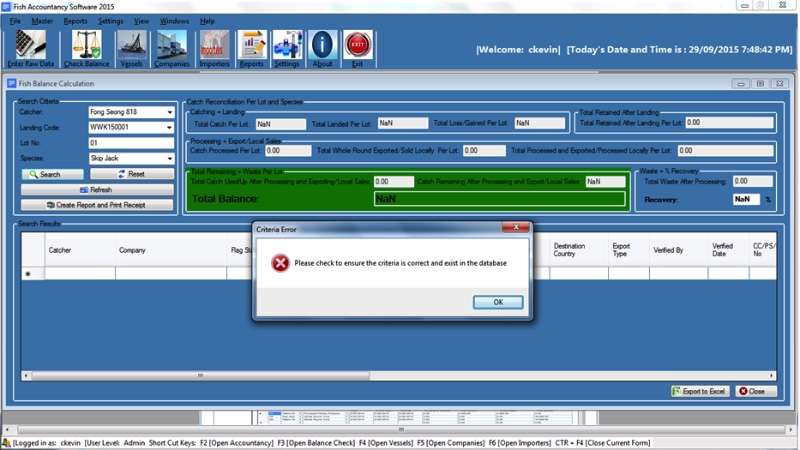
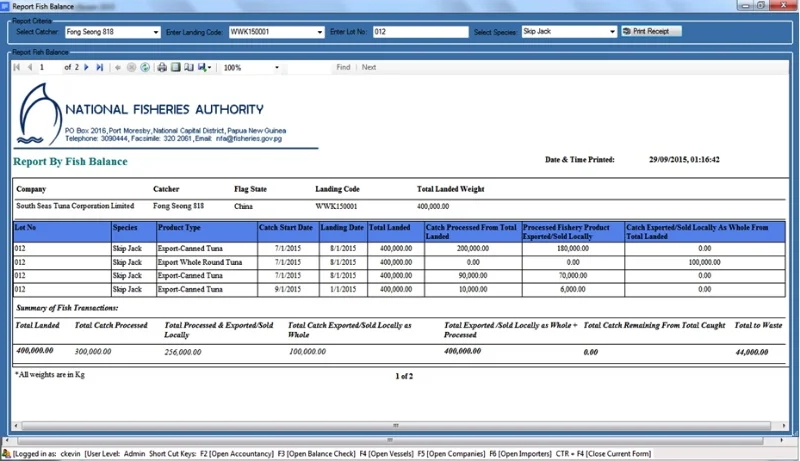
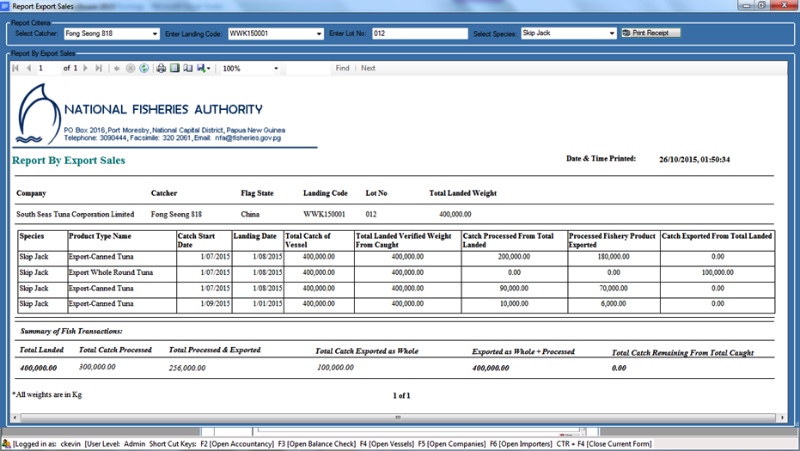
The OFP provide member countries with a sub-set of the regional tuna fisheries database with software query tools to facilitate the extraction of summary tables, graphs and maps to assist in the decision-making processes related to the management of their tuna fisheries and satisfy their reporting obligations to the WCPFC. Member countries also contact OFP on a regular basis with a variety of ad hoc requests for summarised data prepared from the regional tuna database.
Stock Assessment. Within the section, they have five areas of work.
- Regional oceanic fisheries management policy and decision-making by WCPFC are informed by the best science-based stock assessments and advice. This is achieved primarily through the Regional WCPO stock assessments that they undertake as service provider to tWCPFC, but in addition they have active Research being undertaken into software for use with stock assessments and addressing many of the important issues in stock assessments.
- FFA’s oceanic fisheries management initiatives are supported by the best science-based stock assessments and advice. They work closely to support FFA in providing analytical support for their Regional fisheries management initiatives. This are of work also involves support of PNA and Te Vaka Moana.
- National tuna oceanic fisheries policy and decision-making are informed by the best science-based stock assessments and advice. They work closely with National fisheries agencies to provide scientific advice that assists them in the development of Tuna Management plans and other relevant fisheries management plans. A key part of this support is the development of National Tuna Fisheries Status Reports (NTFSRs).
- Enhanced capacity of SPC members to interpret stock assessment information and advice. For 7 years they have been running Stock Assessments Training Workshops (SAWs), have attachments at SPC for national scientists, and provide in-meeting support, particularly for FFA and WCPFC meetings.